
Pulls vs Pushes: Decoding Inbound and Outbound Lead Generation
Core Differences in Inbound and Outbound Lead Generation

The tug-of-war between inbound and outbound lead generation comes down to two things: control and timing.
With inbound, your prospect controls the clock. They experience a nagging headache, open a browser, and search for answers. If your content library and search engine optimization are in top shape, they find you, read your breakdown, and raise their hand. They enter your world at the consideration stage, having already admitted they have a problem.
Outbound flips the script. You take full control over who hears from you and when. You pick the exact companies or decision-makers you want to work with, track down their details, and introduce yourself directly. Because they were not actively browsing your site two minutes ago, they usually enter your pipeline at the unaware or problem-aware stage. You are interrupting their afternoon, so your pitch has to be undeniably relevant.
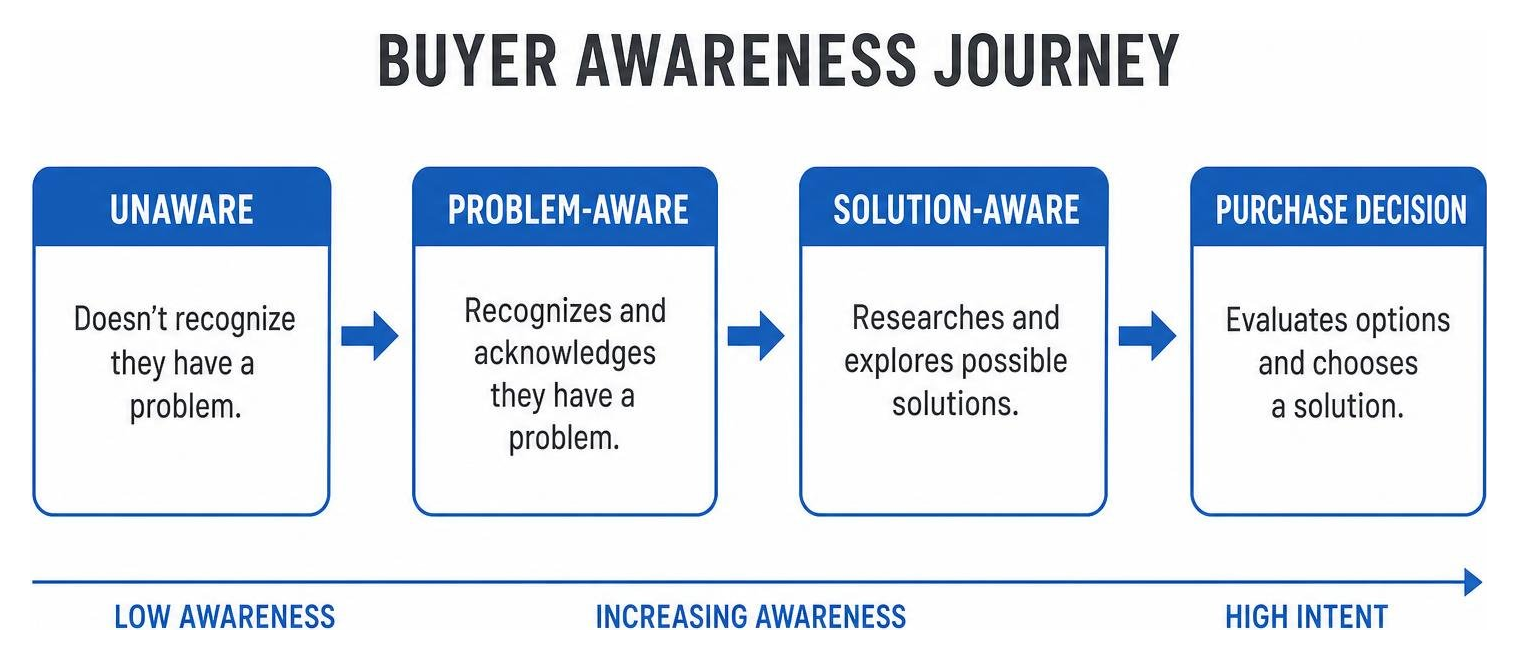
This changes prospect psychology completely. Inbound prospects arrive with built-in trust because they sought you out as an authority. Outbound prospects start skeptical. If you treat an outbound lead like an inbound hand-raiser, you will scare them off. You have to earn their attention by teaching before you sell. For a deeper look at setting up your organic capture systems, check out our 2026 inbound lead generation guide.
Defining Inbound Lead Mechanics
Inbound lead generation is all about demand capture and pull mechanics. You build digital assets that act as 24/7 magnets for high-intent buyers.
The core inbound toolkit includes:
- Search Engine Optimization (SEO) & Generative Engine Optimization (GEO): Structuring your website, blog posts, and core service pages so human searchers and AI engines alike serve your business as the definitive answer.
- High-Value Lead Magnets: Gated resources, pricing calculators, templates, or teardowns that provide immediate utility in exchange for an email address.
- Educational Content: In-depth articles, case studies, and video walkthroughs that solve specific pain points without aggressive sales pitches.
- Social Proof and Authority Building: Active LinkedIn commentary, guest appearances, and client success stories that prove you actually know your craft.
Because inbound relies on permission marketing, leads coming through these channels show high intent and lower sales resistance. They already believe you can solve their issue; they just need to know how you work and what it costs.
Defining Outbound Lead Mechanics
Outbound lead generation operates on push mechanics. Instead of waiting around for ideal clients to stumble onto your digital doorstep, you go knock on theirs.
Modern outbound relies on precision targeting rather than spammy mass blasts:
- Laser-Focused Ideal Customer Profile (ICP) Lists: Hand-curating lists of accounts that fit your exact parameters for company size, revenue, tech stack, or service needs.
- Hyper-Personalized Cold Email: Crafting short, value-first messages (ideally under 100 words) tailored to specific micro-segments of 20 to 50 decision-makers.
- Multi-Channel Sequencing: Coordinating touches across cold calling, LinkedIn engagement, direct mail, and account-based advertising.
- Trigger-Based Outreach: Reaching out based on real-world events, such as a company hiring for a specific role, raising capital, or adopting new software.
Outbound allows you to bypass the algorithmic whims of search engines and social platforms, putting your offer directly in front of the exact people who have the budget to pay you.
Speed, Costs, and Conversion Rates: How the Data Compares
When choosing your growth path, looking at isolated metrics will steer you in the wrong direction. A cheap lead that never buys is far more expensive than a premium lead that closes in two weeks.
| Metric | Inbound Lead Generation | Outbound Lead Generation |
|---|---|---|
| Primary Mechanism | Pull (Demand Capture) | Push (Demand Creation) |
| Time to First Meaningful Lead | 3 to 6 Months | 1 to 3 Weeks |
| Average Close Rate | ~14.6% (HubSpot benchmark) | ~1.7% to 3.0% (Cold Outreach) |
| Average Cost Per Lead (CPL) | 60% to 62% Lower | Higher Initial Upfront Cost |
| Average Deal Size | Moderate to Baseline | ~50% Larger on Average |
| Targeting Precision | Low to Moderate (Self-Selected) | Extremely High (Hand-Picked) |
| Asset Longevity | Compounding (Evergreen Assets) | Linear (Active Outbound Effort) |
As noted in this comprehensive breakdown of 2026 acquisition benchmarks, these numbers reveal distinct strategic trade-offs between initial speed and long-term cost efficiency.
Inbound vs Outbound Acquisition Economics
Inbound leads cost roughly 60% to 62% less than outbound leads over a multi-year horizon. Why? Because inbound marketing creates compounding returns. A well-written case study or an authoritative guide published today will keep generating organic search visits, social shares, and consultation bookings for years without added media costs.
Outbound economics are front-loaded and linear. You pay for software tools, verified data feeds, domain infrastructure, and the sales talent executing the outreach. If your team stops sending emails or dialing phones, your outbound pipeline dries up immediately.
However, looking strictly at cost per lead (CPL) is a rookie mistake. If an inbound search lead costs you $45 to generate but your closing rate yields a $12,000 cost per closed enterprise deal, that is not necessarily superior to an outbound motion where a $350 lead closes at a larger contract size for an effective acquisition cost of $2,800. Look at your ultimate cost per acquisition (CAC) and customer lifetime value, not just top-of-funnel clicks.
Deal Sizes and Lead Quality Across Channels
Lead quality means different things depending on your goals. Inbound gives you higher intent, but outbound gives you higher account fit.
When buyers come through organic inbound search, they dictate the parameters. Sometimes they are fantastic enterprise clients; often, they are smaller businesses with shoestring budgets who simply read your blog. This is why inbound deal sizes tend to land closer to your baseline averages.
Outbound allows you to hunt exclusively for whale accounts. By targeting companies with large annual revenues and substantial team sizes, outbound campaigns systematically yield deal sizes that are 50% larger on average according to industry research. If you want to dive deeper into structuring these larger deals, our guide to B2B lead generation strategy breaks down the entire account planning process.
Choosing Between Inbound and Outbound for Your Business Model
No single marketing channel fits every organization. The right balance depends on your cash reserves, your timeline, and the size of your addressable market.
When Outbound Wins: Speed and Niche Accounts
Outbound is your best friend when time is short and your market is narrow:
- You Need Immediate Pipeline: If you launched a new service and need client revenue this month, outbound can put you in front of real buyers within days. Inbound cannot do that.
- Your Total Addressable Market (TAM) Is Small: If there are only 400 organizations in the entire country that could realistically buy your high-end service, writing generic blog posts is an inefficient way to reach them. Direct outreach makes every dollar count.
- You Sell High Annual Contract Values (ACV): When your contracts are worth $25,000 to $100,000 or more, you can easily justify the higher cost-per-contact of personalized outbound sequences.
- You Need Fast Market Feedback: Outbound shows you right away whether your positioning and pricing resonate. If 100 well-targeted prospects ignore your offer, you know you need to adjust your messaging before building out months of content.
This direct approach is especially effective when working with localized partners, as outlined in our guide covering lead generation for agents.
When Inbound Leads the Pipeline: Long-Term Authority
Inbound should be your primary engine under very different operational conditions:
- Your Buyers Do Heavy Research: In industries where buyers read 10 or more articles, compare features, and consult peer reviews before signing a contract, you must own the digital real estate they land on.
- You Have a Broad Audience: If your services cater to thousands of potential small businesses, pet owners, or local community members, organic search provides scalable reach that manual outreach cannot replicate.
- You Want to Lower Customer Acquisition Costs Over Time: Investing in evergreen assets today creates a self-sustaining discovery loop that protects your profit margins as your company grows.
To see how organic brand positioning and search channels build authority over time, explore our breakdown of marketing lead generation frameworks.
The Hybrid Growth Model: Unifying Pull and Push Motions
The old debate claiming you have to pick inbound or outbound is outdated. The most profitable teams run an integrated approach where both motions share data and feed each other.
Recent research on demand capture versus demand creation highlights how modern go-to-market teams use inbound content to validate market interest while deploying targeted outbound to turn anonymous interest into active sales discussions.

Integrating Inbound and Outbound Lead Generation for Maximum ROI
Combining these two motions creates compounding results. Here is how you can weave them together:
- Feed Outbound Objections into Inbound Content: Have your sales team log the recurring hesitations they hear on cold calls and direct outreach. Turn those exact friction points into authoritative blog posts, case studies, and comparison guides.
- Weaponize Content in Outbound Sequences: Cold emails should not just ask for 15 minutes of someone's time. Include links to relevant teardowns, custom benchmark data, or useful guides. This instantly differentiates your outreach from lazy sales spam.
- Retarget Inbound Content Engagers: When a prospect reads three articles on your website or downloads a guide, trigger a gentle, personalized outbound check-in via email or LinkedIn referencing the exact topic they researched.
- Turn Anonymous Website Traffic into Target Account Lists: High-intent pages like your pricing or service breakdowns are visited by companies every day who never fill out a form. Use visitor identification to spot these accounts and hand them to your sales team for timely outreach.
Leveraging Modern AI and Intent Data in 2026
Artificial intelligence has completely rewritten the playbook for both inbound and outbound execution.
On the outbound side, AI agents now handle roughly 80% of manual prospect research and data enrichment. Instead of spending hours digging through corporate websites, reps use AI to monitor hiring surges, tech migrations, and leadership changes, crafting hyper-relevant outreach in seconds.
On the inbound side, search behavior has shifted. With AI search engines answering roughly a third of basic informational queries directly, classic top-of-funnel keyword stuffing is obsolete. Inbound success in 2026 requires Generative Engine Optimization (GEO), which means creating original, deeply researched, bottom-of-funnel content that AI models cite as authoritative source material.
Execution Strategy and Pipeline Pitfalls
Building an integrated growth engine requires discipline. When companies struggle with their pipeline, it is almost always caused by basic strategic missteps.
Common Mistakes in Inbound and Outbound Lead Generation
- Running Teams in Silos: Marketing produces content that sales reps never use, and sales reps encounter objections that marketing never addresses. Both sides must share a single ICP definition and unified CRM dashboards.
- Expecting Inbound Speed on an Outbound Timeline: Launching an SEO strategy and complaining after six weeks that leads are not pouring in is a fundamental misunderstanding of search algorithms. Give inbound at least three to six months to mature.
- Ignoring Email Deliverability and Domain Health: Blasting thousands of generic emails from your primary corporate domain will destroy your sender reputation. Keep your user-reported spam rates below 0.1% and practice strict list hygiene.
- Skipping Prospect Education in Outbound: Treating cold outbound leads as if they are ready for an immediate demo fails to account for their lack of awareness. You must educate them on the problem before asking for their business.
- Tracking Vanity Clicks Instead of Pipeline Revenue: High web traffic and high email open rates mean nothing if they do not convert into booked discovery calls and signed client agreements.
Budget Allocation Framework across Growth Phases
Your capital allocation should evolve as your business scales:
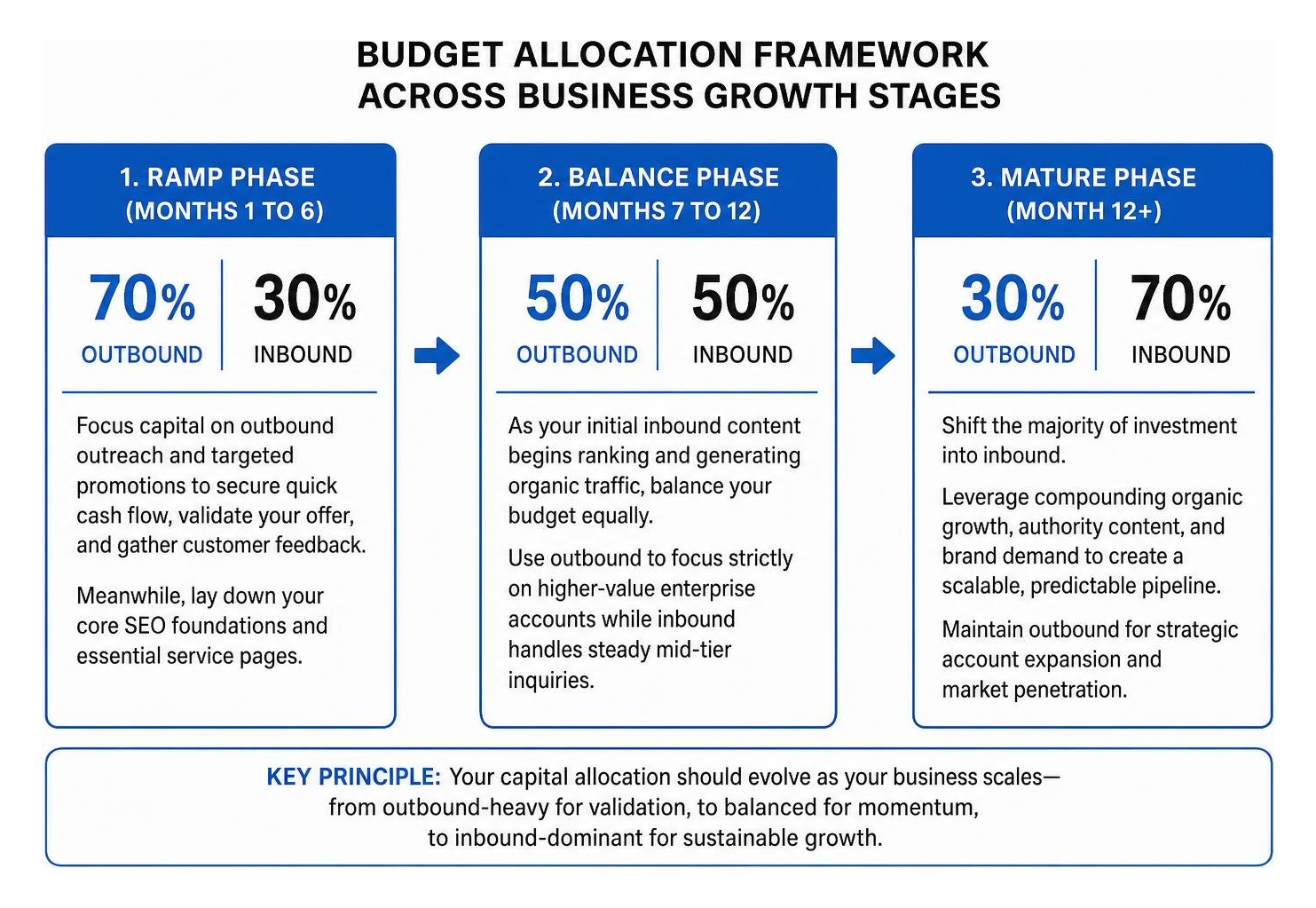
- Ramp Phase (Months 1 to 6): 70% Outbound / 30% Inbound
Focus capital on outbound outreach and targeted promotions to secure quick cash flow, validate your offer, and gather customer feedback. Meanwhile, lay down your core SEO foundations and essential service pages. - Balance Phase (Months 7 to 12): 50% Outbound / 50% Inbound
As your initial inbound content begins ranking and generating organic traffic, balance your budget equally. Use outbound to focus strictly on higher-value enterprise accounts while inbound handles steady mid-tier inquiries. - Mature Phase (Month 12+): 30% Outbound / 70% Inbound
Once your evergreen content, client referrals, and organic search presence compound into a dependable stream of hand-raisers, let inbound carry the bulk of your lead volume. Reserve outbound for high-value strategic accounts.
Frequently Asked Questions About Pipeline Generation
Which strategy produces faster revenue for new offers?
Outbound lead generation produces faster revenue when testing new services. You can build a targeted prospect list and begin direct conversations within days, gathering real feedback on pricing and positioning long before organic search rankings kick in.
Can small businesses run both inbound and outbound effectively?
Yes. A small team can run a streamlined hybrid model by focusing outbound efforts on small, highly targeted batches (50 to 100 well-researched prospects per week) while maintaining a steady inbound cadence of one or two high-quality, bottom-of-funnel content pieces per month.
How does website visitor identification bridge the gap?
Website visitor identification technology identifies the company domain of anonymous visitors browsing your web pages. When a target business visits high-intent pages (like pricing or detailed service offerings) without submitting a form, your team can trigger a warm, relevant outbound message to key stakeholders at that account.
Scaling Your Pipeline with a Balanced Strategy
Relying entirely on a single channel to grow your business leaves you vulnerable. If you depend solely on outbound, you stay trapped on a manual sales treadmill where your pipeline stops the moment you take a vacation. If you depend solely on inbound, you remain at the mercy of platform algorithm updates and slow organic ramp times.
True business stability comes from building an integrated pipeline that captures existing demand through authoritative search visibility while actively opening doors with key accounts through targeted outreach. If you are ready to build a reliable growth engine that actually drives revenue, explore our complete lead generation services to get started.
