

When we look at building a b2b lead generation strategy that actually works in 2026, let us be real for a second, the market has shifted big time. Gone are the days when you could buy a giant email list, blast out a generic offer, and watch the cash roll in. Today, your prospective buyers are smarter, busier, and honestly pretty tired of cold outreach.
An effective digital strategy rests on three core pillars: deep target audience clarity, tight alignment between marketing and sales, and modern qualification criteria. Without these three components working together, your marketing efforts will simply generate noisy clutter instead of predictable business revenue.
To start, you need a crystal clear Ideal Customer Profile. An ICP is not just a vague demographic summary. It goes far deeper into firmographics, technographics, operational triggers, and acute business pain points. For example, knowing that your target is a mid sized software company is not nearly enough. You want to know that they have between 50 and 200 employees, use SquareSpace or WordPress for their web presence, recently hired a new head of sales, and are struggling with low search engine visibility.
Once you know exactly who you are targeting, you must align your entire revenue team around what a qualified buyer actually looks like. Too many organizations suffer from a massive disconnect between marketing goals and sales reality. Marketing celebrates capturing 500 email downloads, while sales complains that none of those downloads turn into actual sales calls. Building a winning strategy requires both teams to agree on exact qualification standards from day one.
Why the Traditional MQL Model Fails Your B2B Lead Generation Strategy
Let us be completely honest about Marketing Qualified Leads. The traditional MQL model is broken, and it is quietly draining marketing budgets everywhere. Historically, teams defined an MQL based on superficial digital actions. If someone downloaded a free whitepaper, clicked a link in an email, or viewed a pricing page twice, they were tagged as an MQL and handed off to a sales representative.
The problem with this approach is that behavioral proxies do not equal purchasing intent. A college student researching an essay or a competitor analyzing your pricing will perform those exact same actions. According to industry research cited in The Ultimate Guide to B2B Lead Generation in 2026 , sales teams reject a staggering 87 percent of MQLs. Furthermore, the average conversion rate from MQL to Sales Qualified Lead sits at a dismal 13 percent.
When your marketing team focuses entirely on MQL volume, they end up chasing vanity metrics. You might hit your monthly goal of capturing 1000 leads, but if 870 of them get thrown directly into the digital trash bin by sales, you have wasted vast amounts of time and ad spend. Even worse, sales representatives spend hours attempting to call or email unqualified contacts, leading to fast burnout and pure frustration.
As Google Ads cost per lead has skyrocketed by 70 percent since 2021, and the average LinkedIn CPL in 2026 sits around $408, paying top dollar for low intent MQLs is no longer sustainable. We must shift away from pure lead volume and move toward capturing verified buying intent.
Modern Lead Qualification Frameworks Beyond BANT
For decades, the standard qualification framework was BANT, which stands for Budget, Authority, Need, and Timeline. While BANT was a great tool for sales reps in the 1990s, applying it too strictly early in the modern digital funnel can kill great deals.
Today, buyers rarely reveal their exact budget or timeline on an initial contact form. If you demand that a prospect confirm an active budget before you speak with them, you risk pushing away high potential buyers who are still evaluating solutions.
To modernize lead qualification, we recommend combining explicit lead grading with implicit lead scoring.
- Lead Grading (Fit): This measures how closely a prospective company matches your Ideal Customer Profile. We evaluate firmographic factors like industry, annual revenue, employee count, tech stack, and location. If a prospect does not fit your baseline criteria, they should never be sent to sales regardless of how active they are on your website.
- Lead Scoring (Intent and Engagement): This tracks dynamic behavioral actions. Visiting key landing pages, viewing case studies, attending live webinars, or requesting interactive demos add positive points to a lead score.
- Automated CRM Enrichment: Modern RevOps teams use data enrichment tools to automatically check firmographic fit and active hiring or technology signals behind the scenes before a sales representative ever reaches out.
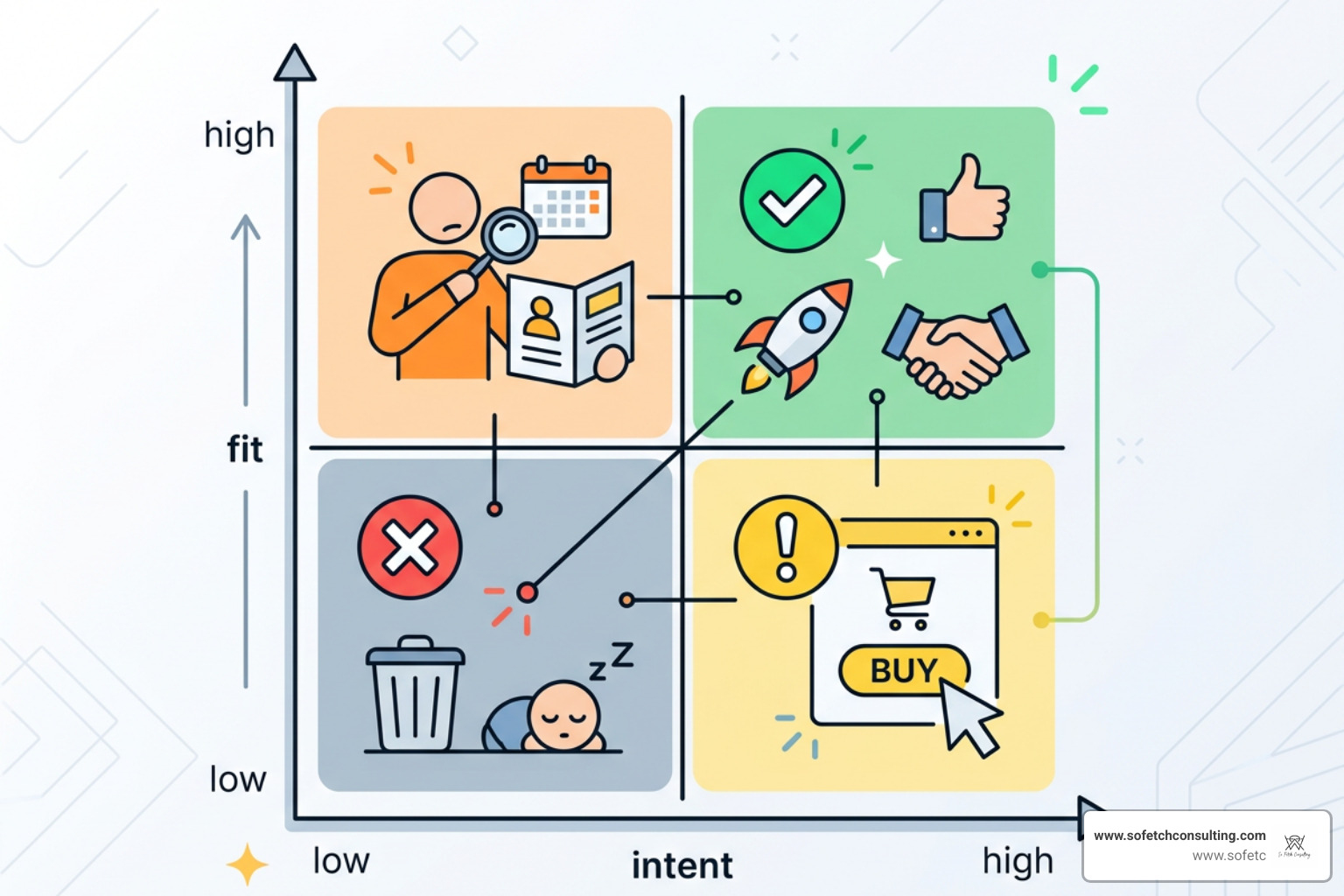
By plotting prospects on a fit versus intent matrix, you can route them correctly. High fit and high intent leads get routed instantly to sales for immediate contact. High fit but low intent leads get placed into automated educational nurture campaigns. Low fit leads, regardless of their intent score, are politely filtered out so your team stays focused on real revenue opportunities. For a complete deep dive on building automated lead engines, check out How to Generate B2B Leads: The Complete Playbook for 2026 | Clay .
High Impact Channels to Supercharge B2B Lead Generation in 2026
No single channel can carry your entire growth plan. A successful b2b lead generation strategy balances long term organic channels with agile outbound tactics, picking specific channels based on your Average Contract Value.
| Average Contract Value (ACV) | Primary Acquisition Channels | Typical Time to See Results | Average Cost Per Lead (CPL) |
|---|---|---|---|
| Small Business (< $25K ACV) | Organic SEO, Google Search Ads, Content Marketing | 2 to 12 months | $10 to $100 |
| Mid Market ($25K to $100K ACV) | Hybrid SEO, LinkedIn Ads, Targeted Cold Email, Webinars | 1 to 6 months | $80 to $300 |
| Enterprise ($100K+ ACV) | Account Based Marketing (ABM), LinkedIn Outreach, Executive Events | 3 to 9 months | $200 to $2000+ |
Inbound Tactics: Content Marketing, SEO, and Social Selling Strategy for B2B Lead Generation
Inbound marketing remains the cornerstone of predictable revenue, but how people consume content has changed dramatically. With the rise of generative search engines and AI answer engines (GEO), B2B buyers get direct answers without always clicking through to full websites.
To win at organic inbound in 2026, your content must focus on deep authority and bottom of funnel intent. Top of funnel articles that define basic terms are being swallowed by search engine AI overviews. Instead, focus on detailed product comparisons, implementation guides, ROI frameworks, and specific industry case studies.
Interactive content is another total game changer for capturing buyer attention. Studies show that 81 percent of marketers agree interactive content catches prospective buyers much better than static PDFs. Creating interactive ROI calculators, self assessment quizzes, or customized diagnostic tools gives users instant value while naturally capturing rich qualification data.
Social selling on platforms like LinkedIn has also transformed inbound momentum. Decision makers do not want to be pitched by brand logos; they want to engage with real subject matter experts. Over 55 percent of business decision makers explicitly use LinkedIn to vet potential partner companies. When your executive leadership team and subject experts consistently publish personal insights, case studies, and practical advice, you create an environment where high value leads reach out to you directly.
For more insights on structuring integrated demand generation programs, explore B2B Lead Generation: The Complete Playbook for 2026 | MarkCMO .
Outbound Plays and Intent Data Strategies
While inbound takes time to compound, strategic outbound allows you to initiate immediate conversations with high value target accounts. However, modern outbound is not about spamming thousands of unverified contacts. Success requires signal triggered outreach backed by high quality intent data.
Intent data helps you identify target companies that are actively researching solutions in your category before they ever fill out a form on your website.
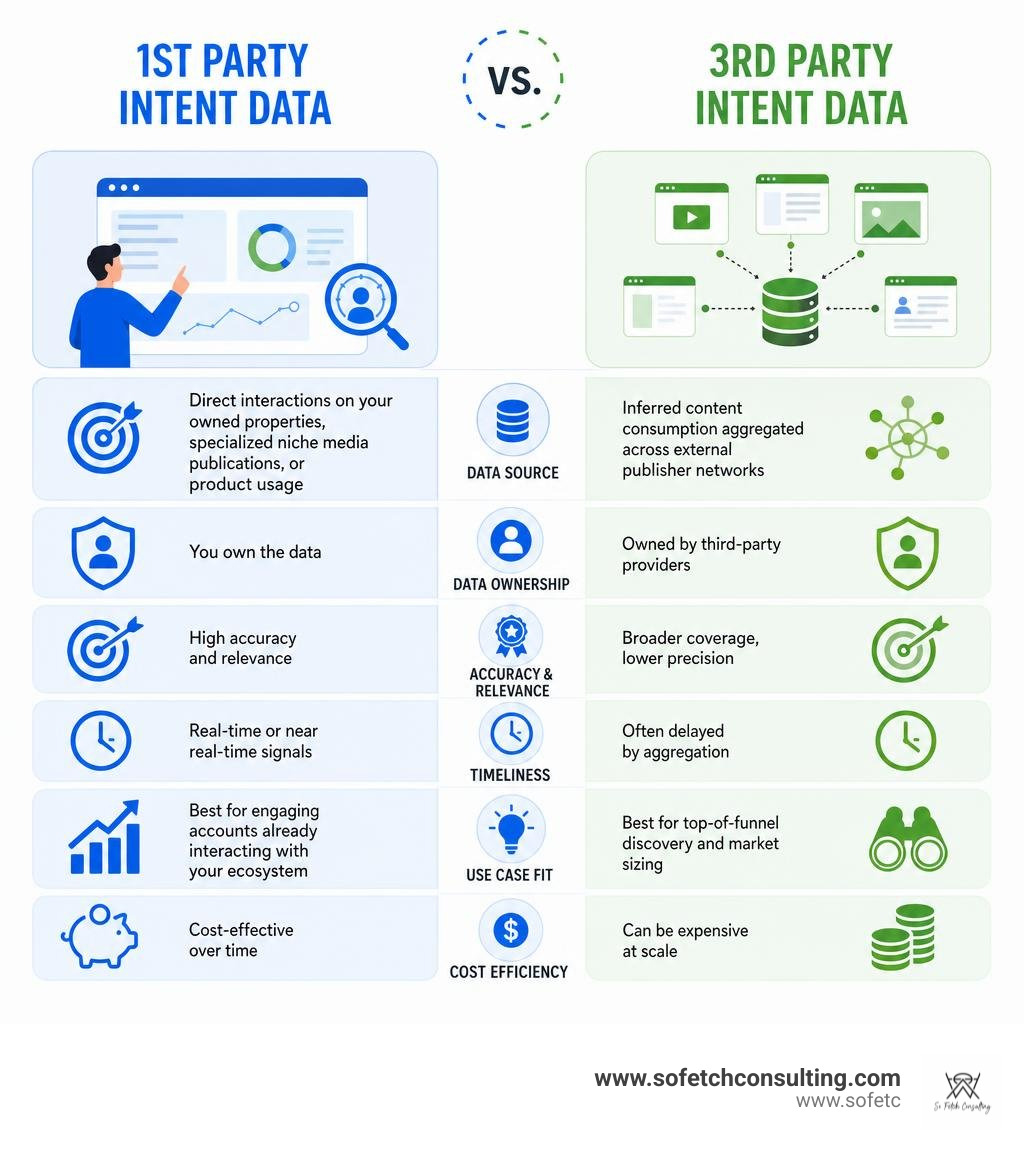
Understanding the distinction between 1st party and 3rd party intent data is critical for budget optimization:
| Metric / Feature | 1st Party Intent Data | 3rd Party Intent Data |
|---|---|---|
| Data Source | Direct interactions on your owned properties, specialized niche media publications, or product usage | Inferred content consumption aggregated across external publisher networks |
| Accuracy Level | Exceptionally high (95%+ accuracy) | Moderate to low (40% to 50% accuracy) |
| Exclusivity | Proprietary to your business or exclusive publisher partnerships | Shared across multiple market competitors simultaneously |
| Actionable Triggers | Immediate, verified engagement actions (e.g. downloading your specific evaluation asset) | Broad topic interest trends (e.g. company browsing cybersecurity topics) |
When you layer 1st party intent signals onto your outbound cadences, your sales team can reach out at the exact moment a target account is considering a purchase. A high converting multichannel sequence typically spans 8 to 12 touches across 14 to 21 days, combining short personalized cold emails, LinkedIn profile engagements, warm phone calls, and video messages.
To learn more about setting up signal driven outbound plays, see B2B Lead Generation in 2026: ICP, Intent, Outbound Plays .
Conversion Tactics: Webinars, Events, and LinkedIn Ads
Once you attract target buyers to your digital assets, your conversion mechanism determines whether those visitors turn into real pipeline or bounce away forever.

Maximizing Webinars and Gated Assets for Qualified Pipeline
Webinars and virtual events remain premier conversion engines because they offer direct real time engagement with decision makers. However, simply hosting a 45 minute lecture with a standard Q and A at the end is no longer enough to keep audiences engaged.
To turn webinar registrants into closed revenue:
- Focus on Specific Tactical Problems: Choose highly focused topics that solve an urgent operational headache for your ICP rather than broad overview sessions.
- Use Live Polling to Gather Qualification Data: Ask active audience questions during the presentation regarding current tool usage, budget priority, or specific pain points.
- Execute an Automated Post Event Follow Up: Never send a generic thank you for attending email. Segment your post event sequence based on engagement level.
Here is a practical 4 step post webinar nurture sequence that drives sales calls:
- Email 1 (Sent within 2 hours): Share the event slide deck, video recording, and a direct link to promised resource templates.
- Email 2 (Sent 48 hours later): Highlight a key technical insight from the event and link to a complementary case study showcasing real client outcomes.
- Email 3 (Sent 4 days later): Address common implementation objections and share client video testimonials.
- Email 4 (Sent 7 days later): Offer a limited one on one strategy session or interactive diagnostic review for qualified decision makers.
Social proof is essential across all gated assets and landing pages. Research reveals that 95 percent of buyers read reviews before making a purchase, and 92 percent trust personal referrals over traditional corporate marketing. Including real customer quotes, client logos, and verified performance statistics on your landing pages boosts conversion rates significantly.
Optimizing LinkedIn Lead Gen Forms and Targeted Paid Ads
LinkedIn is unmatched for precision B2B ad targeting because it allows you to filter directly by job title, company size, industry, member skills, and specific management seniority. It is no surprise that LinkedIn delivers an average 113 percent return on ad spend, ranking first among B2B ad channels.
However, desktop landing page friction often hurts paid campaign performance, especially on mobile devices where typing long responses into form fields causes high abandonment rates. This is where native LinkedIn Lead Gen Forms shine.
Native forms automatically pre populate form fields using verified LinkedIn profile data, allowing prospects to submit their contact details with a single click.
To maximize ROI on LinkedIn paid campaigns:
- Keep Form Fields Short: Limit your form to 3 to 5 fields maximum. Asking for basic contact info alongside standard firmographic fields yields the highest completion rates.
- Align the Offer with Buyer Intent: Do not run lead gen forms asking users to book a demo cold unless you are targeting highly warm retargeting audiences. Use native forms for high value downloadable frameworks, interactive tools, or event signups.
- Integrate Instantly with your CRM: Over 53 percent of successful ad managers connect native forms directly to their CRM via instant webhooks. Following up within minutes drastically improves meeting show up rates.
- Include Clear Privacy Disclosures: Always display standard data privacy links directly above the submit button to maintain trust and regulatory compliance.
Measuring Success and Essential Pipeline Metrics
If you cannot measure your lead generation results accurately, you cannot optimize your strategy or justify your marketing spend. Moving away from vanity metrics like ad clicks, impressions, and raw contact counts is crucial.
Reverse revenue modeling allows you to calculate exact lead targets based on actual financial goals. As shown above, if your company aims for $5,000,000 in new ARR with a $50,000 contract size, working backward through your pipeline conversion math reveals exactly how many qualified leads you must generate each month.
Key Metrics to Track for Sustainable ROI
To maintain a healthy lead engine, track these key metrics weekly:
- Cost Per Lead (CPL): Calculated by dividing total channel expenditure by total leads captured. Compare CPL across channels to see where budget performs best.
- MQL to SQL Conversion Rate: The percentage of marketing contacts accepted by sales reps as real opportunities. Healthy benchmarks range from 20 percent to 35 percent when tight ICP grading is applied.
- Opportunity Creation Rate: The percentage of sales qualified leads that progress into active pipeline deals.
- Customer Acquisition Cost (CAC): Total sales and marketing expense divided by total new customers acquired.
- Pipeline Velocity: How fast prospective deals move through your sales funnel from initial contact to closed contract.
Tracking these indicators keeps your marketing spend anchored to bottom line growth rather than vanity traffic metrics.
Frequently Asked Questions About B2B Lead Generation Strategy
What is the average cost per lead on LinkedIn in 2026?
The overall average cost per lead on LinkedIn in 2026 sits around $408 across all industries and offer types. However, CPL varies significantly based on target audience seniority and offer depth. Top funnel content downloads targeting mid level managers often see CPLs between $80 and $150, while targeted bottom funnel offers directed at C level executives in enterprise markets can easily reach $500 to $800 per lead.
Why are 1st party intent signals better than 3rd party data?
1st party intent signals track direct actions taken on your owned digital properties or verified publisher assets, reaching over 95 percent accuracy. 3rd party intent data relies on inferred browsing patterns aggregated across broad external networks, which often carries accuracy levels between 40 percent and 50 percent. Furthermore, 3rd party intent data is sold to multiple market competitors simultaneously, whereas 1st party data gives your team an exclusive window of opportunity.
How long does it take to see results from a new lead generation strategy?
Building a fully compounding B2B lead generation engine typically takes 6 to 12 months. Paid channels like LinkedIn Ads and Google Search Ads can produce qualified leads within 2 to 4 weeks. Outbound cold email and social selling cadences generally require 30 to 60 days to test messaging and optimize reply rates. Long term organic channels like search engine optimization, generative search visibility, and content marketing take 6 to 18 months to deliver sustainable compounding organic traffic.
Conclusion
Building a successful digital b2b lead generation strategy is an ongoing process of refining your target focus, testing messaging, and optimizing conversion points. By moving away from vanity MQL metrics and adopting intent driven lead qualification, your team can create a reliable pipeline that generates consistent revenue growth.
When marketing and sales align around shared qualification criteria, every dollar spent on ad campaigns, content creation, and technology tools drives measurable business value. Focus on capturing real buyer intent, delivering exceptional educational content, and nurturing target prospects with warm human touchpoints.
At So Fetch Consulting, we help small businesses, private organizations, non profits, and specialized service providers design and execute practical digital strategies that drive real pipeline. From custom SquareSpace designs and strategic SEO setup to targeted paid campaigns and our proven S3 System content frameworks, we make digital marketing simple, clear, and profitable.
Ready to scale your business pipeline with clarity and confidence? Discover SoFetch Consulting Services and let us build your custom lead generation engine today!
