
A Practical Guide to Lead Generation for Real Business Growth

Building a predictable stream of revenue starts with knowing how to find and connect with potential buyers. When your business doesn't have a reliable way to catch people's interest, growth feels random and stressful. Instead of waiting around for word-of-mouth referrals or running sporadic marketing campaigns, having a clear strategy helps turn everyday interest into a steady stream of prospective clients.
At its core, lead generation is about opening the door and building genuine trust. By answering real questions, fixing actual pain points, and sharing helpful insights upfront, you can turn cold website visitors into engaged prospects who come to you for answers.
Defining the Modern Lead
In simple terms, a lead is anyone who shows real interest in what you sell and willingly gives you their contact details. But collecting a name and email is just the beginning; the real value depends on how ready they are to buy and how accurate their information actually is.
High-quality leads usually leave a paper trail. They might spend extra time checking out your pricing page, download a detailed guide, or request a live demo. Making sure you collect verified data—like work emails, direct phone lines, and accurate company information—keeps your sales team focused on real opportunities instead of chasing dead ends.
The 5-Stage Lifecycle Process
Turning fresh interest into actual revenue takes a clear, practical workflow. Most successful lead generation follows these five steps:
- Creation: Crafting helpful content, practical guides, or offers that address what your ideal customers are actually struggling with.
- Discovery: Getting that content in front of people through search engines, social channels, or targeted ads so they can easily discover your brand.
- Action Triggers: Adding clear call-to-action (CTA) buttons that encourage visitors to take the next step.
- Submission Forms: Collecting essential details through short, simple forms or quick interactive tools.
- Nurturing: Staying in touch through automated CRM emails and personal follow-ups until the buyer is ready to make a decision.
Categorizing Qualified Leads Across the Sales Funnel
Not all leads are created equal. Trying to sell immediately to a contact who has only downloaded a basic guide creates friction and wastes valuable sales resources. Categorizing leads based on buyer readiness ensures that your sales and marketing teams stay aligned, delivering the right message at the right moment.
Marketing Qualified Leads (MQL)
A Marketing Qualified Lead (MQL) is a prospective client who has engaged with your marketing campaigns significantly more than a passive site visitor, but isn't quite ready to sign a contract.
MQLs demonstrate clear engagement through touchpoints like downloading a free eBook, attending a live webinar, or repeatedly reading industry-specific blog posts. While these gated assets signal genuine interest and strong demographic fit, MQLs require further nurturing before a direct sales pitch.
Sales Qualified Leads (SQL) and Product Qualified Leads (PQL)
As prospects move deeper into your sales funnel, they demonstrate explicit intent to buy. Recognizing these transitions helps team members deploy high-impact sales conversations effectively.
- Sales Qualified Leads (SQLs): Prospects evaluated by marketing and sales as actively looking for a immediate solution. SQLs typically display explicit buying signals—such as requesting a custom quote, scheduling a consultation, or fulfilling the BANT framework criteria (Budget, Authority, Need, and Timing).
- Product Qualified Leads (PQLs): Prospects who have experienced the value of your offering directly through a free trial, freemium software tier, or hands-on sample. Because PQLs interact directly with the core offer, they often show significantly higher conversion rates than traditional prospects.
- Service Qualified Leads: Existing clients who express a need for expanded support, upgrades, or additional services, presenting high-value upsell opportunities.
| Lead Classification | Primary Trigger | Lifecycle Stage | Recommended Action |
|---|---|---|---|
| Information Qualified (IQL) | Downloads introductory asset | Top of Funnel (TOFU) | Automated email drip education |
| Marketing Qualified (MQL) | Multiple content engagements | Middle of Funnel (MOFU) | Targeted solution comparisons |
| Sales Qualified (SQL) | Fills out request form | Bottom of Funnel (BOFU) | Direct outreach by sales team |
| Product Qualified (PQL) | Reaches product usage milestone | Trial / Freemium | In-app upselling / direct proposal |
Inbound vs Outbound Lead Generation Strategies
Successful growth engines often combine organic pull strategies with direct outreach. Understanding the practical differences between inbound and outbound methods lets you balance long-term brand building with immediate sales needs.

Building Sustainable Organic Inbound Funnels

Inbound lead generation focuses on bringing in qualified prospects naturally by offering genuinely useful content. Instead of interrupting someone's day with an unexpected pitch, inbound strategies answer the exact questions target clients are searching for online.
- Search Engine Optimization (SEO): Tuning your web pages to show up high in search results for high-intent keywords brings a steady stream of interested visitors to your site every day.
- Conversion Rate Optimization (CRO): Creating clean, uncluttered landing pages with straightforward messaging and simple forms turns casual search traffic into verified contacts.
- High-Value Lead Magnets: Offering practical tools, checklists, calculators, or thorough guides gives visitors a compelling reason to share their contact details.
Building organic channels takes steady effort over three to twelve months, but it creates a lasting asset that generates leads at a lower cost over time. Discover how structured frameworks streamline this process with B2B lead generation tactics.
Proactive Outbound Prospecting and Outreach
While inbound strategies build steady momentum over time, outbound prospecting lets you reach out directly to key decision-makers right away. It gives companies a way to contact specific target accounts without waiting for them to discover the site organically.
To build a practical outbound approach:
- Define your Ideal Customer Profile (ICP) based on clear industry, size, and location criteria.
- Keep an eye out for real-time buying signals, like team expansions, leadership updates, or new tool adoptions.
- Run helpful multi-channel outreach campaigns that combine personalized emails, social touchpoints, and quick phone conversations.
Modern outreach works best when messages feel personal and timely, using tools like AI autonomous agents to handle background research and routine check-ins without losing the human feel.
Optimizing and Nurturing Prospects for Maximum Conversion
Capturing a prospect's initial contact information is only the middle phase of the customer journey. If you leave inquiries unattended, prospect engagement quickly cools off. Optimizing conversion speed, maintaining data hygiene, and implementing systematic nurturing sequences are crucial to turning leads into revenue.
Essential Lead Generation Tools and Software

Maintaining a modern pipeline requires an integrated lead management tech stack. Instead of relying on disconnected spreadsheets, top-performing GTM teams connect dedicated platforms to track every user touchpoint automatically.
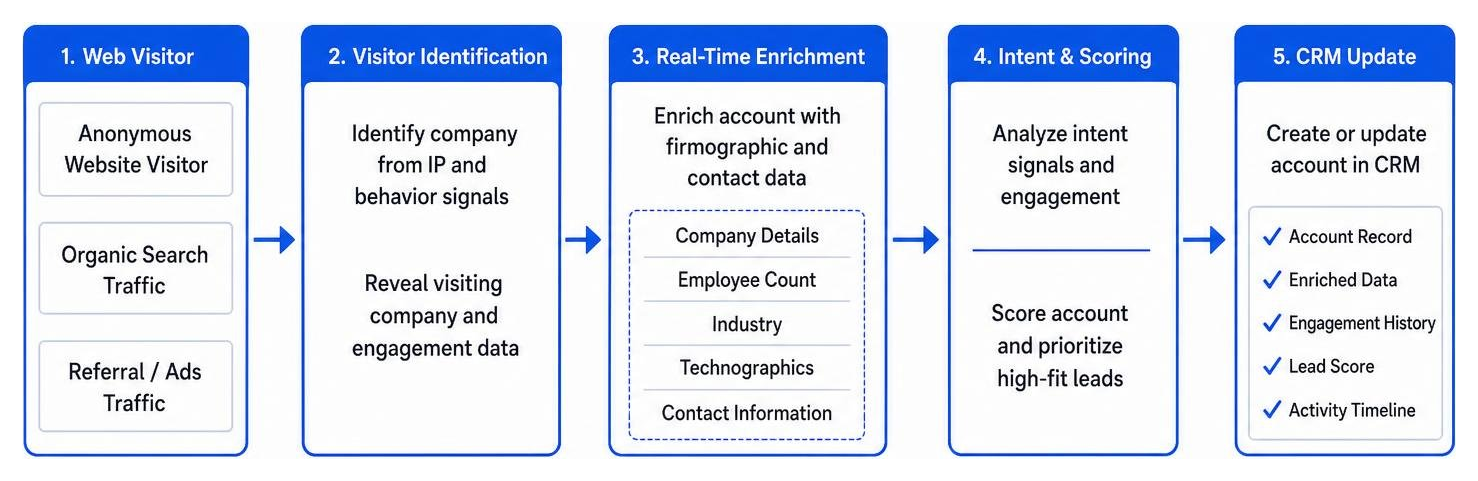
Key components of a complete tech stack include:
- Automated CRMs: Serving as a central repository for communication logs, prospect statuses, and deal tracking.
- Lead Enrichment Tools: Instantly filling in missing company details, employee counts, and social profiles upon form submission.
- Web Visitor Identification: Uncovering dynamic IP addresses to identify anonymous business visitors reviewing your website before they fill out a form, utilizing website visitor identification software to reveal real-time account intent.
- Automation Systems: Triggering immediate alerts for sales reps when high-value prospects interact with key pricing pages.
Effective Lead Nurturing and Qualification Best Practices
To maximize conversion rates and prevent pipeline drop-off, implement these core practices across your sales and marketing operations:
- Implement Dynamic Lead Scoring: Assign points based on firmographic fit (30-40%), site behavior (40-50%), and intent signals (20-30%). Focus your sales team's daily efforts on prospects with the highest overall engagement scores.
- Shorten Capture Forms: Long forms with extensive required fields reduce submission rates. Ask for basic contact details initially, then collect additional data progressively over future interactions.
- Use Action-Oriented CTAs: Replace generic button text like "Submit" with strong, benefit-driven verbs such as "Download Your Free Guide" or "Book Your Strategy Session."
- A/B Test Conversion Touchpoints: Regularly run split tests on landing page headlines, form field placements, and email subject lines to make continuous, data-driven improvements.
- Deploy Drip Email Sequences: Create automated, value-focused email cadences that address common objections, share customer success stories, and build trust over time.
Frequently Asked Questions About Lead Generation
How do businesses measure the success of their lead generation efforts?
Evaluating performance requires looking beyond top-of-funnel impression numbers and focusing on metrics directly tied to pipeline efficiency and revenue generation.
- Conversion Rate: The percentage of website traffic that completes a lead form, alongside the conversion rate of MQLs into SQLs.
- Cost Per Lead (CPL): Total marketing campaign spend divided by the total number of verified leads generated. For instance, spending $1,000 on an ad campaign that yields 200 qualified contacts results in a $5 CPL.
- Return on Investment (ROI): Total revenue generated from closed deals compared against the total cost of tools, ad spend, and labor required to acquire those leads.
- Lead-to-Sale Velocity: The total average time it takes for a newly captured prospect to move through every funnel stage and convert into a paying client.
How do lead scoring and qualification help prioritize prospects?
Lead scoring provides an objective, mathematical model to rank leads by their readiness to purchase. Instead of forcing sales representatives to guess which contacts to reach out to first, scoring models evaluate both demographic fit and explicit behavioral actions.
When a prospect downloads a technical buyer's guide, opens emails consistently, or visits pricing pages multiple times, their total lead score increases. Once a lead crosses a predetermined point threshold, the platform automatically alerts sales for immediate outreach. Fast response times directly increase conversion rates by connecting with prospects while their interest is peaked.
What is the primary difference between inbound and outbound tactics?
The primary difference lies in initiation and timeline:
Inbound tactics rely on creating value to attract prospects who are actively searching for solutions. Inbound takes time to build momentum—typically requiring 3 to 12 months for organic SEO and content marketing to scale—but delivers compounding value over time at a lower long-term cost per acquisition.
Outbound tactics directly approach selected decision-makers regardless of whether they have started searching for a solution. Outbound produces faster immediate results—generating conversations within days or weeks—making it ideal for targeting specific high-value accounts or driving rapid growth.
Modernizing Your Pipeline for Sustainable Revenue

Growing a business over the long haul means treating lead generation as an ongoing system rather than a quick fix. When you set clear criteria for qualifying prospects, balance organic inbound content with direct outbound conversations, and back it all up with a solid CRM, you take the guesswork out of your sales pipeline.
Matching your content with actual buyer intent builds authority while ensuring your sales team spends time on real opportunities. Keep refining your scoring rules, keep forms short and straightforward, and track your actual customer acquisition costs so you can reliably turn casual interest into steady revenue.
Ready to optimize your marketing performance and build a consistent client acquisition pipeline? Transform Your Digital Marketing Strategy with expert guidance tailored to your operational goals.
