
Stop Chasing Ghosts: Invaluable Lead Generation Ideas for Agents
Core Frameworks of Inbound Lead Generation for Agents

Lead generation for agents works best when you stop chasing cold prospects and start building inbound systems that bring high-intent clients to you. The core playbook combines local SEO, targeted paid search, authority-building social content, and frictionless booking pages so nearby clients find you first, qualify themselves, and schedule a consultation without a pushy sales call.
Let us be completely honest for a minute: nobody wakes up in the morning excited to cold call sixty strangers who would rather throw their phone into a lake than talk to a sales rep. If you run client intake for a dog training business, a pet boarding facility, or a regional service company, interruption marketing is the fastest path to burnout.
Instead of chasing cold prospects down digital dark alleys, modern service booking agents thrive by setting up reliable inbound flywheels. When someone searches online for a puppy behavioral specialist or needs urgent pet care, they are dealing with an immediate problem. They want a solution right now. By positioning your business in front of that high-intent demand through organic search, targeted local ads, and helpful content, you flip the dynamic entirely. You stop being an annoying telemarketer and become the trusted expert they reached out to for help.
To make this inbound engine work predictably, you need a balanced mix of channels feeding your intake pipeline:
- Local SEO and Google Business Profile Optimization: Claim top positions on local map packs so nearby clients find your booking page first.
- Targeted Paid Search (SEM): Capture high-intent queries with focused Google Ads targeting exact search phrases.
- Authority-Building Social Content: Use educational social posts that prove your methods work and walk clients through common objections.
- Frictionless Conversion Pages: Build clean, fast-loading landing pages with built-in intake forms so prospects never get lost.
Integrating a thoughtful marketing lead generation strategy ensures your phone rings with educated buyers rather than tire-kickers who vanish when you mention your rates.
Mastering Inbound Lead Generation for Agents
The secret sauce of high-converting inbound systems lies in intent scoring and consultative booking. When a lead lands in your inbox, they should not get a generic sales pitch. They need a consultative assessment that pinpoints their problem and maps out the exact next step.
When you contrast modern inbound systems with legacy outbound prospecting, the numbers speak for themselves. Inbound prospects arrive with established trust, shorter sales cycles, and significantly higher willingness to pay premium rates.
| Performance Metric | Inbound Lead Acquisition | Outbound Cold Prospecting |
|---|---|---|
| Typical Conversion to Consultation | 25% to 45% | 2% to 5% |
| Average Sales Cycle Length | 3 to 10 days | 30 to 90 days |
| Lead Trust & Receptivity | High (solution-seeking) | Low (defensive / resistant) |
| Long-Term Acquisition Cost | Decreases over time with SEO | Increases with manual labor |
| Appointment Show-Up Rate | 80% to 92% | 40% to 60% |
Instead of pitching features, consultative booking agents use educational content and diagnostic intake surveys. This establishes your authority before you even get on the phone, transforming the initial consultation into a collaborative planning session rather than an awkward high-pressure pitch.
Qualifying Prospects and Speed-to-Lead Response Times
Here is a painful truth: a warm lead has the shelf life of fresh seafood. Research across modern sales systems shows that contacting a new inbound prospect within five minutes increases the likelihood of booking an appointment by over 300% compared to waiting even an hour. If you wait until tomorrow morning to reply to a homeowner whose dog just ate through their drywall, that client has already booked with the trainer down the road who answered their text in two minutes.
Speed-to-lead is not just about raw hustle; it is about smart automation. By implementing automated qualification workflows, you can screen incoming inquiries instantly without being chained to your desk 24/7.
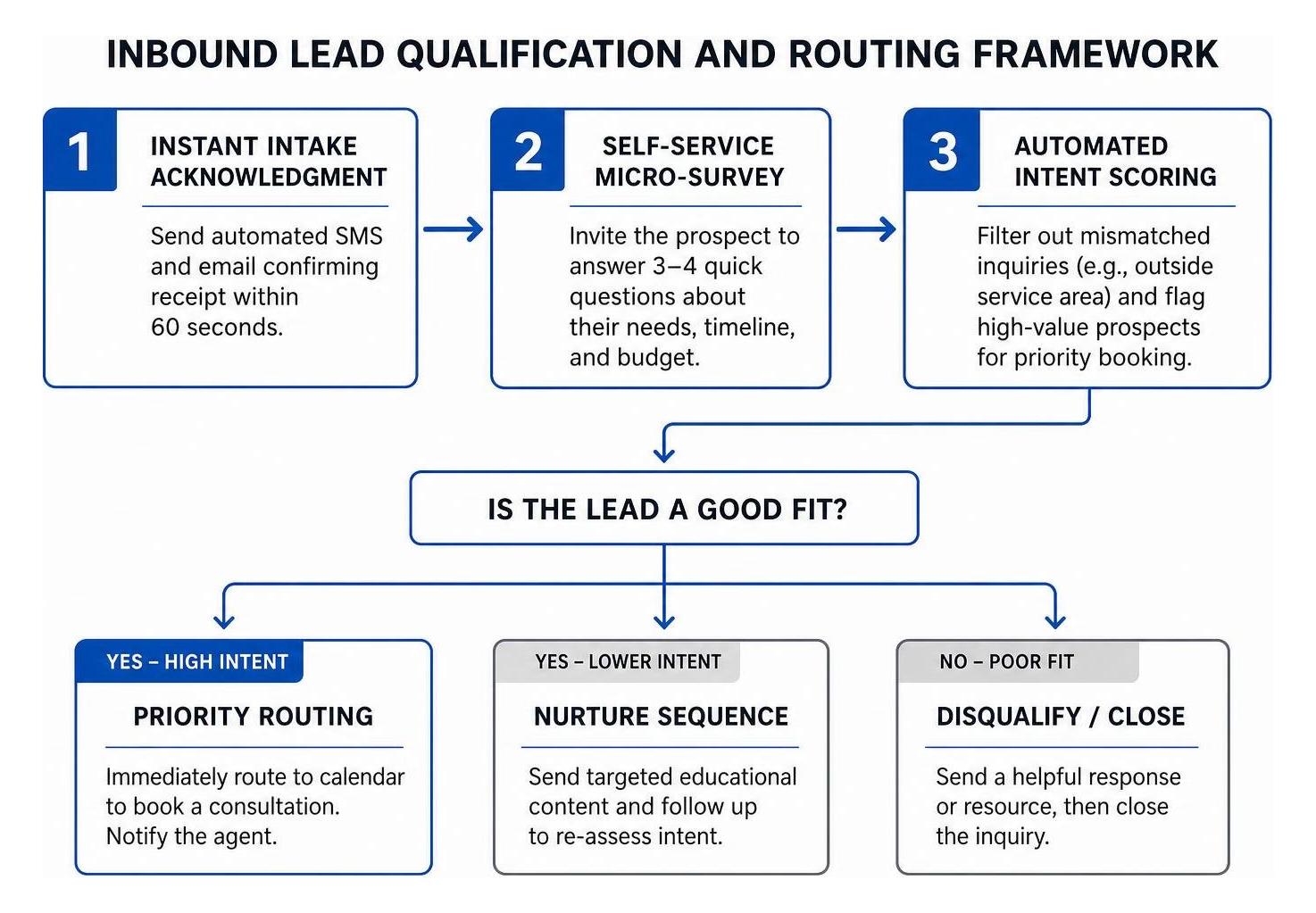
A practical qualification framework looks like this:
- Instant Intake Acknowledgment: Send an automated SMS and email confirming receipt within 60 seconds.
- Self-Service Micro-Survey: Invite the prospect to answer three or four quick questions regarding their needs, timeline, and budget.
- Automated Intent Scoring: Filter out mismatched inquiries (such as service requests outside your operational territory) and flag high-value prospects for priority booking.
- Direct Calendar Scheduling: Route pre-qualified prospects directly to your real-time booking calendar so they lock in their discovery session immediately.
Using automated lead qualification tools frees up your team to focus exclusively on high-value conversations, eliminating hours wasted on administrative back-and-forth. For a broader look at how this fits into a complete client acquisition system, see Wikipedia's overview of lead generation.
Omnichannel Systems and Follow-Up Workflows

Most service booking agents drop the ball not on the first call, but on the fifth touchpoint. Studies consistently show that roughly 80% of service bookings require between five and twelve interactions before the client commits. Yet the vast majority of local business owners call once, leave a voicemail, and then assume the prospect changed their mind.
People get busy, kids get sick, and work emergencies happen. A non-responsive lead is rarely a lost cause; they are usually just distracted. If you want consistent pipeline velocity, you need a structured, multi-channel follow-up cadence that combines email, SMS, and task-driven phone check-ins. If you have ever looked closely at home services lead generation, you know that consistent automated follow-up is often the single biggest difference between a struggling local operator and a fully booked multi-van business.
Automated Workflows to Scale Lead Generation for Agents
Building a reliable follow-up engine does not mean spamming people into oblivion. It means delivering steady, value-focused touchpoints across multiple channels over a 90-day window. Modern client management setups let you build a 12-touch nurture sequence that runs in the background while you are actively training dogs, managing staff, or meeting clients.
Here is what a high-performing 12-touch nurture sequence looks like in practice:
- Day 1 (Immediate): Instant SMS confirmation followed by a personalized email with a direct booking link.
- Day 2: Follow-up text checking if they had any trouble finding a time on your calendar.
- Day 4: Helpful case study or video link showing how you solved a similar problem for a local client.
- Day 7: Short email addressing the top three questions most new clients ask before hiring you.
- Day 11: Quick check-in text to see if their timeline or situation has shifted.
- Day 16: Educational resource (like a training tip sheet or prep checklist) with zero sales pressure.
- Day 23: Mid-month check-in email offering a quick 10-minute discovery chat.
- Day 30: Gentle status update checking if they still need help this season.
- Day 45: Value-first email highlighting a recent seasonal promotion or program opening.
- Day 60: SMS re-engagement asking if their service needs are still active.
- Day 75: Educational email featuring client success stories and recent transformations.
- Day 90: "Closing your file" text and email, which consistently generates a surprising flurry of last-minute bookings from procrastinators.
Using intelligent automated management tools allows booking agents to maintain this rigorous cadence automatically, ensuring no warm opportunity slips through the cracks.
Preventing Lead Decay and Churn Across Long Sales Cycles
When dealing with premium packages, corporate clients, or complex service contracts, decision-making cycles naturally stretch out over weeks or months. This extended timeline creates lead decay, where initial enthusiasm fades and prospects slip into dormancy.
To keep long-cycle leads engaged without annoying them, you must provide ongoing value rather than repetitive "just checking in" messages. Borrowing proven tactics from a structured B2B lead generation strategy, you can sustain interest by sharing market insights, seasonal readiness guides, and clear answers to unspoken budget objections.
Sync your team calendar directly with your intake dashboard so that any re-engaged dormant lead automatically triggers a notification for immediate personal follow-up. When a past prospect clicks a link in your 60-day nurture email, your booking agent should receive an instant alert to reach out while your business is top of mind.
Tech Stack and Pipeline Management for Service Booking Agents

A lead generation system is only as good as the software architecture supporting it. If your client notes live on sticky notes, random spreadsheets, or scattered text threads across three different personal phones, you do not have a business pipeline; you have an administrative hazard.
Scaling your booking volume requires a unified tech stack that automates data collection, tracks lead attribution, and provides clear visibility into every stage of your customer journey. Modern booking engines combine several essential software layers:
- Centralized CRM and Pipeline Tracking: A single source of truth to track leads from first click to completed contract.
- Automated Messaging Engines: Integrated SMS and email tools that execute multi-channel nurture drips without manual intervention.
- Real-Time Scheduling Software: Calendar booking links that sync with team availability and collect intake survey data upfront.
- Call Tracking and Attribution Analytics: Dynamic number insertion and tracking pixels that show exactly which ad campaigns and search keywords produce paying clients.
Essential CRM Tracking and Weekly Performance Metrics
To maintain a healthy booking engine, agents and business owners must look past vanity metrics like website impressions or social media likes. What matters is pipeline velocity, conversion rates, and acquisition costs.
Every week, your booking team should review these four core key performance indicators:
- Speed to First Response: The average number of minutes between a new inquiry and your first personalized touchpoint. Keep this under five minutes for digital inquiries.
- Inquiry-to-Consultation Booking Rate: The percentage of total raw leads that successfully book an initial discovery call or assessment. High-performing setups target 30% or higher.
- Consultation-to-Close Rate: The percentage of completed consultations that turn into signed agreements or paid packages. Target 60% to 80% for qualified inbound traffic.
- Customer Acquisition Cost (CAC): Total sales and marketing spend divided by the number of new paying clients acquired during that period.
Reviewing these metrics weekly reveals exact bottlenecks in your pipeline. If booking rates drop while close rates remain high, your qualification messaging or response speed needs work. If close rates plunge, your upfront qualification criteria may be letting mismatched prospects slip through.
Ethical Data Compliance and Lead Privacy Regulations
As lead capture systems become more sophisticated, maintaining strict compliance with consumer privacy regulations and digital marketing laws is non-negotiable. Whether you are collecting contact information through digital ads, organic landing pages, or opt-in micro-surveys, transparent data handling protects both your clients and your brand reputation.
Never buy shady third-party email lists or scrape personal phone numbers without clear authorization. High-converting service booking relies on explicit opt-in consent, transparent privacy policies, and easy opt-out mechanisms on every automated SMS and email sequence. Capturing verified, permission-based inquiries ensures high deliverability, protects your domain reputation, and establishes immediate trust with your prospects.
Frequently Asked Questions About Agent Lead Generation
How can service agents convert warm leads without cold calling?
Converting warm inbound inquiries without cold outreach comes down to structured qualification scripts and frictionless self-scheduling tools. When a prospect submits an inquiry, immediately provide an automated confirmation that includes a link to choose a specific consultation time on your calendar.
During the initial discovery call, follow a consultative framework: ask open-ended questions about their specific challenges, listen actively to their goals, and clearly outline the exact service package that solves their problem. When prospects feel heard rather than sold to, closing rates increase without any need for aggressive sales tactics.
What core metrics should agents review weekly to assess lead quality?
Lead quality is best measured by tracking response timestamps, survey completion percentages, appointment show-up rates, and pipeline conversion velocity. If your team responds within minutes but prospects routinely ghost scheduled calls or push back aggressively on standard pricing, your top-of-funnel targeting is attracting low-intent traffic. High-quality leads consistently complete upfront intake surveys, show up on time for consultations, and progress from initial inquiry to signed contract within two weeks.
How does seasonal demand impact lead volume for local service booking?
Most local service businesses experience seasonal peaks and valleys throughout the year. For pet care providers, boarding facilities, and trainers, demand surges around major holiday travel seasons and summer vacations, while early winter months may experience brief lulls.
To keep revenue steady during slower periods, deploy targeted seasonal campaigns, introduce off-peak service packages, and activate automated re-engagement workflows for past clients. Building a resilient organic search presence ensures consistent inbound volume regardless of seasonal fluctuations.
Build a Resilient Client Acquisition Engine
Predictable business growth does not happen by accident. It is the natural result of building a clean, automated inbound engine that captures high-intent demand, responds instantly, and nurtures prospects until they are ready to buy.
When you replace manual scrambling with a proven, multi-channel marketing system, you stop worrying about where your next client is coming from and start focusing on delivering exceptional service. At So Fetch Consulting, we help local business owners, pet industry professionals, and service teams install proven marketing engines using our proprietary The S3 System™ content strategy program, tailored Squarespace web design, local SEO, and data-driven ad management.
Ready to build a consistent pipeline of qualified, ready-to-buy clients? Explore our approach to building customized lead generation systems and discover how we can help you scale your business with confidence.
