
Winning Strategies for Modern Home Services Lead Generation
Core Models in Home Services Lead Generation
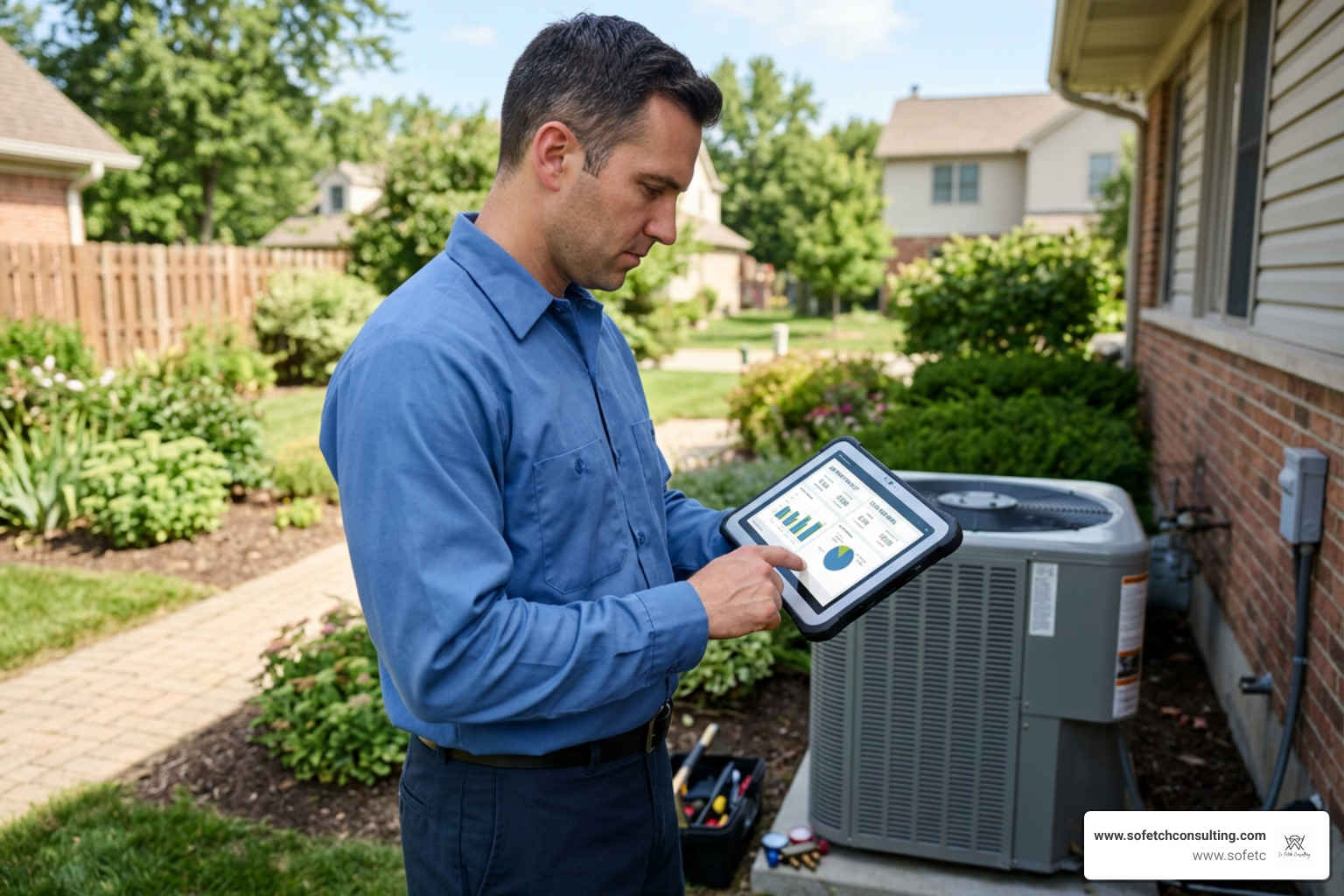
Winning modern home services lead generation comes down to three core strategies: capturing exclusive pay-per-call leads for high-urgency repairs, building owned local search assets for long-term inbound bookings, and automating fast follow-ups to protect your margins. Rather than fighting over shared lists, successful contractors focus on channels where they control the customer relationship directly.
Evaluating lead cost without looking at customer lifetime value and margin protection is risky. If you buy twenty cheap leads and nineteen hang up, you just paid a premium for a single conversation.
When you evaluate customer acquisition models, you are generally looking at three distinct buckets: pay-per-call, shared marketplace leads, and owned digital assets.
| Model Type | Average Upfront Cost | Exclusivity Level | Typical Close Rate | Best Suited For |
|---|---|---|---|---|
| Shared Marketplace Leads | Low ($15 to $60 per lead) | Zero (sold to 3-5 competitors) | 10% to 25% | Filling slow days; quick volume when starting out |
| Pay-Per-Call Platforms | Moderate to High ($35 to $150+ per billable call) | 100% Exclusive (live phone transfer) | 40% to 65% | Urgent trades (plumbing, HVAC, locksmith) needing ready-to-book jobs |
| Owned Programmatic & SEO Assets | Upfront build investment, then low monthly maintenance | 100% Exclusive (direct to your office) | 50% to 75% | Long-term market dominance, lower customer acquisition cost over time |
Why Exclusive Home Services Lead Generation Wins the Margin Game
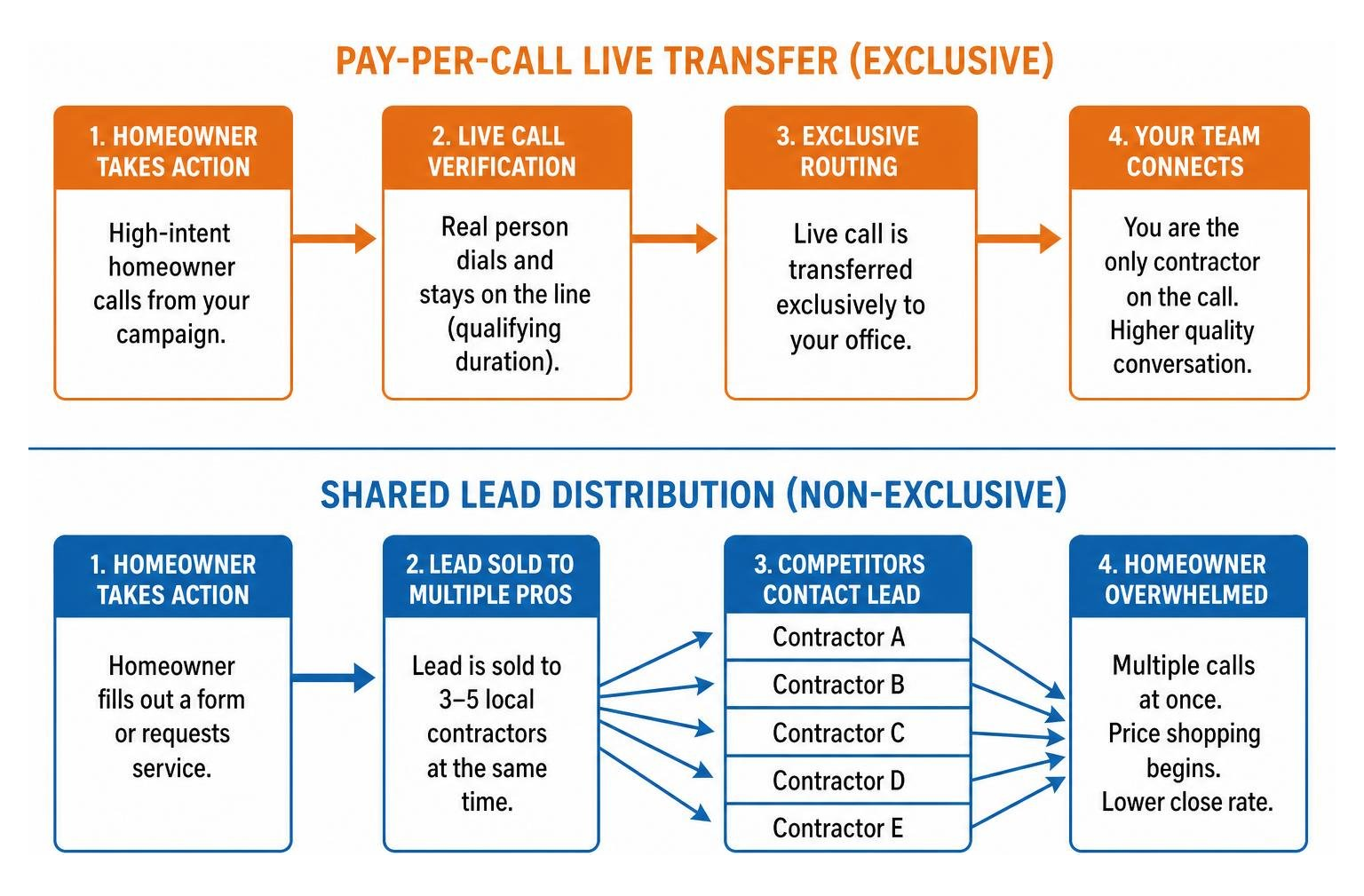
We have all been there. You buy a batch of leads from a third-party aggregator, your phone pings with a notification, and you drop whatever wrench you are holding to dial the number. By the time the homeowner picks up thirty seconds later, they sound exhausted and snappy. Why? Because four other local contractors are already calling them on call waiting. That is the dreaded shared lead feeding frenzy.
Shared leads turn your business into a commodity. When a homeowner is bombarded by five companies at once, the conversation immediately shifts to who can do it cheapest rather than who can do it best. That ruins your profit margins.
Exclusive contractor leads flip this dynamic completely. When a lead comes directly to you through focused campaigns like TradeLead or verified platforms like RenoLeadz, you are the only professional in the room. Platforms offering deep lead verification, such as one-time password (OTP) mobile phone verification, filter out bots, tire-kickers, and fake phone numbers before you spend a dime.
Homeowners avoid contact fatigue, your team gets to have a polite, consultative conversation, and your close rates shoot through the roof.
Pay-Per-Call Versus Pay-Per-Lead and Subscriptions
Not all leads are created equal, and neither are their pricing structures.
- Pay-Per-Lead (PPL): You pay a set fee when someone fills out a web form. The problem? Form fills can sit in an inbox. If a homeowner has a burst pipe or a dead furnace in the dead of winter, they are not waiting around for an email reply.
- Pay-Per-Call (PPC): You pay only when a real, qualified human being dials your dispatch number and stays on the line past a certain duration threshold. High-intent emergency buyers do not fill out forms; they tap the first call button they see. Services like LeadZik lean heavily into this on-demand, qualified model. You only pay for billable calls, meaning repeat callers, wrong numbers, and spammers are completely free.
- Monthly Subscriptions and Retainers: You pay a recurring fee to be listed in a directory or retain an agency. This can work fine, but you shoulder all the risk if call volume drops or if lead quality tanks.
If you are choosing a performance partner, always check their refund policy for disconnected numbers or out-of-area requests. Transparent providers make it easy to dispute bad data with zero hassle.
Owned Search Assets Versus Renting Third-Party Inboxes
Renting leads from massive directories is like renting an apartment: it gives you a roof over your head today, but you build zero equity. The minute you stop paying your monthly rent, the leads vanish overnight.
Owning your search presence is like buying the building. This is where programmatic SEO and localized content come to play. Instead of hoping a directory sends you scraps, you build a network of high-speed, geo-targeted landing pages targeting the exact towns, neighborhoods, and suburbs you serve.
Specialized platforms like LeadGenZilla show the power of building static, geo-targeted search assets that keep ranking and generating calls for years. When a homeowner in your neighboring town searches for emergency AC repair, your dedicated local page shows up, highlights your reviews, and routes the call straight into your dispatch system without an aggregator taking a cut.
Building High-Speed Local Pages That Actually Convert
Nobody waiting on an overflowing water heater is going to sit around for a clunky, five-second page load. If your website takes forever to render on a phone, potential customers will hit the back button faster than you can say "plunger."
Here is how you make localized pages convert like crazy:
- Lightweight, Static Architecture: Ditch bloated page builders that load fifty unnecessary scripts. Keep your core web vitals spotless.
- Instant Click-to-Call Triggers: Put your phone number right at the top of the mobile screen. Make it a sticky header that follows the user as they scroll.
- Frictionless Mobile Booking Widgets: For non-emergency services, embed a clean calendar widget where clients can pick an open slot without playing phone tag.
- Dynamic Number Insertion (DNI): Swap phone numbers dynamically based on whether the visitor came from organic search, Google Maps, or a paid campaign so you know exactly what is working.
Why Most Local Inbound Funnels Collapse
We review tons of local marketing campaigns, and when lead generation fails, it almost always comes down to the same five culprits:
- Bloated Website Templates: Slow, unresponsive pages kill your conversion rate before the homeowner even reads your business name.
- Zero Call Attribution: If your office staff does not know whether a caller came from Google Maps, a flyer, or a local service ad, you cannot calculate your true return on investment.
- Unvetted Lead Forms: Long, complicated forms asking for twelve fields of information scare away mobile users, while completely open forms let spam bots run wild.
- Glacial Office Response Times: In modern home services, speed to lead is everything. Waiting two hours to call back a web inquiry drops your chance of closing by over eighty percent.
- Broken Follow-Up Automations: If you do not send immediate text confirmations or automated quote reminders, that homeowner will simply call the next contractor on their list.
Evaluating ROI, Trade Dynamics, and Growth Tactics
A five-hundred-dollar cost per acquired customer sounds terrifying to a house cleaner doing eighty-dollar jobs. But to a roofer replacing a twenty-thousand-dollar asphalt shingle roof, a five-hundred-dollar acquisition cost is an absolute home run.
To evaluate lead channels properly, you have to look at your trade dynamics, your average ticket value, and your geographic service density.
- Emergency Repairs (Plumbing, Locksmith, HVAC): Characterized by high urgency, shorter sales cycles, and smaller-to-medium ticket sizes. Fast response times and pay-per-call channels shine here.
- High-Ticket Replacements (Roofing, Siding, Full Remodels): Longer sales cycles with larger ticket values. Homeowners will research thoroughly, making verified leads, review-heavy local landing pages, and automated estimate follow-ups vital.
- Route-Based Services (Lawn Care, Pest Control, Pool Maintenance): Lower individual ticket prices, but high lifetime value through recurring subscriptions. Geographic density matters most here to minimize technician drive time.
Modern Tools for Scalable Home Services Lead Generation
You do not need thirty different apps to manage your growth, but you do need a tight stack that talks to each other.
- Field Service Management (FSM): Tools like ServiceTitan, Housecall Pro, or Jobber handle your scheduling, dispatching, and invoicing. They ensure a lead turns into a dispatched truck without getting lost in a paper notebook. In fact, many active contractors increase their platform-driven revenue significantly within their first year simply by streamlining these operational workflows.
- Call Tracking & Attribution: Software like CallRail uses dynamic number insertion to show you the exact keyword or campaign that prompted a phone call.
- Reputation & Review Automation: Platforms like Podium or your CRM's built-in SMS tools can automatically text customers a review link the moment a technician marks a work order complete. Local search rankings thrive on a steady flow of genuine, five-star reviews.
- Automated Follow-Up: Use lightweight CRM pipelines to follow up on open estimates after 24, 48, and 72 hours. Half of winning a job is just being the contractor who actually remembered to follow up.
DIY Tool Stacks Versus Agency Partnerships
Should you manage your marketing in-house with software subscriptions or hire an agency?
If you are an owner-operator running fewer than two trucks, a DIY stack is usually best. Setting up a streamlined website, optimizing your Google Business Profile, using basic call tracking, and handling your own CRM follow-ups will keep overhead low while your schedule fills up.
Once you are managing multiple crews, your internal capacity becomes the primary bottleneck. That is when hiring a digital marketing partner makes sense. A solid agency partner will set up scalable search assets, manage paid search budgets, and deliver clear attribution dashboards.
Just beware of vanity retainers. If an agency cannot tell you your cost per booked call and instead brags about impressions and ad views, show them the door.
Emerging Trends and Real-Time Intent Signals for 2026
The landscape of local marketing changes fast. As we look at current 2026 strategies, relying purely on passive inbound searches is no longer the only game in town. Smart contractors are increasingly tapping into real-time intent triggers from public data sources:
- Building Permit Filings: Monitoring open municipal data for newly issued remodeling or structural permits allows specialty subcontractors to reach out right as a major project begins.
- Deed Transfers and New Movers: Homeowners who bought a property within the last 90 days spend significantly more on immediate repairs, HVAC inspections, and system upgrades than long-term residents.
- Municipal Code Violations: Public notices for exterior code violations, overgrown lots, or roofing issues create immediate, high-urgency outreach opportunities.
- Predictive Weather & AI Routing: Integrating real-time freeze warnings or storm tracking directly into your automated ad spend to capture sudden spikes in emergency pipe-burst or roof repair calls.
By combining public intent triggers with automated, personalized outreach, tradespeople can connect with high-intent homeowners long before they jump into a competitive bidding portal.
Frequently Asked Questions About Contractor Marketing
What is the cheapest way for a contractor to generate high quality leads?
The most cost-effective foundation is optimizing your Google Business Profile, gathering consistent reviews from happy clients, and working your local referral network. These channels take a little time and sweat equity to set up, but the calls they produce are 100% exclusive and have zero ongoing per-lead fees.
How do trade job sizes affect acceptable cost per lead?
Your acceptable cost per lead depends on your close rate and your average gross profit per ticket. If your average HVAC replacement ticket is $8,000 with a 30% close rate, paying $150 for an exclusive, qualified phone lead is extremely profitable. If your average drain clearing ticket is $200, that same $150 lead would completely wipe out your margins.
Why do shared leads convert at lower rates than inbound calls?
Shared leads are sent simultaneously to three to five competing contractors, forcing the homeowner into an overwhelming blitz of calls. This creates massive friction, causes consumer annoyance, and turns the job into a race-to-the-bottom price war. Inbound phone calls, by contrast, are initiated directly by the customer to your business, leading to immediate conversations and significantly higher close rates.
Wrapping It Up and Claiming Your Market
At the end of the day, chasing cheap clicks and wrestling five other contractors over shared scraps is an exhausting way to run a business. True, long-term growth comes from building marketing assets you own, verifying the quality of every incoming lead, answering your phones promptly, and tracking your revenue right down to the dispatch ticket.
If you are ready to stop guessing and start building a real, sustainable pipeline that actually turns into booked jobs, take a look at our custom digital marketing strategies. We help small businesses ditch the fluff, master their local visibility, and build marketing systems that consistently fill the schedule.
