
How to Generate Dog Training Leads That Turn Into Clients

Start where local dog owners look for help: optimize your Google Business Profile, make it easy to book from a phone, and ask happy clients for reviews. Then show your work with short training videos, build referral relationships with groomers and shelters, and follow up with every inquiry quickly. Track which leads become paying clients, not just which posts get likes.
Dog owners are often looking for help with a problem that feels urgent. They need to see that you understand it, trust your approach, and know what to do next. A clear path from search to consultation beats a pile of marketing tactics with no follow-up.
I'm Karin Wright. I've trained dogs professionally since 2008 and run dog training businesses, and I now use that hands-on experience to build dog training lead generation strategies grounded in data, not guesswork.
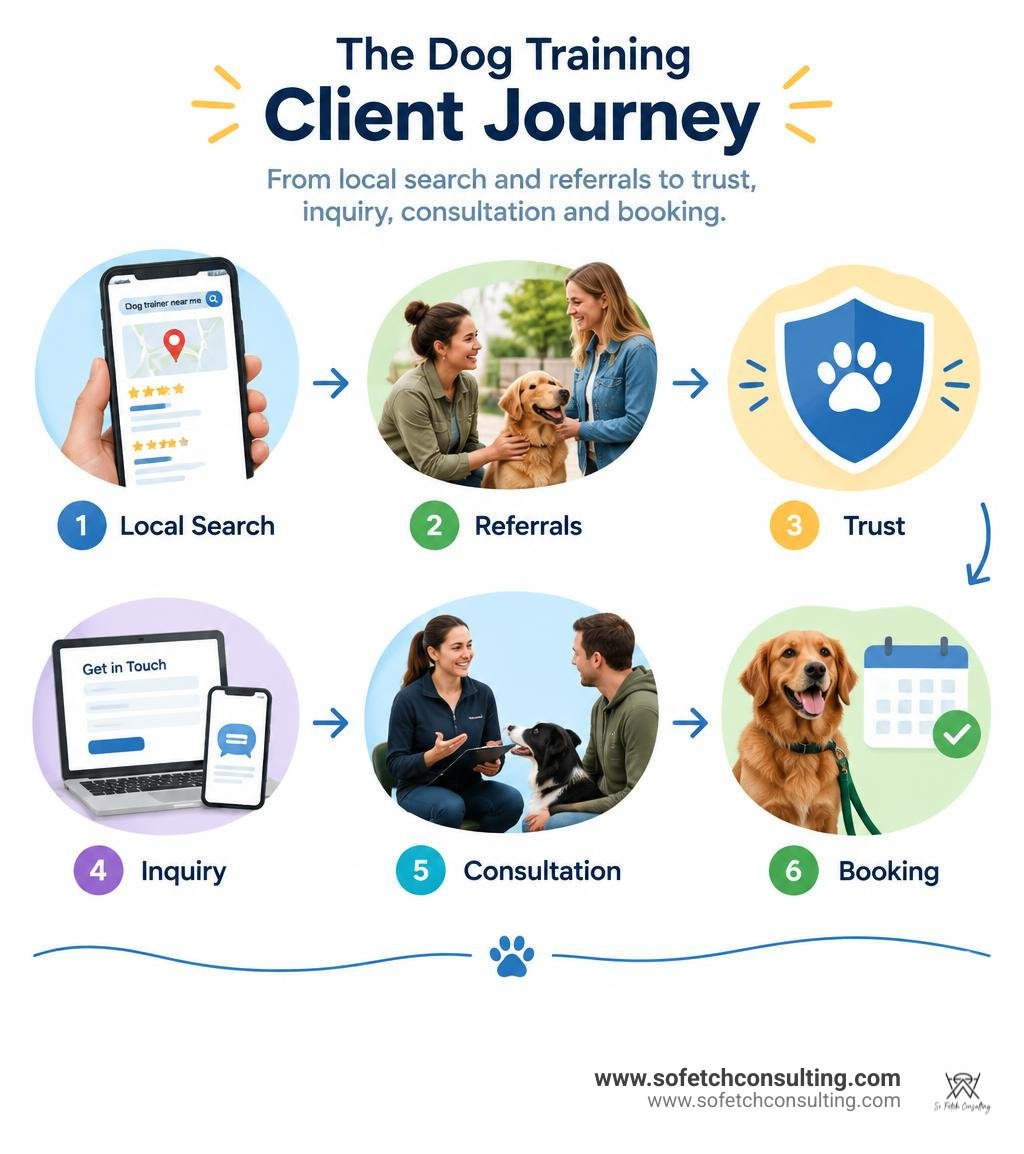
Why Dog Training Lead Generation Requires an Industry-Specific Strategy
Generating leads for a dog training business is nothing like selling roofing, accounting, or routine dental cleanings. In those fields, consumers compare quotes with a cold calculator. When someone types a search query for a dog trainer, they are usually holding a ripped leash, staring at a shredded couch, or nursing a bruised forearm after their rescue dog lunged at a delivery driver.
The US pet industry is massive. Americans spent $152 billion on their pets, and the domestic dog training sector alone accounts for over $9 billion annually across 68 million dog-owning households. Yet, having millions of pet parents in the market does not automatically fill your training schedule.
A staggering 68.5% of all traffic to dog training websites comes from mobile devices. When people search, they do it on their phones while dealing with their pets in real time. If your website is clunky, slow to load, or forces visitors to download a PDF price sheet, they will bounce immediately to your local competitor.
Building an effective client acquisition engine means designing an intuitive mobile pathway. You can check out our inbound lead generation guide for 2026 to see how modern discovery mechanics work across service niches.
The Emotional Psychology Behind Dog Training Inquiries
Dog training prospects reach out during moments of high vulnerability and emotional distress. According to national shelter metrics, roughly 5.8 million dogs and cats enter US shelters every year, and about 30% are surrendered directly by their owners, predominantly due to preventable, fixable behavioral issues. Pet parents frequently carry deep guilt, frustration, embarrassment, and fear.
When a prospect lands on your digital channels, they are not looking for an academic lecture on operant conditioning terminology. They want to know three simple things:
- Have you successfully fixed this exact problem before?
- Will you judge me or treat my dog harshly?
- How quickly can we start making my daily life peaceful again?
Your messaging must immediately validate their struggle, present a calm, structured solution, and lower the friction required to ask for help.
Structuring a Multi-Tiered Dog Training Lead Generation Value Ladder
Trying to sell a $2,500 board-and-train package directly to cold traffic from an Instagram post is an uphill battle. A sustainable dog training business relies on a structured value ladder where low-friction entry offers naturally nurture clients toward premium programs.
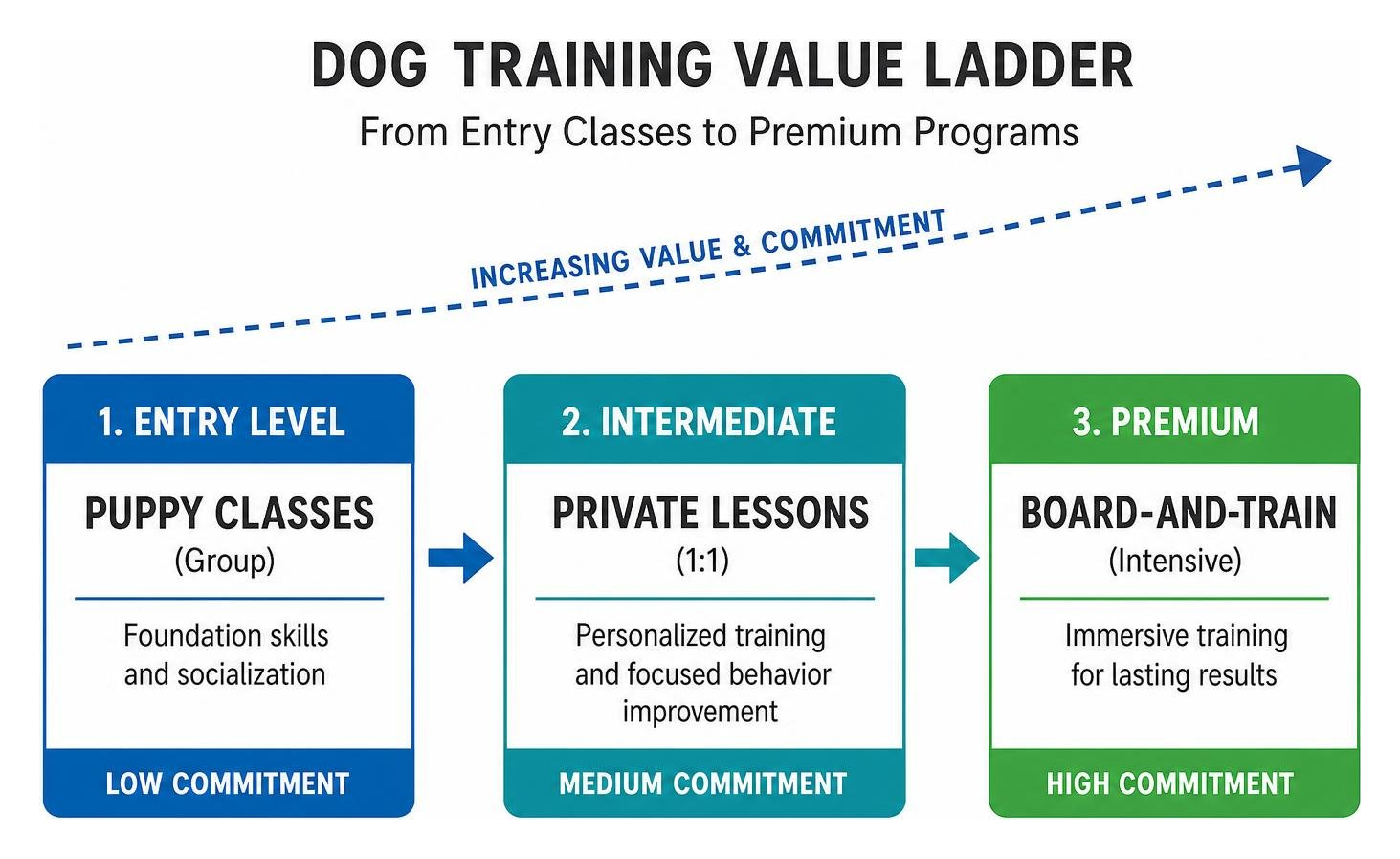
Here is how a balanced dog training service ladder aligns with specific lead generation channels:
| Service Tier | Typical Price Range | Best Acquisition Channel | Primary Client Mindset |
|---|---|---|---|
| Top-of-Funnel Entry (Puppy Socialization / Pack Walks) | $25 to $50 / session or Free Community Event | Local Social Media, Rescue Partnerships | Proactive, budget-conscious, seeking community |
| Core Group Programs (Basic & Advanced Obedience) | $150 to $350 (6-week course) | Google Business Profile, Local SEO | Prevention-focused, standard manners |
| Private Behavioral Coaching (In-Home / Custom Lessons) | $75 to $200 / hour (or $600 to $1,200 packages) | Google Search Ads, Vet Referrals | Specific friction points (reactivity, counter-surfing) |
| High-Ticket Immersion (Board-and-Train Programs) | $800 to $2,500+ per engagement | Transformation Videos, Paid Search Landing Pages | High urgency, severe issues, busy professionals |
| Continuity & Digital (Alumni Clubs, Online Courses) | $30 to $100 / month or $150 digital product | Email Nurture Sequences, Client Retention Hub | Sustained maintenance, skill enrichment |
Core Channels for Dog Training Lead Generation

To build a recession-proof business, you cannot rely entirely on a single platform. If an algorithm shifts or ad prices spike, an isolated pipeline collapses. We focus on building an integrated, multi-channel discovery engine for pet professionals, blending organic visibility, video assets, and community networks into our specialized marketing for dog trainers.
To see how local service firms scale across diversified acquisition channels, review these multi-channel local service strategies.
Dominating High-Intent Search with Google Business Profile and Local SEO
When a dog owner searches for dog trainers near me or puppy aggression training in [city], they have immediate purchasing intent. Winning these searches starts with your Google Business Profile (GBP) and capturing the local Google 3-pack.
The average rated US dog trainer holds an impressive 4.71 stars, making it one of the most highly rated local service industries in the country. Because the bar is high, standing out requires disciplined optimization:
- Target Review Depth and Recency: Trainers with 30 or more Google reviews sitting at a 4.7-star rating or higher consistently capture the top map positions in mid-sized US markets. Set up an automated prompt asking clients to mention their dog's breed and specific behavioral problem in their review.
- Weekly Media Updates: Upload weekly geotagged photos and short video clips of training sessions directly to your GBP.
- Targeted Service Descriptions: Do not just list "Dog Training." Create discrete service entries for Puppy Potty Training, Leash Reactivity Rehabilitation, Off-Leash Recall, and Board and Train.
- Local Landing Pages: Build dedicated city and neighborhood service pages on your website featuring localized schema markup.
Applying these effective lead generation tactics ensures you capture high-intent organic traffic right when frustration peaks.
Transformation Video Marketing and Social Media Proof
Video is the undisputed champion of pet industry marketing. Before-and-after behavioral transformation videos are the single highest-converting content format available to dog trainers.
Static images of a dog sitting in a training facility cannot prove emotional stability. Showing a 15-second clip of a Belgian Malinois lunging violently at passing bicycles, followed by a clip of that same dog walking calmly on a loose leash past traffic two weeks later, creates undeniable authority.
- Short-Form Channels (TikTok & Instagram Reels): TikTok dog training content yields an average engagement rate of 5.5%, outperforming Instagram's 2.8%. Post short, punchy transformation clips tagged with your city, local dog parks, and neighborhoods.
- Long-Form Authority (YouTube): Independent trainers with 5,000 or more YouTube subscribers regularly pull 20 to 40 qualified inbound inquiries every single month directly from their video tutorials.
- Video Client Testimonials: Direct video interviews with past clients are 3 to 5 times more persuasive than written website quotes when closing high-ticket board-and-train packages.
Building an Untapped Referral Network Beyond Veterinary Clinics
Most trainers drop off business cards at local vet clinics, put their hands in their pockets, and wonder why the phone never rings. Veterinarians are extraordinarily busy and frequently inundated with promotional flyers.
To build a reliable local referral engine, expand your outreach to adjacent pet professionals:
- Professional Dog Groomers: Groomers regularly deal with dogs suffering from handling sensitivity, table anxiety, and severe grooming reactivity. Offer to run a free handling workshop for their staff or provide priority booking for their most challenging canine clients.
- Animal Shelters and Rescues: Create an exclusive "New Adopter Foundation Package" included in their adoption paperwork to help lower surrender rates.
- Pet Sitters and Dog Walkers: Walkers know exactly which dogs pull violently, jump on guests, or exhibit barrier frustration. Pay them a referral commission or exchange cross-promotional client spotlights.
- Upscale Property Managers: High-density apartment complexes frequently struggle with barking complaints and leash reactivity in hallways. Introduce yourself to leasing offices as their dedicated on-call behavioral problem solver.
Paid Advertising and High-Converting Funnel Architecture
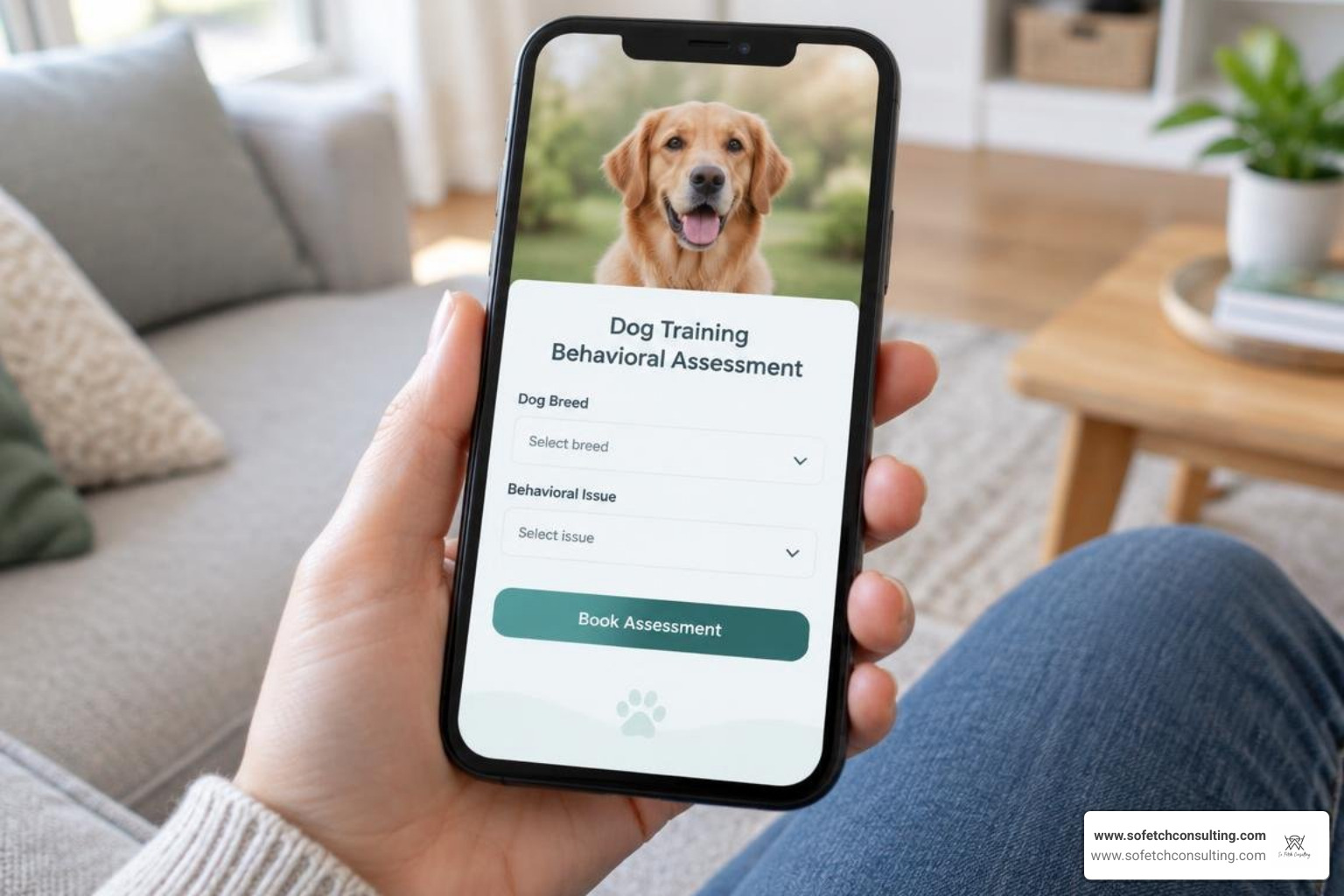
Organic strategies build long-term brand equity, but paid advertising offers on-demand client acquisition when you have open spots to fill. Learn more about structural funnel design by examining these proven pet service sales funnels.
Google Ads and Hyper-Local Social Ad Campaigns
Paid search and paid social play two entirely different roles in your funnel:
- Google Search Ads (PPC): Captures active buyers searching for urgent behavioral solutions. Industry benchmarks show Google Ads for dog training convert at an average rate of 6.8%. Expect a cost per lead ranging from $25 to $40 for basic group obedience, and $85 to $120 for high-ticket board-and-train inquiries.
- Meta Ads (Facebook & Instagram): Excellent for proactive, top-of-funnel programs such as new puppy manners, holiday obedience, and pack walks. When targeting local pet owners within a 5 to 10 mile radius of your facility using before-and-after video creatives, lead costs typically range between $15 and $40 per lead.
Explore scalable campaign frameworks across our dedicated marketing lead generation techniques.
High-Converting Landing Pages and Speed-to-Lead Automation
Sending paid ad clicks to your generic website homepage wastes budget. Standard websites convert at roughly 3.5%, whereas dedicated, single-offer landing pages convert at 7.2%.
Your landing page must be built mobile-first, load in under two seconds, feature video proof above the fold, and include a clear qualification form rather than a vague contact box.
Speed-to-lead is where most trainers lose revenue. Contacting a lead within an hour makes you roughly seven times more likely to have a meaningful conversation than waiting longer. If you reply within five minutes using automated text messaging, your booking rates jump dramatically.
Nurturing Slow Deciders with Automated Email Marketing Sequences
Not every dog owner is ready to spend $1,500 on the day they first find your website. Many deliberate for weeks while their dog's behavior slowly deteriorates.
Dog training email marketing generates an impressive 26.9% open rate, outperforming global cross-industry averages. Capture email addresses with valuable lead magnets, such as:
- The 5-Step Emergency Guide to Stopping Leash Reactivity
- The First 48 Hours: Surviving Your New Rescue Dog
- Puppy Potty Training Cheat Sheet & Daily Schedule
Once subscribed, drop prospects into an automated 5-part nurture sequence structured around clear customer journey messaging:
- Day 1 (Value Delivery): Deliver the guide with zero pitch, sharing one actionable tip they can apply immediately.
- Day 3 (The Core Problem): Explain why standard internet tips fail for complex behavioral issues.
- Day 5 (Case Study Transformation): Share a client story with video proof showing a dog with their exact struggle.
- Day 8 (Handling Objections): Address common client doubts regarding time commitments, household consistency, and positive training methods.
- Day 12 (Direct Call to Action): Offer a paid in-person evaluation or phone consultation.
Pricing, Packaging, and Tracking for Maximum Client Lifetime Value
Lead generation only builds wealth if your business model extracts healthy margins from every client you acquire. If you are refining your back-office structure, review our comprehensive dog training business plan alongside actionable insights on how to grow your dog training business.
Value-Based Package Pricing vs. Hourly Rate Pitfalls
Charging by the hour is the fastest route to burnout. When you bill $100 per hour, clients view you as an expense to minimize, cutting sessions short right before real behavioral changes stick.
Shift entirely to outcome-based package pricing:
- Position as an Expert Prescriber: After an initial paid behavioral assessment, diagnose the issue and prescribe a comprehensive program (e.g., The 6-Week Calm Canine Program or The 3-Week Immersion Board-and-Train).
- Anchor Your Tiers: Present three options: Core, Intensive, and VIP Maintenance. Most clients naturally select the middle tier.
- Charge for Assessments: Charging a modest fee (such as $75 to $150) for your initial evaluation eliminates tire-kickers who only want free advice while establishing clear professional value.
Key Performance Metrics for Dog Training Lead Generation
To scale predictably, track these essential business metrics every single month:
- Cost Per Lead (CPL): Total ad spend divided by total form submissions or inbound calls.
- Inquiry-to-Assessment Conversion Rate: The percentage of raw inquiries that book a paid consultation (benchmark: 25% to 40%).
- Assessment-to-Program Close Rate: The percentage of evaluated dogs that enroll in full training packages (benchmark: 60% to 80%).
- Customer Retention Rate: The average client retention rate for dog trainers is 28%. Clients who finish basic puppy manners should consistently graduate into advanced off-leash training, agility, or monthly alumni clubs.
- Average Customer Lifetime Value (LTV): Total revenue earned across all programs, follow-up sessions, and gear sales per acquired client.
Frequently Asked Questions About Dog Training Leads
What is the average cost per lead for dog training services?
Paid search leads generally range between $25 and $120. Standard puppy manners and group obedience classes fall into the $25 to $40 range, while intensive behavioral modification and board-and-train programs run between $85 and $120 per qualified lead due to higher competition and higher purchase value.
How can new dog trainers generate leads without an advertising budget?
New trainers should start by fully optimizing their Google Business Profile to capture zero-cost local search traffic, building referral partnerships with local groomers and animal shelters, hosting free weekend pack walks at busy public parks, and consistently posting short before-and-after video clips on local social media groups.
How quickly should dog trainers follow up with inbound inquiries?
You should respond within 10 to 15 minutes whenever possible. Following up within an hour makes you roughly seven times more likely to connect with the owner than waiting half a day. Utilizing automated SMS confirmations and direct calendar booking links ensures prospects get an immediate touchpoint even while you are actively working with dogs.
Scale Your Dog Training Business with a Predictable Inbound Engine
You did not get into dog training to spend your evenings wrestling with ad managers, debugging broken landing pages, and guessing why website visitors are not picking up the phone. You got into this business because you love helping dogs and giving their owners their sanity back.
Building an automated, predictable client acquisition machine gives you the breathing room to do your best work without stressing over next month's calendar. Whether you are laying the foundation for your first local service area with our guide on how to start a dog training business or scaling a multi-trainer facility, we can help you build an inbound system that works as hard as you do.
