
Core Criteria to Evaluate B2B Lead Generation Agencies

Reliable lead generation agencies share a few non-negotiable traits: they blend AI automation with human judgment, they verify data to at least 95% accuracy, and they run multi-channel outreach instead of leaning on one fragile channel. If a partner cannot show you how they source, scrub, and qualify prospects before a single message goes out, keep looking.
Choosing the right partner from the sea of lead generation agencies out there can feel like navigating a minefield. Everyone promises a calendar bursting with decision-makers, but very few talk about what happens when those leads actually show up on Zoom. Spoiler alert: half of them might not even know why they are there if your agency is cutting corners.
When evaluating external partners, your main objective is finding an outfit that understands how modern revenue pipelines function. You want a team that respects your brand reputation, deeply understands your total addressable market, and builds a sustainable b2b lead generation strategy rather than blasting out digital spam.
How Top Lead Generation Agencies Blend AI Automation with Human Judgment
AI has completely flipped the marketing world upside down, but relying purely on automated bots to run your entire prospecting pipeline is a fast track to the spam folder. In recent benchmarks across 7.5 million outbound emails, reply rates dropped by 20% over the last year. Why? Because decision-makers are drowning in generic, robotic outreach that takes two seconds to spot and delete.
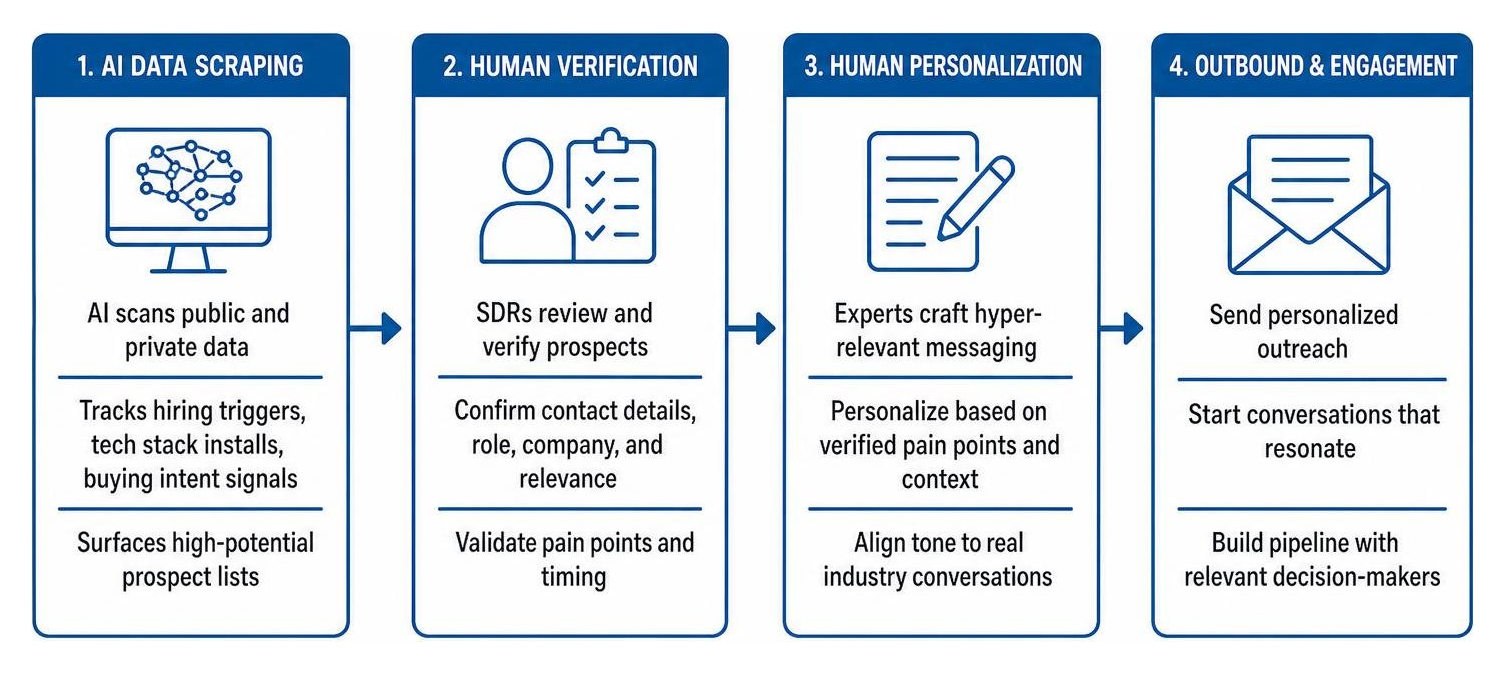
The top performers today do not use AI to replace human intellect; they use it to scale human capability. They lean on machine learning to scan hundreds of public and private data points, track real-time hiring triggers, spot tech stack installations, and monitor buying intent signals.
Once the data is surfaced, human strategists step in to craft hyper-relevant messaging. Real people review the prospect lists, verify the pain points, and tweak the messaging tone so it sounds like a conversation between two industry professionals. This balance between algorithmic data scraping and human discernment is the secret sauce behind successful done-for-you outreach programs.
Evaluating Industry Fit, Sourcing Data, and Lead Qualification
A shiny agency portfolio means nothing if their entire playbook was built for enterprise fintech while you sell commercial fit-outs or specialized business services. You need an agency that already understands the buying committees, sales cycle quirks, and regulatory headaches of your specific sector.
Data integrity is the bedrock of any outbound campaign. Premier agencies maintain a 95% data accuracy benchmark by running multi-layered verification routines before a single message goes out. They combine enterprise data tools with manual verification to ensure direct dials and corporate email addresses are active, protecting your domain health and keeping bounce rates below 2%.
Qualification criteria must also be rock solid. Ask prospective partners how they define a sales-qualified opportunity:
- Budget and Authority: Are they speaking directly to decision-makers who control budget allocations?
- Need and Timing: Has the prospect shown active intent or acknowledged a pressing operational pain point?
- Exclusivity: Are these leads worked exclusively for your pipeline, or are they being recycled across three competitors?
- Seamless CRM Handoffs: Do they push lead data, call recordings, and email interaction history straight into your CRM system without manual intervention?
Comparing Outreach Channels and Pricing Models for Maximum ROI
Relying on a single communication channel to carry your entire pipeline is asking for trouble. If your chosen channel suffers deliverability issues, algorithm updates, or platform restrictions, your pipeline dries up overnight. Building a healthy flow of business opportunities requires balancing outbound prospecting with an inbound lead generation guide 2026 mindset so prospects encounter your brand across multiple touchpoints.

Single-Channel vs. Omnichannel Outreach Strategies
Single-channel outreach, like cold emailing in a silo or cold calling off a spreadsheet, rarely delivers reliable pipeline anymore. A single phone call attempt connects only 9.9% of the time. However, when you coordinate that dial with LinkedIn touches and tailored emails, connection rates surge to 24.5%. That is a massive 2.5x increase in conversation volume just by syncing your channels.
| Outreach Channel | Primary Strengths | Inherent Weaknesses | Optimal Use Case |
|---|---|---|---|
| Cold Email | Scalable, cost-effective, easily automated | High inbox deliverability risk, falling reply rates | Broad TAM, tech buyers, clear feature-led offers |
| LinkedIn Prospecting | High trust, professional context, direct access | Message volume caps, platform policy restrictions | Executive leadership, consultants, niche B2B niches |
| Cold Calling | Immediate real-time feedback, fast qualification | Resource-heavy, low standalone connect rates | Local services, industrial sectors, high ACV deals |
| Omnichannel Engines | 24.5% connection rate, cross-channel air cover | Complex technical setup, higher operational cost | Mid-market to enterprise B2B sales cycles |
By combining these outreach methods into a unified cold email and sales infrastructure setup, each touchpoint reinforces the last. A prospect might see your connection request on LinkedIn, read an insightful email the next morning, and pick up the phone when your SDR calls that afternoon because your brand is already familiar.
Retainers, Pay-Per-Lead, and Performance Pricing Models
Pricing structures in the lead generation world dictate where the risk sits. Agencies generally work off three commercial frameworks: monthly retainers, pay-per-lead (or pay-per-appointment), and hybrid performance models.
Monthly retainers provide predictable cash flow for agencies and allow them to invest heavily in custom data builds, dedicated technical infrastructure, and senior copywriters. Pay-per-lead models shift the upfront risk to the agency, but they come with a catch: agencies are heavily incentivized to relax their qualification standards just to hit their numbers.
| Model Type | Typical Price Range | Financial Risk | Lead Quality Risk | Best Fit For |
|---|---|---|---|---|
| Fixed Retainer | $2,500 to $8,000+ / mo | Client absorbs risk | Low (focus is on process) | Established firms with proven sales motions |
| Pay-Per-Lead | $150 to $600+ / lead | Agency absorbs risk | High (incentive to push weak leads) | Startups testing product-market fit |
| Hybrid Model | Base fee + $150 to $350 / SQL | Shared risk | Balanced (aligned incentives) | Scaling companies wanting accountability |
Before signing any agreement, establish clear Service Level Agreements (SLAs). Define what constitutes a legitimate, billable meeting, set attendance criteria, and establish no-show replacement policies so you never pay for empty calendar slots.
How to Vet and Pilot an Agency Before Long-Term Commitment
Committing to a 12-month agency contract without testing their operational rigor is a recipe for heartbreak. The smartest approach is treating agency selection like an executive hiring process: run a structured pilot, establish objective scorecards, and integrate their daily output with your broader marketing lead generation initiatives.

Red Flags to Avoid When Vetting Lead Generation Agencies
Keep an eye out for these operational warning signs during your agency discovery calls:
- 🚩 Guaranteed Deal Volumes: Outbound marketing creates sales conversations, not guaranteed closed revenue. Any agency promising a specific revenue figure is cutting corners or setting you up for disappointment.
- 🚩 Pre-Packaged, Static Contact Lists: If an agency claims to possess a static database of millions of ready-to-buy contacts, run. High-performing outbound requires dynamic, signal-based data sourcing built fresh for your campaign.
- 🚩 Vague Lead Qualification Definitions: If their definition of a qualified meeting is simply "someone who agreed to a 15-minute chat," you will end up with students, job seekers, and confused junior staff on your calendar.
- 🚩 No Dedicated Account Leadership: If you are passed from a charismatic sales rep to an anonymous, unmonitored ticketing desk, campaign optimization will stall.
- 🚩 Refusal to Grant Inbox and Data Transparency: You should always own your prospect data, have visibility into sending infrastructure, and see the exact copy being distributed under your brand name.
Designing a Low-Risk Paid Pilot and Seamless Sales Integration
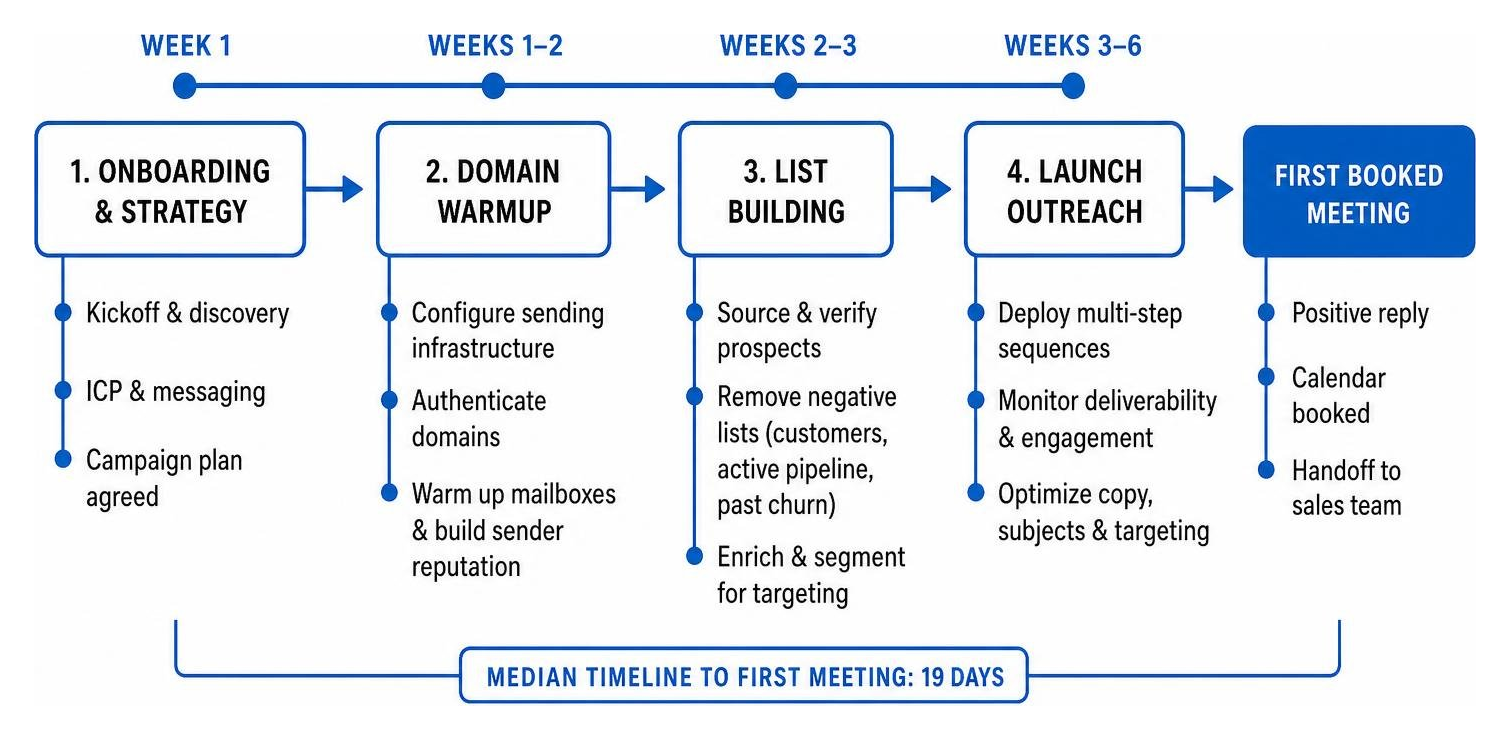
Before locking into an extended agreement, propose a focused 4-to-6 week paid pilot. This gives the agency ample time to configure dedicated sending domains, warm up mailboxes, build custom target lists, and launch initial outreach sequences.
Across client campaigns, the median timeline from initial launch to the first booked appointment sits right at 19 days. A 6-week pilot provides more than enough runway to measure initial reply rates, message resonance, and meeting quality.
To ensure smooth collaboration, set up clear account handoff rules:
- Define Negative Target Lists: Supply the agency with active pipeline opportunities, existing customers, and past churned accounts to prevent embarrassing duplicate outreach.
- Establish CRM Workflows: Map out automated lead routing so positive replies trigger instant calendar bookings and notification alerts to your internal account executives.
- Weekly Pipeline Syncs: Hold brief, weekly alignment calls during the pilot to review lead quality, discuss prospect objections, and refine target parameters in real time.
Frequently Asked Questions About B2B Lead Generation
How long does it typically take a lead generation agency to book the first qualified meeting?
Most structured outbound campaigns land their first qualified sales meeting within 2 to 4 weeks post-launch, with the median industry benchmark sitting around 19 days.
This ramp period is necessary because high-tier agencies spend the first two weeks setting up dedicated technical infrastructure, configuring DNS records, warming up mailboxes, and scrubbing target account lists.
Timelines also vary significantly by industry. Highly technical or regulated sectors with large buying committees, such as enterprise healthcare or financial services, often require 3 to 5 weeks to build trust and coordinate schedules.
Simpler B2B offerings with short sales cycles can generate meetings in as little as 7 to 10 days.
What specific questions should I ask to evaluate an agency's data enrichment quality?
To properly vet an agency's data pipeline, ask these specific operational questions:
- What primary data providers and scraping tools do you use to build raw prospect lists?
- What real-time verification layers do you run to ensure corporate email deliverability and avoid spam traps?
- How do you track and verify direct-dial phone numbers before SDRs begin calling?
- What is your guaranteed bounce rate ceiling, and what happens if campaign bounces exceed 2%?
- How do you handle regional data privacy regulations such as GDPR, CCPA, and CAN-SPAM Act compliance?
How do I prevent account collisions between an external agency and internal sales reps?
Preventing collisions requires clear operational boundaries and synced software tools. First, maintain a dynamic exclusion list inside your CRM that automatically syncs with your agency partner, blocking them from contacting open opportunities, active client accounts, and protected strategic targets.
Second, implement clear territory or vertical mapping; assign the external agency specific industries, company size tiers, or geographic regions that your internal sales reps do not actively prospect.
Finally, schedule a bi-weekly pipeline review between your agency account manager and internal sales leaders to resolve territory overlaps and review outbound account assignments.
Scaling Your Pipeline with the Right Growth Strategy
Building a predictable, high-value pipeline is not about chasing the newest marketing gimmick or spamming thousands of inboxes. Real, repeatable revenue growth happens when your outbound prospecting, inbound organic visibility, and content systems work together as one cohesive engine.
Whether you are looking to fix broken outbound prospecting or strengthen your organic footprint, we build full-funnel marketing ecosystems that turn casual interest into loyal clients. Ready to transform your customer acquisition from an unpredictable headache into a streamlined revenue driver? Discover how our comprehensive lead generation services help small businesses, niche providers, and service professionals build sustainable, high-converting pipelines today.
