
How to Launch a Dog Training Business on Solid Ground

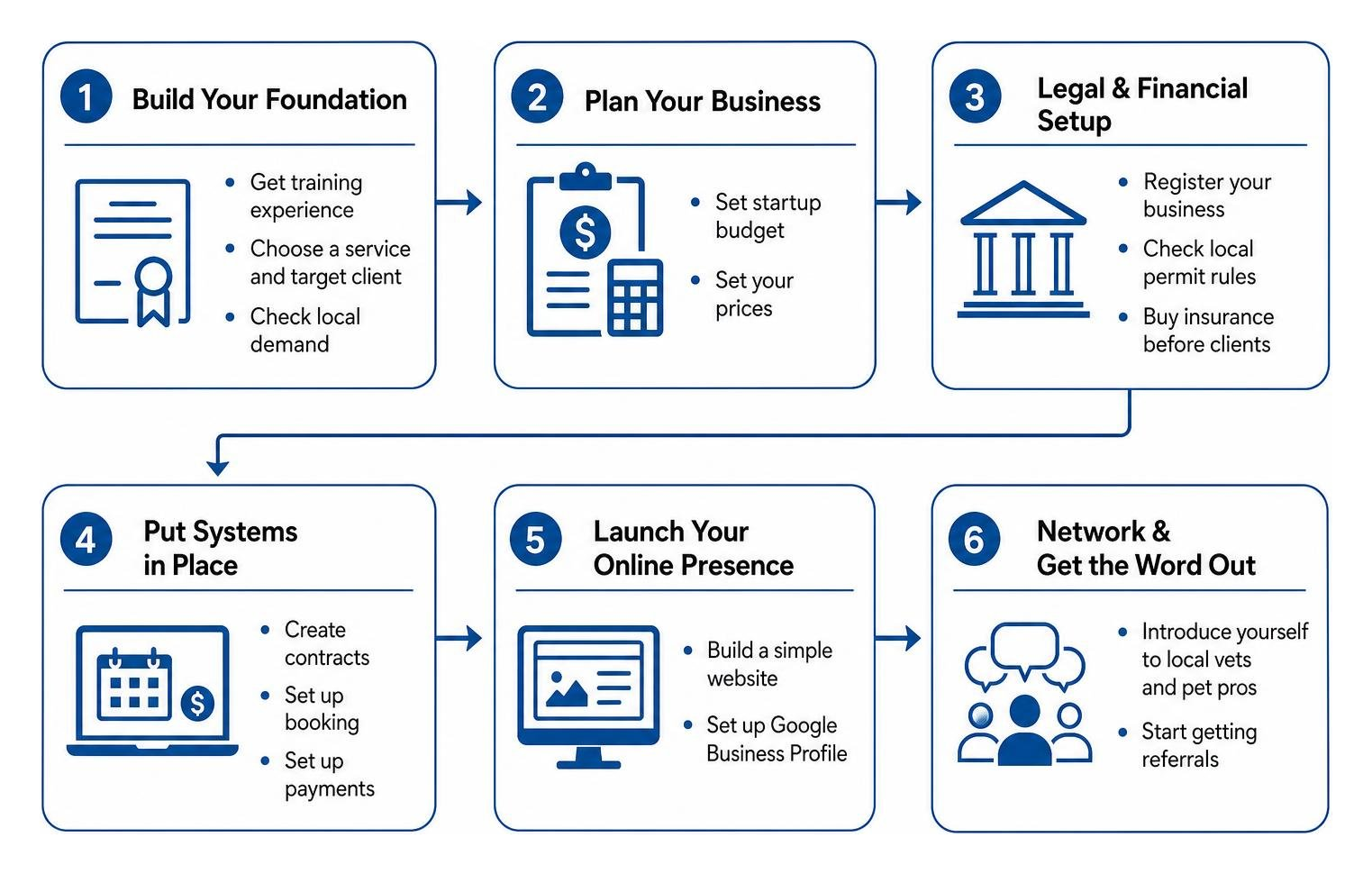
Start with your skills, then build the business around them. Get hands-on training experience, choose a service and target client, and check local demand. Next, set a startup budget and prices, register your business, check local permit rules, and buy insurance before taking clients. Put contracts, booking, and payments in place. Then launch a simple website, set up a Google Business Profile, and introduce yourself to local vets and other pet professionals.
You can start with in-home lessons instead of paying for a facility. Lower overhead gives you room to find clients and test your offer before you expand.
I'm Karin Wright, a dog trainer since 2008 who has also run dog walking, boarding, and training businesses. Today I help owners build data-led marketing plans at So Fetch Consulting, and this guide shows you how to launch a dog training business without relying on hope and vibes.

The pet care market is booming. Demand for certified dog trainers has jumped over 15% across the last five years, with an expected expansion of 9.35% through 2034. With roughly 85 to 90 million pet dogs across the US and a massive chunk of owners dealing with leash pulling, reactivity, or destructive puppy chewing, pet parents need professional support.
Launching a solo practice does not require taking on massive commercial debt. A solo trainer can easily achieve 70% to 85% profit margins because there is almost no cost of goods sold. When built properly, a solo venture can serve 50 to 200 clients in Year 1, producing $45,000 to $110,000 in gross revenue and netting $30,000 to $80,000 in pure owner profit.
Here is how to set up your business so you can skip the expensive mistakes and start booking paid clients immediately.
Step-by-Step Blueprint: How to Launch a Dog Training Business
Building a sustainable business takes more than loving dogs. It requires a solid operational foundation. Around 20% of new small businesses fold within their first 12 months, and nearly 50% shutter within five years. That failure rate usually has nothing to do with training mechanics; it comes down to messy bookkeeping, bad pricing, or treating client acquisition like an afterthought.
Phase 1: How to Launch a Dog Training Business with the Right Education and Credentials
Anyone can buy a treat bag and print business cards, but formal credentials instantly give you authority. Certified dog trainers routinely earn up to 60% more than non-certified competitors. While formal licensure is not legally mandated in most regions, working through an accredited body functions as consumer proof that you know your stuff.
Target gold-standard credentials such as:
- CCPDT-KA (Certified Professional Dog Trainer - Knowledge Assessed): Demands hundreds of hours of hands-on experience and a comprehensive psychometric exam covering learning theory and ethology.
- KPA CTP (Karen Pryor Academy Certified Training Partner): An intense, science-backed curriculum rooted in positive reinforcement and marker training.
- IAABC (International Association of Animal Behavior Consultants): Highly regarded for trainers stepping into complex behavior modification like aggression, separation anxiety, and fear reactivity.
Modern pet owners want force-free, humane techniques backed by behavioral science. Positioning yourself as a positive-reinforcement specialist protects your brand reputation and opens doors with local veterinarians. If you are curious about my journey transitioning from hands-on work with dogs to running a digital marketing agency, read about my background as a dog trainer turned marketer.
Phase 2: Choosing Your Business Model and High-Yield Niche
Trying to be everything to every dog owner is a surefire way to burn out while competing on price. Picking a clear service model and specialized niche lets you charge premium rates from day one.
Consider these standard business structures:
- In-Home / Mobile Private Training: The lowest-barrier model. You drive to the client's home or neighborhood. Startup expenses stay tiny because you do not have commercial rent.
- Board-and-Train: High-ticket and intensive. You house and train the dog either in your private home or an inspected facility.
- Facility-Based Training: High fixed overhead, but allows high-volume group classes, day-training programs, and puppy socials under one roof.
- Virtual / Hybrid Coaching: Ideal for separation anxiety cases, pre-puppy consultations, and basic human coaching where the dog's physical presence in front of you is unnecessary.
When it comes to niches, puppy foundations and leash reactivity remain two massive money-makers. If you do not own a massive fenced property for reactive sessions, you can use Sniffspot private dog park rentals to secure quiet, private, fully-fenced fields by the hour.
Your brand identity starts with your business name. Make sure you pick something that resonates with your ideal client by reviewing our Dog Training Name Guide 2026.

Phase 3: Legal Setup, Insurance, and Financial Planning
Do not train a single dog until your legal and financial house is in order.
First, form a legal entity, such as an LLC (Limited Liability Company), to separate personal assets from company liability. Register your business with your state, apply for a Federal Employer Identification Number (EIN) with the IRS, and open a dedicated business checking account. Never mix personal and business funds.
Next, get comprehensive insurance. A single dog bite, slip-and-fall, or runaway pup can trigger tens of thousands of dollars in medical and legal costs. With providers like Pet Care Insurance, basic liability policies start around $29.43 per month, making it an easy expense to absorb. Considering that the average pet care claim payout is $1,758, going without coverage is an unforced error. Review essential pet care insurance coverage details to make sure your policy includes:
- General Liability: Covers third-party bodily injury and property damage.
- Animal Bailee: Covers medical care if an animal in your custody is injured, lost, or falls ill.
- Veterinary Expense Reimbursement: Helps cover emergency clinic trips during training hours.
A disciplined solo trainer can get fully operational with just $3,000 to $15,000 in startup capital. Create an accurate financial forecast by putting together a comprehensive dog training business plan before spending money on branded merch or fancy accessories.
Pricing and Packaging Strategies for Maximum Profitability
If you sell your services by the single hour, you will hit an income ceiling fast. Selling 60-minute blocks forces you into a hamster wheel where you must constantly chase new leads just to maintain your baseline income.
The Dog Training Yield Ladder: Move up the ladder to increase your revenue per booked hour.
Designing High-Ticket Packages over Hourly Sessions
While the industry average for a single private obedience session hovers between $70 and $150, selling single sessions hurts your client results. Real behavior change takes weeks of consistency, environmental management, and human practice.
Stop selling time and start selling transformations. Bundle your private sessions into structured programs, such as a "4-Week Puppy Imprinting Program" for $750 or an "8-Week Reactive Dog Rehab" for $1,600. Include direct messaging support between sessions, video reviews, and customized training handouts. Selling comprehensive packages creates immediate cash flow, weeds out uncommitted pet owners, and supports healthy 70% to 85% profit margins.
Financial Projections and Yield Ladders
To build a lucrative schedule, track your Revenue Per Booked Hour. Different training formats offer vastly different returns on your physical time:
| Training Service Model | Typical Price Point | Time Commitment | Revenue Per Worked Hour |
|---|---|---|---|
| Single Private Lesson | $100 per session | 1 hour training + travel | $50 - $100 |
| 4-Week Private Package | $600 per package | 4 hours + travel + support | $100 - $130 |
| 6-Week Group Class | $180 per dog (6 dogs) | 6 direct teaching hours | $150 - $180 |
| 2-Week Board-and-Train | $2,200 per dog | 10-12 active training hours | $180 - $220+ |
| Monthly Video Membership | $49 per month (30 members) | 3-4 hours community calls | $360 - $490 |
By stacking group classes or high-ticket board-and-train spots on top of your standard private packages, you can dramatically increase your total earnings without doubling your working hours.
Client Acquisition: Marketing and Referral Systems
Word-of-mouth is great once you have a roster of raving fans, but you cannot rely on casual chats to pay your rent during your first six months. You need a reliable client acquisition system.

Strategies on How to Launch a Dog Training Business Website and Local SEO
Your website is your 24/7 digital storefront. Pet owners do not want a bloated, confusing site; they want clear program descriptions, transparent pricing details, and an easy way to book a call.
We build high-converting Squarespace sites and design smart SEO roadmaps for pet businesses at So Fetch Consulting. Your local digital strategy must prioritize:
- Google Business Profile (GBP): Claim and optimize your profile completely. List your exact service categories, add high-quality photos of happy dogs, and aggressively collect 5-star reviews from every completed client.
- Local Keywords: Optimize your web pages around terms like "puppy training in [Your City]" or "reactive dog specialist [Your Neighborhood]."
- The S3 System™ Framework: Create educational blog content that addresses the real questions your local clients search for every day.
For a deeper dive into our complete marketing methodology, review our guide to effective marketing for dog trainers.
Building a Local Referral Network and Community Partnerships
Local pet professionals are your most lucrative source of high-intent leads. When a veterinarian or groomer recommends your services, the client shows up pre-sold and ready to pay.
- Veterinary Clinics: Drop off coffee, introduce yourself to the practice managers, and hand over professional brochures outlining your force-free behavior modification protocols. Vets love having trusted trainers to refer difficult behavioral cases to.
- Pet Groomers and Walkers: Mobile groomers and pet sitters frequently encounter pushy or reactive dogs. Offer mutual cross-referrals so you both benefit.
- Rescue Groups and Shelters: Offer discounted transition workshops or foster coaching. Shelters regularly deal with newly adopted dogs that need immediate help adjusting to their new homes.
Operational Pitfalls and How to Scale Past the Solo Ceiling
Getting clients is only half the battle; managing your daily operations smoothly is what prevents burnout.
Common Mistakes New Trainers Make
Watch out for these common startup traps:
- Underpricing Out of Insecurity: Slashing your rates below market average attracts bargain hunters who cancel on short notice, ignore homework, and demand endless free support. Charge professional rates from day one.
- Training Without Written Contracts: Every single client must sign a formal agreement containing clear cancellation terms, bite liability disclaimers, and payment policies before you start training.
- Using Clunky Text-and-Email Scheduling: Juggling bookings via text message guarantees scheduling mix-ups. Invest in a dedicated pet-industry CRM or booking tool like PocketSuite, Gingr, or Acuity to automate appointment confirmations, waivers, and invoicing.
Scaling to Multi-Trainer Practice and Facilities
Once your personal calendar stays booked two to three weeks in advance and you are turning away work, you hit the solo ceiling. To scale beyond your own physical capacity, you can:
- Hire Associate Trainers: Transition from an independent operator to an agency model by bringing on W-2 employees or vetted 1099 subcontractors to run basic puppy classes and private lessons.
- Open a Brick-and-Mortar Facility: Secure commercial space to offer climate-controlled group classes, structured daycare, and indoor agility.
- Package Digital Products: Build asynchronous online puppy courses or monthly subscription communities to generate passive, location-independent revenue.
If you are ready to scale past the solo ceiling, check out our step-by-step guide on strategic guidance to grow your dog training business.
Frequently Asked Questions About Launching a Dog Training Practice
How much does it cost to start a dog training business?
Launching a lean mobile or in-home dog training practice typically costs between $3,000 and $15,000. This covers professional certifications, legal LLC formation, website design, booking software, treat pouches, leashes, training gear, and an annual liability insurance policy. Operating expenses remain low because you do not have commercial rent.
Do you need a formal license or certification to train dogs?
In the United States, professional dog training is largely unregulated, meaning a specific state license is generally not required beyond a standard local business license. However, obtaining independent certifications like the CPDT-KA or KPA CTP builds immediate client trust, justifies higher package rates, and protects your reputation.
How long does it take for a new dog training business to become profitable?
Because a solo training business has very little overhead, most trainers break even and reach profitability within 3 to 6 months. By combining optimized local SEO with direct veterinary networking, a dedicated trainer can easily maintain a steady roster of private clients within their first year.
Next Steps for Building Your Dog Training Career
Launching a dog training business gives you the freedom to build a career around your love for animals, set your own working hours, and create real behavioral changes for families in your community. With steady industry growth, minimal startup overhead, and high profit margins, there has never been a better time to jump in.
Set up your legal foundation, invest in your credentials, price your services around client transformations, and put real client acquisition systems in place from day one. When you are ready to build a reliable marketing engine that keeps your booking calendar full, check out our complete roadmap on how to start a dog training business to get started on the right foot.
