
Core Training Services and Methodologies Compared

Before you start browsing for local help, know this: finding a qualified dog trainer means checking for accredited certifications like CPDT-KA or IAABC, confirming the trainer is transparent about their methods, and making sure they offer post-program support. A good dog trainer website will show you all of that upfront, not bury it behind vague marketing buzzwords. Once you know what to look for, you can compare the wildly different programs trainers offer. Not every trainer handles every issue, and sending a dog with severe bite history to a general puppy manners class is a recipe for chaos.
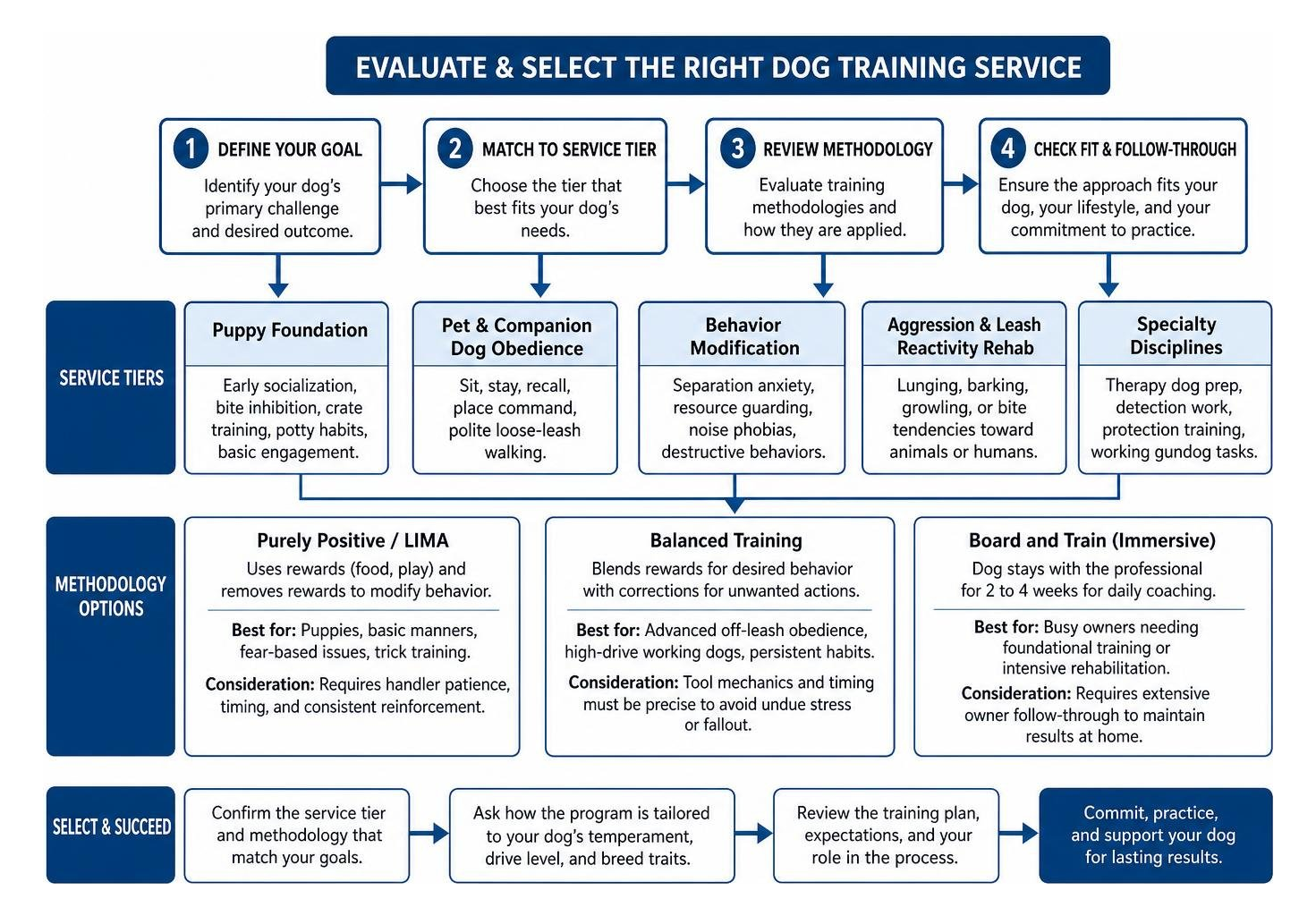
Here is a breakdown of the core services you will typically encounter:
- Puppy Foundation: Focuses on early socialization, bite inhibition, crate training, potty habits, and basic engagement before bad habits take root.
- Pet & Companion Dog Obedience: Covers essential household cues like sit, stay, recall (coming when called), place command, and polite loose-leash walking.
- Behavior Modification: Targets stress-rooted issues such as separation anxiety, resource guarding, noise phobias, and destructive behaviors.
- Aggression & Leash Reactivity Rehab: High-level intervention for dogs displaying lunging, barking, growling, or bite tendencies toward other animals or humans.
- Specialty Disciplines: Advanced fields including therapy dog preparation, detection work, protection training, or working gundog tasks.
To make an educated choice, you need to understand how different training styles operate in practice.
| Methodology | Primary Mechanism | Best Suited For | Key Considerations |
|---|---|---|---|
| Purely Positive / LIMA | Uses rewards (food, play) and removes rewards to modify behavior. | Puppies, basic manners, fear-based issues, trick training. | Requires handler patience, timing, and consistent reinforcement schedules. |
| Balanced Training | Blends rewards for desired behavior with corrections for unwanted actions. | Advanced off-leash obedience, high-drive working dogs, persistent habits. | Tool mechanics and timing must be precise to avoid undue stress or fallout. |
| Board and Train (Immersive) | Dog stays with the professional for 2 to 4 weeks for daily coaching. | Busy owners needing foundational training or intensive rehabilitation. | Requires extensive owner follow-through to maintain results once the dog returns home. |
Positive Reinforcement and Science-Based Conditioning
Modern training heavily relies on operant conditioning, a behavioral science framework that teaches dogs through markers, cues, and consequences. Rather than assuming a dog misbehaves out of spite, science-based trainers assess what reinforces the behavior and systematically alter the environment.
Using positive reinforcement training resources allows handlers to capture and shape complex tasks by pairing distinct marker signals (like a clicker or verbal marker) with high-value rewards. This humane hierarchy builds genuine enthusiasm for learning and strengthens trust between pet and owner.
Evaluating Services on a Professional Dog Trainer Website
A reputable trainer does not hide their curriculum behind vague marketing buzzwords. When browsing a site, check whether the provider specifies how they tailor exercises to individual canine temperaments, drive levels, and breed traits. A high-energy herding dog has entirely different mental stimulation needs than a sensitive rescue hound.
Professionals who take the time to map out their service breakdowns, evaluation procedures, and custom curricula online demonstrate operational clarity. We often point out in our resources on marketing for dog trainers that transparent service descriptions protect both the client and the business by setting proper expectations before anyone signs a contract.
What to Look for on a Dog Trainer Website
A polished layout looks nice, but pretty pictures do not equal behavioral expertise. You want evidence of hands-on skill, ethical standards, and clear client communication.
Trainers who invest in clear communication often follow proven growth strategies for trainers to outline their client journey, making it simple for you to see what happens from initial consultation through graduation.
Essential Credentials, Certifications, and Experience
Dog training is largely an unregulated industry, meaning anyone can buy a leash and build a landing page. Because of this, verifying formal education and continuing professional development is critical.
Look for affiliations with respected organizations such as:
- CPDT-KA / CPDT-KSA: Certified Professional Dog Trainer (Knowledge and Skills Assessed).
- KPA CTP: Karen Pryor Academy Certified Training Partner.
- IAABC: International Association of Animal Behavior Consultants.
- IMDT: Institute of Modern Dog Trainers.
Beyond acronyms, look at direct lineage and experience. Trainers who practice a relationship-centered canine training philosophy focus on underlying canine emotional states rather than surface-level suppression. Decades of working dog handling, competition titles, or formal mentorship under master trainers carry significant weight when evaluating complex behavioral cases.
Analyzing Transparency and Reviews on a Dog Trainer Website
Customer feedback should be prominent, detailed, and verifiable across external platforms like Google and Yelp. Look for video case studies showing the start, messy middle, and end of a behavior modification process.
If a trainer has established clear systems, you will see it reflected in their educational content, intake workflows, and case studies. Businesses that leverage expert business guidance for pet professionals make their client agreements, cancellation policies, and follow-up support clear from day one.
Program Formats, Timelines, and Cost Expectations
Every dog owner wants to know two things right out of the gate: how long will it take, and how much will it cost? The answer depends heavily on the format you select and the severity of the behavior.

Standard pricing models across the industry generally fall into these tiers:
- Group Classes: $150 to $350 for a multi-week series (typically 4 to 6 one-hour weekly sessions).
- Private In-Home or Facility Lessons: $100 to $250+ per single hour session, or packaged at $500 to $1,800 for comprehensive multi-session programs.
- Day Training (Drop-Off): $60 to $120 per day, where the trainer works the dog and transfers skills to the owner weekly.
- Board and Train Programs: $1,500 to $4,500+ for 2 to 4 weeks of residential immersive training.
- Virtual Coaching Consultations: $75 to $175 per hour session for lifestyle setups, puppy prep, or remote behavior plans.
Private Lessons vs. Board and Train vs. Group Classes
Private lessons put you in the driver's seat. The trainer coaches you to train your dog, which means progress depends on your homework compliance between sessions.
Board and train programs offer rapid initial progress because an expert handles the daily repetitions. However, if the trainer does not provide thorough owner turnover sessions, the dog may simply revert once back in their home environment. When evaluating residential programs, checking operational background principles like dog boarding marketing principles helps you assess whether the facility manages safety, sanitation, and enrichment properly.
Pricing Factors and At-Home Owner Support
Geographic location, trainer credentials, specialized insurance, and facility overhead all influence pricing. High-demand behaviorists dealing with bite prevention naturally charge premium rates.
More importantly, look at what happens after the program ends. The best trainers build structured homework, text or video check-ins, and lifetime alumni access into their programs. Trainers running sustainable practices often build their structures around comprehensive dog training business plan strategies, ensuring they do not overbook themselves and leave clients without post-graduation guidance.
Frequently Asked Questions About Dog Training Services
How quickly can I expect to see behavioral results?
For foundational obedience, such as teaching sit, place, or focus cues, you will often see initial comprehension within the first two or three sessions. However, real-world reliability in high-distraction environments takes several weeks of consistent practice. Complex behavior modification for anxiety or aggression requires structured desensitization that can span several months. Anyone promising a permanent, overnight fix for deep fear is selling snake oil.
How do trainers handle extreme aggression or leash reactivity?
Professional trainers begin with safety management: basket muzzle conditioning, secure gear setups, and environmental control to prevent rehearsing reactive behaviors. From there, they utilize systematic desensitization and counter-conditioning. By exposing the dog to triggers beneath their stress threshold and pairing that exposure with positive outcomes, the trainer alters the dog's underlying emotional response rather than just punishing the warning growl.
What additional services do modern trainers provide?
Today's training businesses frequently offer hybrid support setups. Beyond standard private sessions, you will find self-paced video libraries, virtual troubleshooting calls, structured daycare enrichment, pack walks, and agility foundations. These supplementary resources allow owners to reinforce learning between formal training blocks.
Navigating Your Path to the Right Dog Training Solution
Finding the right trainer comes down to asking direct questions about methods, verifying hands-on credentials, and confirming that the human side of the leash gets just as much coaching as the dog. A quality website gives you all of these answers upfront so you can make an informed choice with confidence.
At So Fetch Consulting, we help pet care businesses build clear, transparent client platforms. If you are an owner looking to establish your own structured training venture, explore our guide on how to start and scale a dog training business to learn how professional services build lasting trust with their communities.
