
A Guide to Safe and Stress-Free Multi-Dog Boarding
Assessing Your Pack: Sharing a Suite vs. Separate Rooms
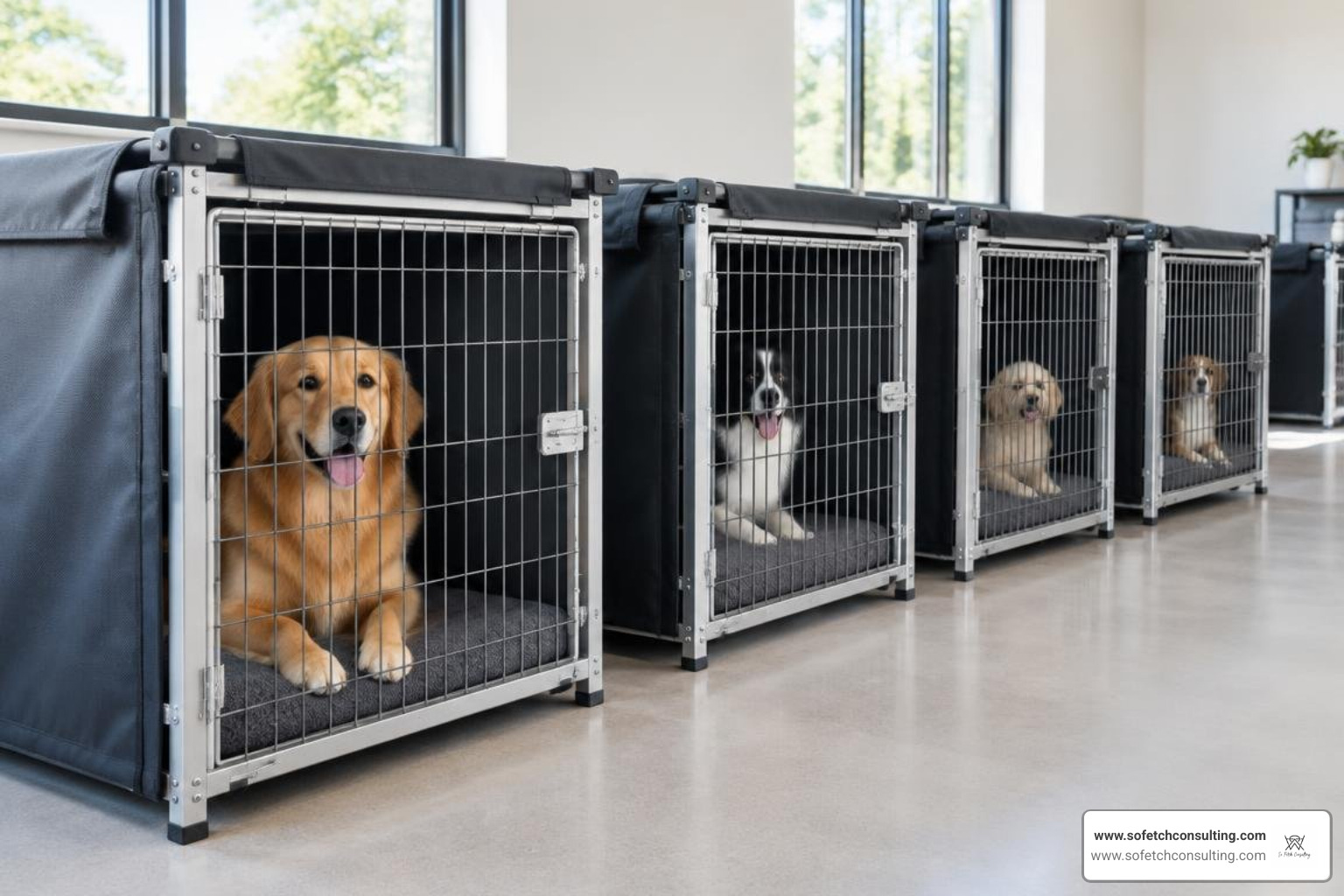
When planning a boarding trip for a multi-dog household, the biggest decision you will face is whether your dogs should bunk together or have their own private rooms. It sounds lovely to keep the entire fur family in one luxury suite. For many bonded pairs, sharing a room lowers separation anxiety and helps them settle into an unfamiliar environment much faster. But shared quarters are not always a universal win.
Dogs experience stress differently in boarding environments than they do at home on the living room sofa. A change in scenery, unfamiliar scents, and ambient barking can heighten arousal levels. If your dogs get grumpy over personal space, high-value chews, or human attention when they feel overwhelmed, cramming them into the same four walls can trigger unnecessary friction.
| Consideration | Shared Boarding Suite | Separate Kennel Rooms |
|---|---|---|
| Best For | Closely bonded pairs with zero resource guarding | Dogs with differing energy levels, food guarding, or medical needs |
| Stress Level | Lower for dogs that draw comfort from sibling presence | Lower for dogs that need quiet, uninterrupted personal space |
| Mealtime Safety | Requires attentive staff to supervise or separate during feeding | Completely safe and isolated feeding environments |
| Space & Comfort | Needs larger square footage to allow natural physical distance | Standard room sizing gives each dog their own dedicated bed |
| Cost Impact | Frequently qualifies for multi-pet household discounts | Standard single-dog rate per room (limited or no shared discounts) |
Evaluating Sibling Dynamics in Dog Boarding for Multiple Dogs
Before you check that single-room box, take a hard, honest look at how your dogs interact daily. Sibling dynamics are fluid. A pair of dogs might nap together at 2:00 PM, but if one tries to steal a bone at 2:15 PM, a brawl breaks out.
Understanding multi-dog boarding dynamics means evaluating how your pets handle resources like food bowls, beds, and attention. If you have an energetic puppy and a 12-year-old senior with arthritis, rooming them together in an enclosed suite might exhaust your older dog. The youngster wants to wrestle at 6:00 AM, while the senior just wants to sleep on an orthopedic raised bed without being stepped on. Be ready to share these nuanced details with the boarding staff so they can structure the stay accordingly.
When to Separate Dogs from the Same Household
Separating household dogs during boarding is not a failure of love; it is an act of responsible pet management. You should definitively book separate rooms if:
- Either dog shows mealtime stiffness, growling, or food guarding behavior.
- One dog requires complex, time-sensitive medications that the other might try to consume.
- A pet is recovering from an injury or requires strict rest away from an active sibling.
- Past tension has escalated into actual fights when the dogs were stressed or overstimulated.
Many modern pet resorts offer adjoining suites or rooms with partial glass dividers. This setup gives your dogs visual contact and reassurance without putting them in physical reach of each other during vulnerable moments like mealtime and deep sleep.
How to Choose Safe Dog Boarding for Multiple Dogs
Finding the right facility takes a little detective work. Do not rely solely on polished website photos. Schedule an in-person tour without your dogs first so you can inspect the premises with your own eyes and nose. Look for clean, climate-controlled suites, secure double-gated entry points, robust air filtration systems, and solid perimeter fencing around all outdoor relief areas.
Ask the facility about their staff-to-dog ratios and overnight supervision protocols. Solid operations maintain structured routines and have emergency protocols in place. As we often discuss in our boarding places for dogs market research, high-quality boarding facilities prioritize safety, transparent communication, and continuing education for their animal care staff above all else.
Health, Vaccination, and Facility Requirements
Every reputable boarding business enforces strict veterinary protocols to keep all canine guests safe. In September 2026, standard requirements across professional facilities include:
- Rabies Vaccine: Mandatory by state and local laws.
- DHPP / DHLPP: Protects against distemper, hepatitis, parainfluenza, and parvovirus (with or without leptospirosis).
- Bordetella: Protects against canine infectious respiratory disease complex (kennel cough), typically required within the last six to twelve months.
- Canine Influenza (CIV): Frequently recommended or required depending on regional veterinary alerts.
- Negative Fecal Examination: Many high-end facilities require a clear fecal check within the past 6 to 12 months to prevent parasite transmission.
- Spay/Neuter Policies: Intact adult dogs may be restricted from group play environments to prevent behavioral conflicts.
- Daily Wellness Checks: Professional facilities conduct routine 5-point wellness inspections to monitor hydration, coat condition, appetite, and stool quality.
Routine Management and Playtime Options in Dog Boarding for Multiple Dogs
A good multi-dog boarding facility will make every effort to synchronize your dogs' daily routines so their internal clocks do not get scrambled. Ask what kind of exercise packages are available. Some facilities offer large group daycare where social dogs can run with a wider pack, while others provide private family play sessions in dedicated outdoor yards.
Facilities that offer multi-pet resort play packages often let you customize activities. For instance, you might book group play for your social golden retriever and solo puzzle-toy sessions for your shy rescue dog. Live webcams and digital daily report cards with photos are fantastic features that let you check in on your dogs' antics while you are away.
Preparing and Packing for Your Multi-Dog Boarding Stay
Preparation is the secret to a stress-free boarding experience. If your dogs have never stayed at a facility before, book a trial daycare day or an overnight test run a few weeks prior to your main vacation. This allows the staff to observe your dogs' behavior and helps your pups realize that you always come back to pick them up.
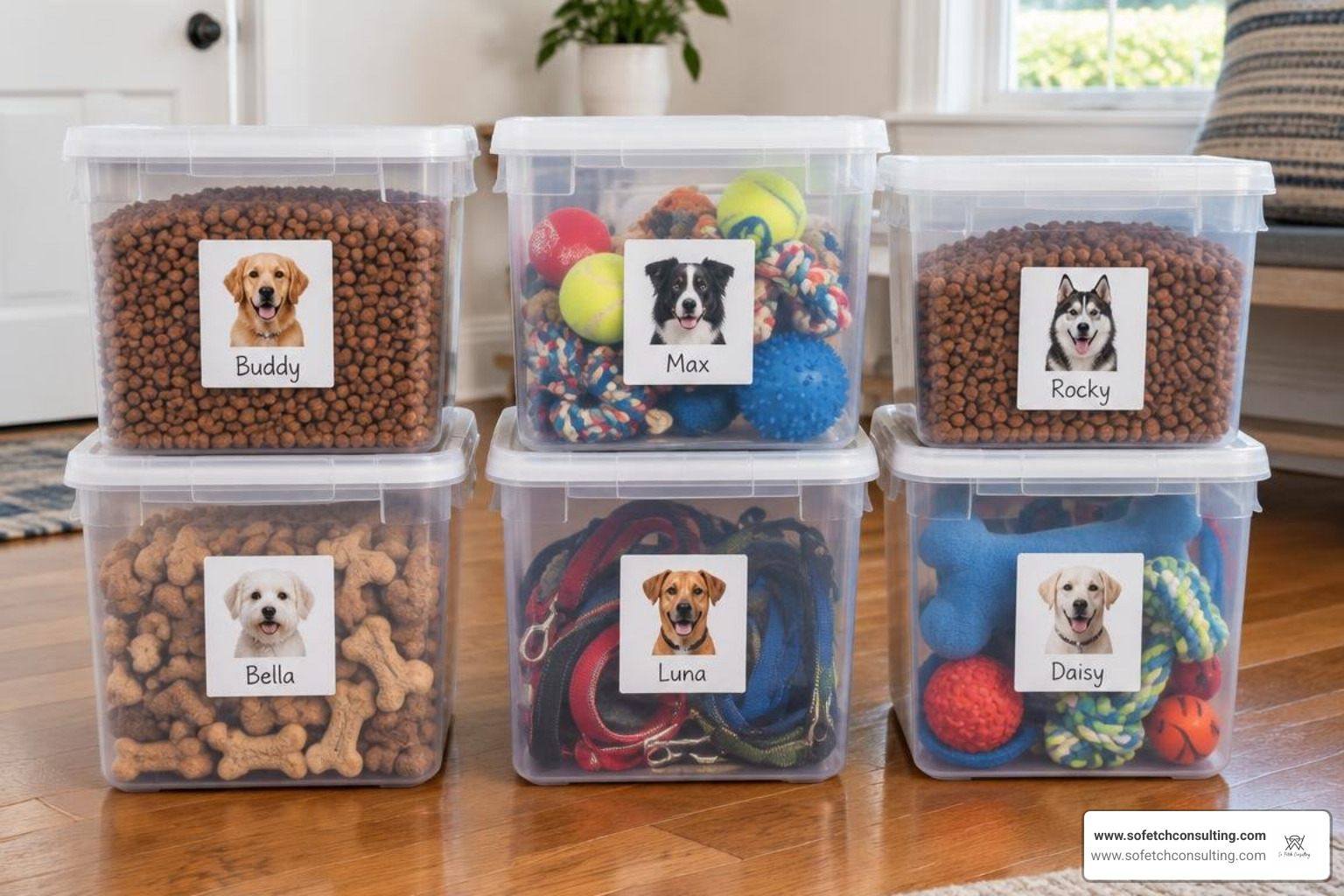
When packing gear for multiple dogs, keep everything organized to prevent mix-ups:
- Pre-Portioned Meals: Pack each dog's food in individual, labeled zip-top bags for every single meal of the stay, plus two extra days of food in case travel plans are delayed.
- Medications in Original Containers: Never toss loose pills into food bags. Provide prescription bottles clearly showing the dog's name, medication name, dosage, and veterinary instructions.
- Familiar Bedding or Scent Items: Bring a small, washable blanket or an unwashed t-shirt that smells like home (as long as your dogs do not chew and ingest fabric).
- Proper Walking Gear: Provide secure, well-fitted collars or harnesses with clear ID tags and sturdy, non-retractable leashes for drop-off and pick-up.
- Treats and Enrichment: Pack individual, approved chew treats or puzzle toys to keep busy brains occupied during midday rest periods.
Multi-Pet Boarding Costs, Discounts, and Policies
Boarding multiple dogs can add up quickly, but many facilities offer pricing structures designed to support multi-pet families. Standard single-dog overnight rates across the country often range between $45 and $65 per night, depending on the region, suite size, and included amenities. When you board two or more dogs from the same household sharing a suite, facilities routinely offer a discount, such as $5 to $20 off per night for each additional dog.
That extra fees may apply for peak holiday seasons, specialized medication administration, exit baths, or one-on-one enrichment sessions. Facilities typically require a deposit (often $50 to $100) to reserve rooms during busy travel windows, with specific cancellation windows (often 14 to 30 days prior to major holidays).
For pet care professionals looking to design balanced pricing structures and client-friendly multi-dog service menus, our team provides targeted dog training business help to help facilities scale safely while maintaining high standards of pet care.
Frequently Asked Questions About Multi-Dog Boarding
Can all of my dogs stay in the same boarding suite?
Yes, provided the dogs are from the same household, get along peacefully, and the suite meets the facility's square-footage capacity limits. Most facilities allow two large dogs or up to four small dogs to share an oversized family suite. If dogs show any signs of stress, resource guarding, or agitation, staff will separate them into individual rooms for their own safety.
Do boarding facilities offer discounts for multiple dogs?
Most pet resorts and boarding kennels offer discounted rates for additional dogs from the same family who share a room. These multi-pet discounts usually range from a flat nightly deduction (such as $5 to $20 off the second dog) to a percentage discount (10% to 20%) off the total lodging bill.
What vaccinations are mandatory before boarding multiple dogs?
Boarding facilities universally require proof of up-to-date Rabies, DHPP (Distemper, Hepatitis, Parainfluenza, Parvovirus), and Bordetella vaccinations for every dog entering the building. Many facilities also require Canine Influenza vaccines and a negative fecal test conducted within the previous 6 to 12 months.
Ensuring a Smooth Multi-Dog Boarding Experience
On drop-off day, keep your own energy calm, light, and matter-of-fact. Dogs are emotional sponges; if you make drop-off an emotional, prolonged goodbye with dramatic hugs and trembling voices, your pack will assume something terrible is about to happen. Hand over the leashes with a cheerful smile, pass your organized gear to the reception team, and let the pros do what they do best.
When you return to pick them up, give them a few days to decompress back at home. Even the most fun, luxurious boarding stay is stimulating, and it is completely normal for dogs to sleep heavily for 24 to 48 hours after returning to their regular beds.
If you run a pet-care business and want to attract great multi-dog families while refining your operational offerings, explore our detailed dog boarding marketing guide 2026 for actionable insights on modern pet-industry growth.
