
Your Guide to Dog Boarding Market Research
Why Boarding Places for Dogs Market Research Matters Now
Boarding places for dogs market research points to a fast-growing, exciting industry where pet care, hospitality, and technology come together. For facility owners and operators, the takeaway is clear: dog boarding demand is rising, but pet parents now expect much more than just a clean kennel and a bowl of food.
| Quick market snapshot | What it means |
|---|---|
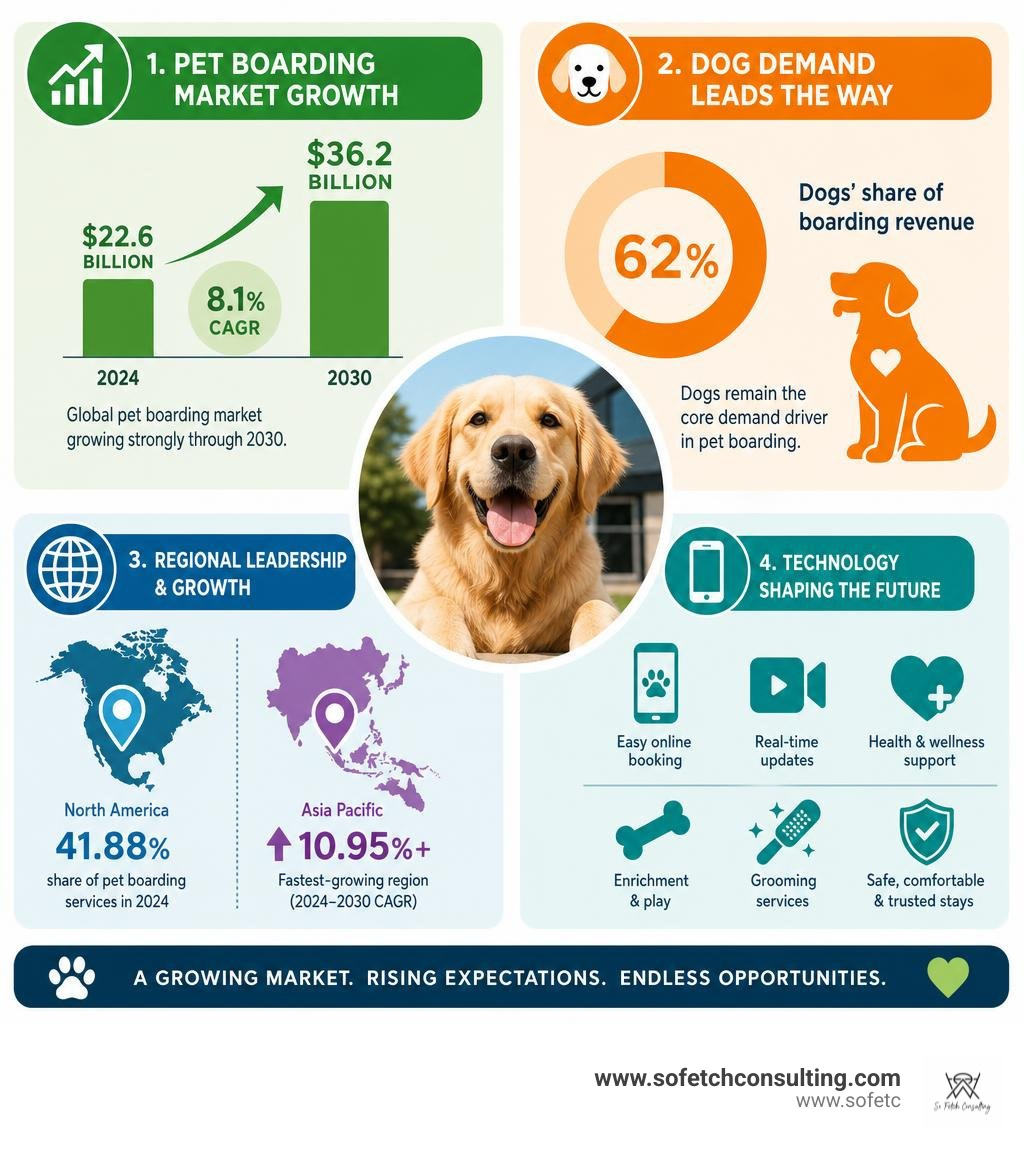
| Global pet boarding market: $22.6 billion in 2024 | A large and expanding service category |
| Projected global value: $36.2 billion by 2030 | Forecast growth of 8.1% CAGR |
| Dogs' share of boarding revenue: about 62% | Dogs remain the core demand driver |
| North America share of pet boarding services: 41.88% in 2024 | The region is mature, competitive, and premium-focused |
| Fastest-growing region: Asia Pacific | Growth is expected to exceed 10.95% CAGR |
The market is moving way beyond basic overnight stays. Today's pet parents want smooth online booking, real-time updates, enrichment activities, grooming, medical support, and spaces that feel just like home. That shift opens up huge opportunities, but it also raises the bar for every pet business out there.
I am Karin Wright, founder of So Fetch Consulting, with hands-on experience running dog walking, boarding, training, grooming, and rescue operations. My work in boarding places for dogs market research combines real facility experience with practical digital marketing strategy for pet businesses.
Global Size and Growth: Boarding Places for Dogs Market Research
Tracking where the pet boarding sector is headed gives us a great look at capital, innovation, and shifting consumer demand. The global market valuation shows a big shift in how people view their furry family members. What used to be a simple seasonal housing service has transformed into a vibrant, multi-billion-dollar branch of the pet hospitality world.
According to detailed industry reports, like the Pet Boarding Services Global Market Report 2026, non-veterinary pet services are showing amazing financial momentum. With travel back in full swing and return-to-office routines settling in, dog boarding continues to capture the biggest slice of overall pet service revenue around the world.
Key Metrics in Boarding Places for Dogs Market Research
When we break down the numbers, the global pet boarding market hit USD 22.6 billion in 2024. Analysts project this number will jump to USD 36.2 billion by 2030, representing a strong compound annual growth rate (CAGR) of 8.1 percent over the forecast period.
Looking specifically at specialized pet care facilities, the dedicated pet boarding market stood at USD 8.62 billion in 2024 and is on track to hit USD 14.02 billion by 2030, keeping up an 8.59 percent annual growth rate.
Dogs are easily the main revenue driver across the board:
- Dogs generated nearly 62 percent of total market revenue in the broader pet boarding industry in 2024.
- In specialized pet boarding facilities, the dog segment claimed a massive 81.22 percent revenue share in 2024.
- Overnight stays for dogs account for nearly half of all global booking revenue, way ahead of cats, small mammals, and exotic pets.
Regional Market Breakdown and Growth Prospects
Geographic trends show some neat differences in market maturity and potential:
- North America: Holding 41.88 percent of global pet boarding revenue in 2024 (valued at around $2.90 billion), North America remains the largest regional market. Strong pet ownership, high disposable income, and a deep focus on pet humanization drive steady demand for high-end facilities.
- Asia Pacific: As the fastest-growing region, Asia Pacific is expected to post a CAGR above 10.95 percent. Rapid urbanization, growing middle-class populations, and rising pet adoption rates in major cities fuel this rapid surge.
- Europe: Known for high regulatory standards and strong consumer protections, European markets are bringing cool innovations. European pet insurance providers are increasingly adding temporary boarding coverage during owner stays in the hospital or travel emergencies, making care more accessible for pet parents.
Primary Market Drivers, Service Segments, and Consumer Demand
Why are pet owners spending more on dog boarding than ever? It really comes down to modern lifestyle shifts and changing demographics. The pet humanization trend has turned dogs from outdoor companions into true family members. When modern pet parents travel, they want care options that match or exceed their own living standards.
Research featured in the Overnight Pet Boarding Service Market Research Report 2034 shows that workplace habits play a huge role too. Return-to-office mandates requiring two to four days in the office have pushed weekday dog boarding demand up by 8.3 percent annually, outpacing traditional weekend stays. Younger owners, especially Millennials and Gen Z, lead this trend by treating pet wellness as an essential monthly expense rather than a luxury treat.
Premiumization, Luxury Suites, and Wellness Add-Ons
Modern dog facilities are stepping away from old-school chain-link kennels and moving toward boutique hospitality. Standard kennel runs are giving way to climate-controlled suites complete with orthopedic beds, relaxing background music, TV screens playing pet programming, and private outdoor yards.
Enrichment and wellness add-ons have grown from nice-to-have options into main revenue drivers:
- Behavioral Enrichment: Puzzle toys, structured sensory walks, and individual play sessions led by trained specialists.
- Grooming and Spa Treatments: Exit baths, coat blowouts, and blueberry facials bundled right into overnight stay packages.
- Digital Transparency: Live HD webcams built into private suites so pet parents can check on their pups from their smartphones anywhere.
Comparative Analysis of Service Offerings
Facilities usually group their stay options into three clear tiers to match different budget levels and operational needs.
| Service Tier | Average Nightly Rate | Key Features Included | Target Customer Profile |
|---|---|---|---|
| Standard Boarding | $30 to $60 per night | Secure indoor run, scheduled feeding, standard group potty breaks, basic sanitation | Budget-conscious owners, brief short-term stays, traditional kennels |
| Luxury Suites | $120 to $300 per night | Private suite, webcam access, premium orthopedic bedding, tailored play sessions, daily photo updates | Pet parents seeking boutique hospitality, high-income households, extended vacation stays |
| Veterinary Boarding | $70 to $150 per night | On-site medical monitoring, medication administration, post-surgical care, specialized exercise restrictions | Senior dogs, pets with chronic illnesses, dogs recovering from surgical procedures |
Operational Realities, Licensing, and Startup Financials

While consumer demand is soaring, running a thriving dog boarding facility takes solid business planning, smart budgeting, and careful legal compliance. Loving animals is a great start, but keeping a pet business profitable takes real operational strategy.
Commercial real estate costs are usually one of the biggest hurdles for new business owners. The average commercial lease for a dedicated dog facility runs about $4,000 per month, often ranging between $3,000 and $7,000 depending on location and layout. Facilities generally need 850 to 3,000+ square feet to comfortably host indoor sleeping quarters, front-desk areas, and secure play spaces.
Startup Financials and Boarding Places for Dogs Market Research
The numbers behind dog boarding show fantastic earning potential when occupancy is managed well. Market data published in the Dog Boarding Services Market Size, Share & Trends Analysis Report shows that operators who optimize room density and offer add-on services enjoy healthy operating margins.
- Average Nightly Rates: Across the U.S., standard dog boarding averages about $50 per night per dog.
- Gross Income Potential: Hosting an average of 20 dogs per night at $50 per dog generates roughly $1,000 per day in gross revenue, which works out to about $30,000 per month.
- Labor and Staffing Overhead: Staff payroll usually takes up 30 to 40 percent of overall operating expenses. Keeping low staff-to-dog ratios (like 1 team member per 10 to 15 dogs during playgroup) is essential for safety and high-quality care.
- Non-Veterinary Business Scale: The U.S. pet care services sector includes around 18,500 establishments generating a combined annual revenue of roughly $5 billion, showing a strong foundation of independent operators.
Licensing, Safety Standards, and Staff Training
Getting familiar with local rules and animal safety guidelines is a must before opening your doors. Local municipalities enforce zoning codes around noise control, waste management, and maximum animal counts.
Key setup requirements include:
- Regulatory Compliance: Following USDA Animal Welfare Act guidelines and obtaining local municipal animal housing permits.
- Health Controls: Setting up mandatory vaccination checks (Rabies, DHPP, and Bordetella) along with quick health evaluations at check-in.
- Staff Certifications: Training team members in Pet First Aid, CPR, dog body language, and playgroup management to keep every dog safe.
- Sanitization Protocols: Running commercial HVAC air filtration to minimize airborne bugs, paired with daily hospital-grade cleaning routines.
Technology Innovations and Economic Downturn Resilience

Technology has completely transformed how pet owners connect with care providers. Facilities relying on paper filing cabinets and manual phone calls are quickly losing ground to tech-smart platforms that make booking and communication effortless.
At the same time, market research consistently shows that the pet industry holds up amazingly well during economic downturns. Pet owners consistently treat care services as essential expenses rather than extra luxuries.
Specialized Boarding Software and Digital Customer Experience
Today's pet parents expect the same convenience from a dog boarding facility that they get when booking a hotel or ordering takeout. Over 80 percent of pet owners do thorough digital research before choosing a care provider.
Key tools helping facilities stand out include:
- Online Booking Portals: Easy website software that lets clients pick room types, upload vaccination records, book extra perks, and pay instantly.
- Automated Client Updates: Tools that send quick photo or video updates ("pupdates") right to client phones via SMS or chat apps.
- Live Webcam Integration: Secure HD video streams through client portals, which helps reduce pet parent anxiety and builds lasting trust.
- Operational Management Tools: Dedicated platforms like Time To Pet that simplify team schedules, feeding charts, medical alerts, and invoicing.
Recession Resilience and Changing Consumer Cycles
Economic research confirms that the pet care market is remarkably resilient when times get tough. During financial squeezes, pet parents usually trim their own entertainment, dining, or travel budgets before cutting back on their dog's safety and wellbeing.
This stability comes down to two main things:
- Pets are Family: Caring for a pet is seen as a non-negotiable family responsibility rather than a luxury line item.
- Workplace Expectations: In-office work mandates mean busy owners rely on professional boarding and daycare regardless of broader economic news.
Frequently Asked Questions About Dog Boarding Industry Research
How big is the global pet boarding market?
The overall global pet boarding market reached USD 22.6 billion in 2024 and is projected to grow to USD 36.2 billion by 2030, growing at an 8.1 percent CAGR. The specialized pet boarding services market was valued at USD 8.62 billion in 2024 and is heading toward USD 14.02 billion by 2030. Dogs are the primary revenue driver, accounting for between 62 percent and 81 percent of market earnings depending on the facility type.
What is the average daily rate for dog boarding facilities?
The national average rate for standard dog boarding in the United States is around $50 per night, per dog. Standard stays generally run between $30 and $60 per night, while luxury boutique suites offering private rooms, webcam access, and customized play packages range from $120 to $300 per night.
How resilient is dog boarding during an economic downturn?
Dog boarding and general pet care services are among the most recession-resilient sectors around. Because owners consider dogs to be true family members, surveys show that consumers dial back personal leisure and dining out long before compromising on quality care and wellness for their pets.
How to Turn Market Insights into Full Kennels and Steady Growth
Understanding market data is step one; using those insights to attract loyal clients to your facility is where real business growth happens. Having a top-tier facility with modern suites won't build a thriving business if local dog owners can't find you online when they search for care options.
That is where a focused marketing strategy makes all the difference. At So Fetch Consulting, we help pet care businesses build clear digital footprints that turn local pet parents into lifetime clients. Using our specialized marketing framework, we partner with dog boarding facilities, daycare centers, groomers, and trainers to turn online traffic into steady bookings.
Our core marketing services include:
- Search Engine Optimization (SEO): Optimizing your local Google business profile and website content so you rank high when local pet parents search for dog boarding.
- Generative Engine Optimization (GEO): Making sure your business stands out in modern AI-driven search results and recommendation tools.
- Targeted Paid Advertising: Building focused Google and social media ad campaigns that deliver high-intent leads at sustainable costs.
- Proven Content Strategy: Creating engaging social media and website content using our battle-tested S3 System content framework.
Whether you are launching a brand-new boarding facility, expanding your current setup, or looking to boost mid-week occupancy, having the right digital marketing plan is key. Ready to turn market research insights into actual bookings for your pet care business? Grow your pet business with So Fetch Consulting and let us build a custom strategy tailored to your goals.
