
How to Rank Your Dog Breeding Business on Google
Why SEO for Dog Breeders Matters

SEO for dog breeders helps your website appear when serious puppy buyers search Google for a specific breed, health-tested parents, or a reputable breeder in their area.
To rank your dog breeding business on Google, focus on these basics:
- Use breed and location terms buyers actually search.
- Create clear pages about your dogs, health testing, puppy raising, and application process.
- Make the site fast and easy to use on a phone.
- Build local trust through your Google Business Profile, reviews, and relevant partnerships.
Most buyers begin their research online, often long before they contact a breeder. Organic search drives a major share of website traffic, and local results matter even more: Google's Local Pack earns a large portion of clicks for location-based searches. Good SEO is not just about getting more inquiries. It helps ethical breeders explain their standards, set clear expectations, and attract better-fit homes.
I’m Karin Wright, founder of So Fetch Consulting, with 20+ years in the dog industry and professional experience in SEO, Google Ads, analytics, and content strategy. I use SEO for dog breeders to help dog-focused businesses replace guesswork with a practical plan for visibility, trust, and qualified leads.
Mastering SEO for Dog Breeders: Core Fundamentals
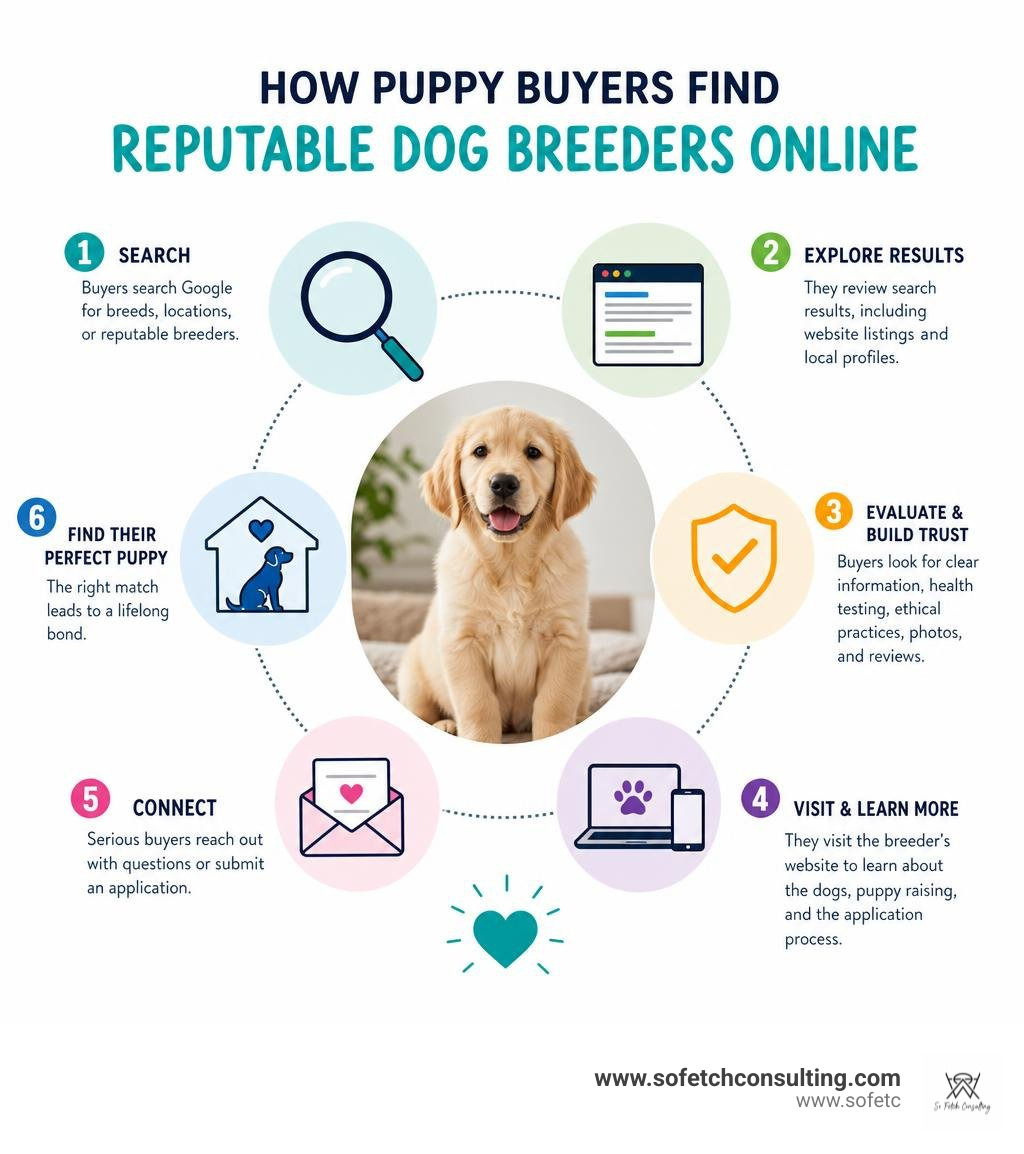
Understanding search engine optimization begins with recognizing how Google matches search queries to web pages. Organic search drives 53% of all website traffic across the web, making search engines the primary matchmaker between dedicated breeders and eager future pet parents. When someone decides to add a four-legged family member to their home—and with 97% of U.S. pet owners considering their pets true family members, that decision is huge—they start by opening a browser.
Search engine algorithms evaluate hundreds of factors to rank pages. At the heart of these algorithms is search intent: determining whether a searcher wants quick background information, local directions, or a reputable breeding program to apply to. By optimizing for high-intent search traffic, we ensure your website answers the exact questions prospective buyers are typing into Google.

Identifying High-Intent Breed and Local Keywords
Keyword strategy forms the bedrock of effective SEO for dog breeders. Rather than competing for ultra-broad keywords like "dogs" or "puppies", which attract casual window shoppers and heavy competition, we focus on high-intent, highly targeted terms.
High-intent keywords fall into two main categories:
- Breed-Specific Keywords: Phrases that specify temperament, health testing, or bloodlines (e.g., "health tested Golden Retriever puppies", "working line German Shepherd breeder").
- Local Search Terms: Phrases incorporating geographic modifiers like city, state, or regional landmarks (e.g., "Poodle breeder near Denver", "French Bulldog puppies in Northern Virginia").
Long-tail keywords, meaning search phrases containing four or more words, are particularly powerful. For example, while a broad search like "German Shepherd breeders" brings up a ton of competition, a long-tail search like "best German Shepherd breeders in Dallas Texas" attracts buyers who are much closer to submitting an application.
Pre-Qualifying Puppy Buyers with Content and SEO
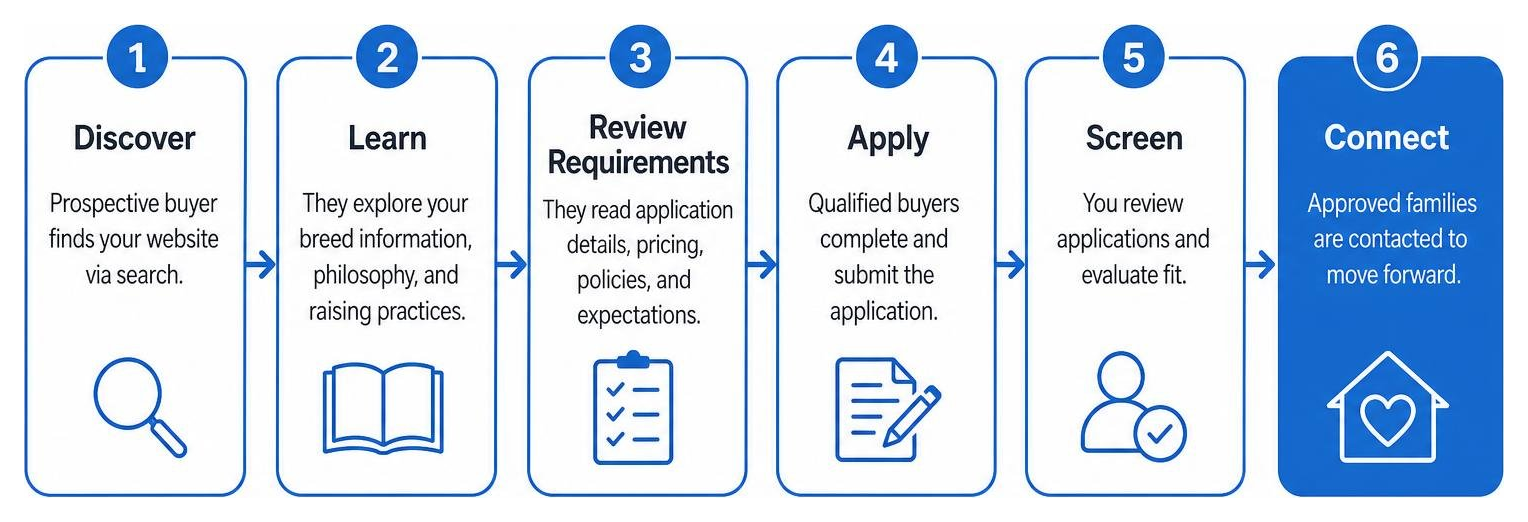
One of the greatest benefits of implementing seo for dog breeders is using search engine visibility as a pre-qualification filter. Social media inquiries often mean answering endless "How much?" messages from impulse buyers. A well-structured website flips this dynamic entirely.
By embedding your ethical breeding philosophy directly into your web pages, you set clear expectations before a prospective buyer ever hits "submit." We recommend building explicit content pathways that detail:
- Parent Profiles and Health Testing: Transparent documentation of OFA, PennHIP, or genetic clearances.
- Puppy Raising Protocols: Explanations of early enrichment practices like Puppy Culture or Avidog.
- Application Requirements: Transparent pricing, deposit terms, and strict spay/neuter or return agreements.
When educational content addresses breed-specific exercise needs, grooming commitments, and potential challenges upfront, impulse buyers self-select out. Meanwhile, dedicated families feel reassured that they have found a responsible, ethical program. To explore broader strategies for ranking pet businesses, check out this guide on Pet Breeder SEO: Rank Higher and Attract Owners | Petbase .
Technical and On-Page Optimization for Breeder Websites
A beautifully written website will struggle to rank if search engines cannot easily crawl and understand its structure. Technical and on-page optimization ensures both Google's crawlers and human visitors navigate your site effortlessly.
On-Page SEO for Dog Breeders Best Practices
On-page SEO refers to optimizing the structural elements on your web pages. Key focus areas include:
- Title Tags: The main clickable headline in search results. Keep it under 60 characters and include your primary keyword and location (e.g., Golden Retriever Breeder in Austin, TX | Our Kennels).
- Meta Descriptions: A 150–160 character summary that encourages users to click. Mention health testing, AKC registration, or current litter status.
- Heading Structure (H1, H2, H3): Organize page content logically. Use your primary H1 for the main topic, with H2s and H3s breaking down subtopics naturally.
- Descriptive Permalinks: Ensure URLs are clean and keyword-rich (e.g.,
yoursite.com/upcoming-littersrather thanyoursite.com/p=123). - Internal Linking: Hyperlink related pages together. For example, when mentioning a dam on your litter page, link directly to her individual parent profile.
Mobile Responsiveness and Page Speed Optimization
Over 50 percent of all web search queries happen on mobile devices, and mobile users expect rapid load times. If your site takes longer than three seconds to display photo galleries of your dogs, prospective buyers will hit the back button.

To maintain pristine page speed and smooth mobile usability:
- Compress Image Files: Camera photos are often massive multi-megabyte files. Use compression tools to keep image file sizes under 200KB without sacrificing visual sharpness.
- Optimize Image Alt Text: Provide descriptive alt text for every picture (e.g.,
alt="8-week-old Labrador Retriever puppy sitting on grass"). This assists screen readers and helps photos rank in Google Image Search. - Simplify Mobile Navigation: Ensure application forms, contact buttons, and phone links are easy to tap with a thumb on smartphone screens.
For additional actionable techniques on technical web tweaks, review these 11 Best SEO Tips for Dog Breeders & Kennel Websites .
Strategic Content and Authority Building
Search engines favor websites that demonstrate authority, trust, and freshness. For dog breeders, building topical authority means publishing helpful guides that serve your audience throughout the lifecycle of owning your chosen breed.
Blogging and Educational Guides for Organic Search
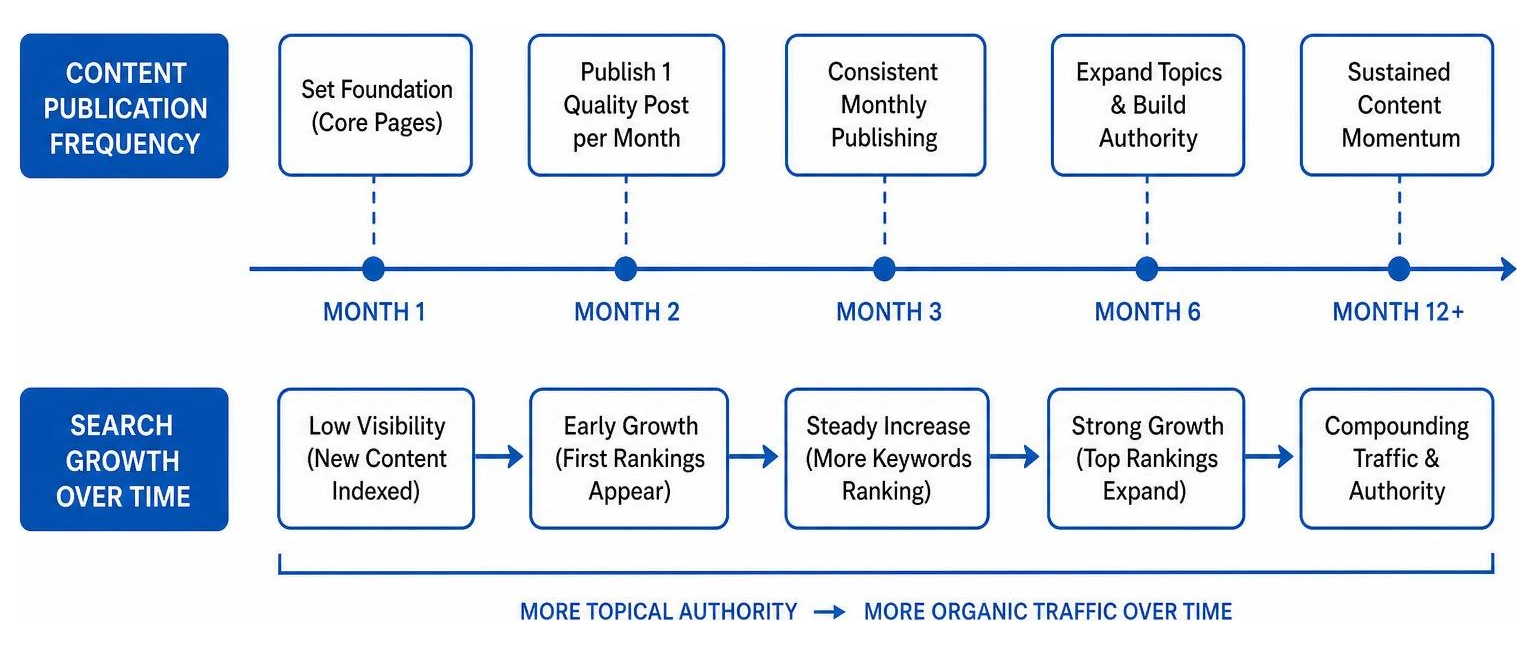
While static pages cover your dogs and upcoming litters, a regularly updated blog expands your visibility across hundreds of informational search queries. You do not need to publish every day—a single, high-quality post of 500 to 1,200 words each month is sufficient to keep your site active and signaling fresh updates to Google.
Excellent educational topics include:
- Breed Education: "Understanding Coat Genetics and Color Variations in Australian Shepherds."
- Preparation Guides: "Essential Puppy Proofing Checklist for New Labradoodle Owners."
- Health & Grooming: "How to Safely Maintain a Poodle's Coat Between Professional Groomings."
Cornerstone articles, depth guides ranging from 1,200 to 3,000+ words, can answer broad queries like "Are Cavalier King Charles Spaniels good for apartment living?" These articles attract prospective owners early in their research phase, positioning your program as their top choice when they are ready to adopt.
Building Backlinks and Local Partnerships
Backlinks, links from external websites pointing to yours, act as votes of confidence in the eyes of search engine algorithms. However, quality matters far more than sheer quantity. A few authoritative links from established pet industry organizations will do far more for your rankings than dozens of low-quality directory listings.
| Backlink Type | Example Source | Impact on SEO Authority |
|---|---|---|
| High-Quality Local | Local veterinary clinic, regional dog trainer, local breed club | Strong authority boost, high geographic trust |
| High-Quality Industry | AKC/UKC parent club, national breed registry, health foundation | Maximum topical authority and industry trust |
| Low-Quality / Spam | Generic link farm directories, paid link schemes, irrelevant sites | High risk of search engine penalties or ranking drop |
Cultivate valuable backlinks by networking with local dog trainers, grooming salons, and veterinary offices. Offer to write a guest blog post on puppy socialization or ask to be listed on their local resource pages.
Local Search Dominance and Tracking Success
Local search optimization is essential for dog breeders because buyers frequently want to meet breeders in person or pick up their puppies nearby. "Near me" searches generate over 1.5 billion monthly searches across Google, and 46% of all Google searches carry local intent.
Why Local SEO for Dog Breeders Matters
Google's Local Pack, the map and three business listings shown at the top of local search results, captures 44% of all clicks on local search queries. Winning a spot in the Local Pack requires a fully optimized Google Business Profile.
To maximize your local presence:
- Complete Profile Details: Ensure your business name, physical location/service area, phone number, and hours are accurate.
- Add High-Quality Photos: Business profiles featuring rich photo galleries receive 42% more requests for directions and 35% more website clicks than those without visuals. Show off your facilities, exercise yards, health certificates, and adult dogs.
- Gather Keyword-Rich Reviews: Customer reviews heavily influence consumer choices. 93% of consumers report online reviews affect their purchasing decisions. Encourage past puppy buyers to leave detailed Google reviews mentioning the breed and their experience.
Essential Free SEO Tools and Realistic Results Timelines
Tracking performance allows us to make informed, data-driven refinements over time. Three free tools provide foundational insights:
- Google Analytics: Tracks website visitors, popular pages, referral sources, and overall user behavior.
- Google Search Console: Shows the exact keywords searchers typed to find your site, your average search position, and technical indexing status.
- Google Business Profile Performance Insights: Reports how many people found your map listing, called your phone number, or requested directions.
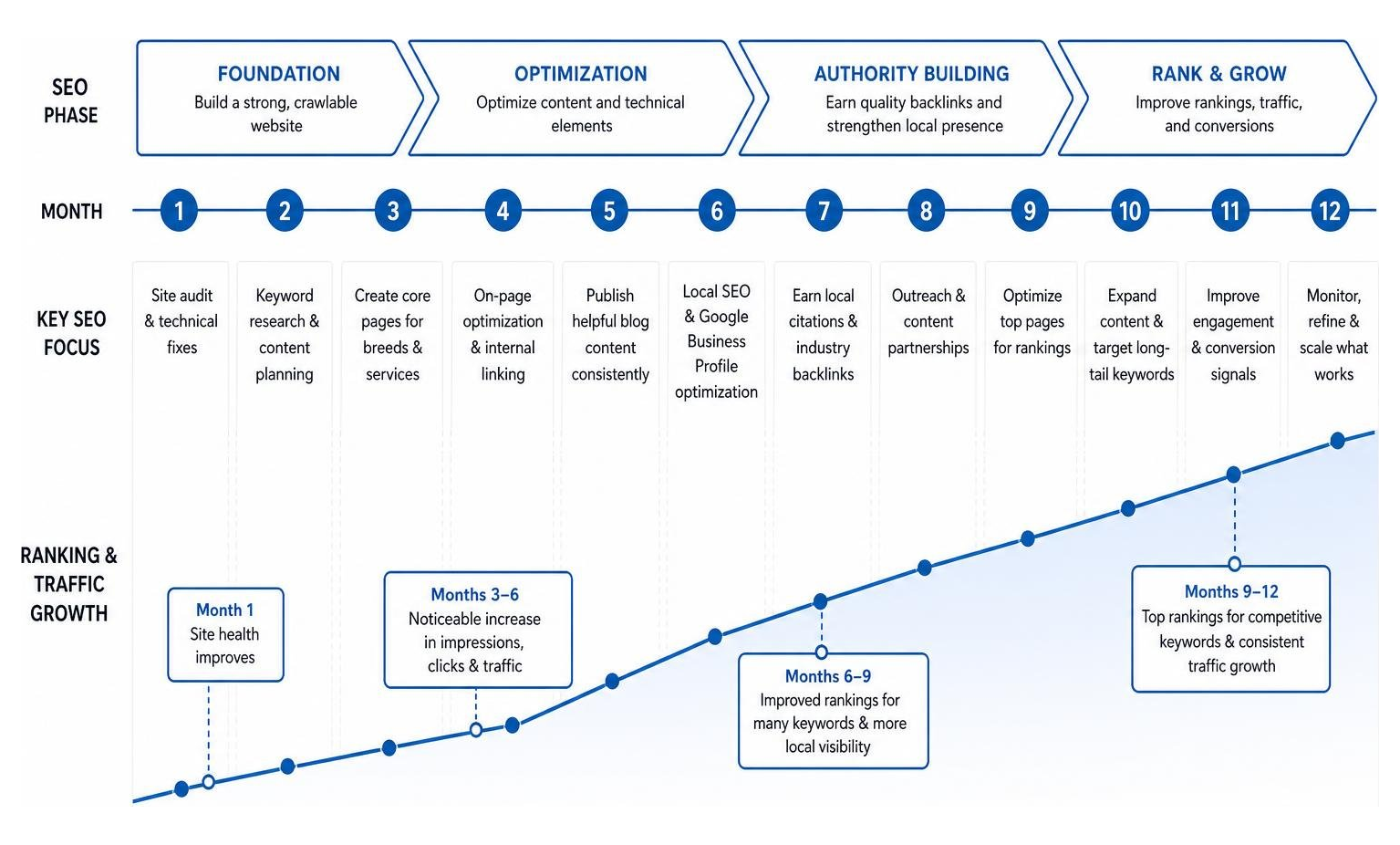
SEO is a long-term strategy rather than an overnight fix. While initial technical fixes improve site health right away, noticeable organic traffic growth typically takes 3 to 6 months. Achieving top rankings for competitive local keywords usually requires 6 to 12 months of consistent effort.
Frequently Asked Questions About SEO for Dog Breeders
What is the difference between generic keywords and long-tail keywords for breeders?
Generic keywords (e.g., "puppies for sale") have massive search volume but extreme competition and broad, low-intent traffic. Long-tail keywords (e.g., "health tested Bernese Mountain Dog breeder in Ohio") have lower monthly search volume but bring in highly qualified buyers ready to apply for a puppy.
How long does it take for a dog breeder website to rank on Google?
Most new or newly optimized breeder websites begin seeing improvements in indexing and local visibility within 3 to 6 months. Ranking on page one for highly competitive local search phrases typically requires 6 to 12 months of continuous local signal building, reviews, and content updates.
Do dog breeders really need a blog to rank high on search engines?
While a blog is not strictly required if your static parent profiles and local SEO signals are rock-solid, publishing monthly blog posts significantly expands your reach. It allows you to target long-tail informational questions, build topical authority, and maintain fresh site updates that search algorithms favor.
Build Search Visibility That Brings Better Puppy Buyers
Building sustainable web traffic for your kennel requires patience, clarity, and consistency. By targeting high-intent keywords, optimizing your site for mobile visitors, sharing educational content, and building strong local signals through your Google Business Profile, you can attract qualified buyers who respect your breeding standards.
At So Fetch Consulting, we help pet industry professionals turn complex marketing into clear, repeatable growth. Explore Professional Marketing Services to discover how we can optimize your web presence and connect your program with loving, lifelong pet homes.
