
Lead Generation Ecommerce Strategies to Strike Online Gold
Core Strategies for Lead Generation Ecommerce Growth

Effective ecommerce lead generation captures high-intent shoppers through interactive lead magnets, streamlined landing pages, and micro-conversions before nurturing them into buyers via automated email and SMS workflows. Rather than treating every store visitor like an immediate impulse buyer, online retailers use targeted search optimization, paid ads, and zero-party data quizzes to turn casual browsers into subscribers you actually own.
Relying solely on direct, first-visit checkouts is an expensive gamble. With rising ad costs and crowded feeds, research shows that about 50% of marketers rank lead generation as their number one priority, yet ecommerce stores face a massive 80% lead-to-sale conversion gap if they do not have a real capture and follow-up engine.
To build a reliable customer base, we need a steady influx of high-intent traffic turned into manageable micro-conversions. That means getting a visitor's contact details so we own the relationship instead of renting it from an ad network.
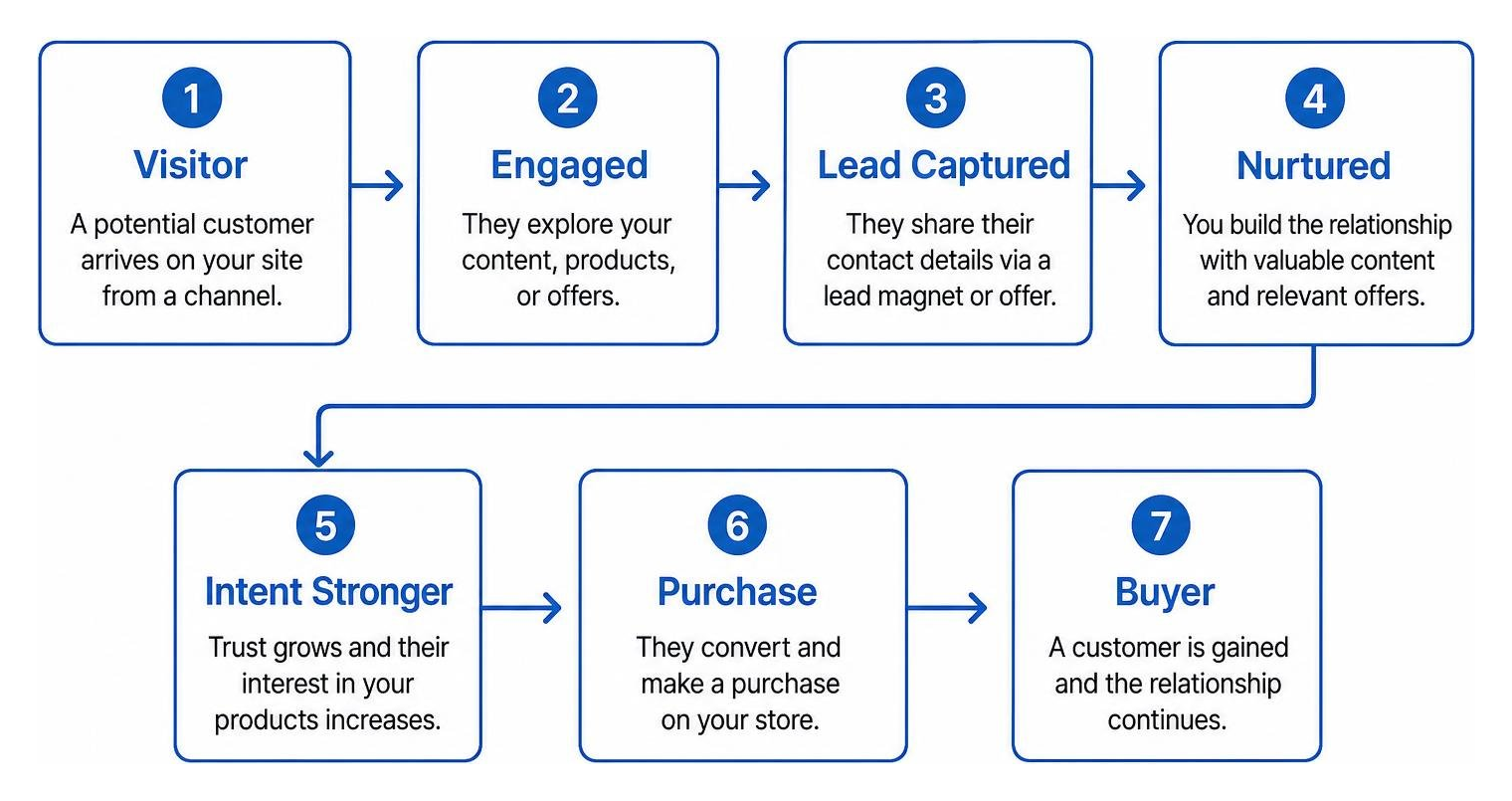
Here is how we capture high-intent leads across the primary channels:
- Search Engine Optimization (SEO): Organic search traffic brings users who already have purchase intent. Most shoppers never scroll past page one. By optimizing product collections, educational articles, and comparison guides around problem-focused search terms, you attract folks who are actively looking for solutions.
- Search Engine Marketing (SEM): Pay-per-click advertising puts your brand right at the top for high-converting commercial keywords. Instead of running broad ads to your homepage, send that paid traffic to tailored landing pages where users can grab a discount or guide in exchange for their contact info.
- Inbound Content: Provide genuine education without a hard sales pitch. For instance, if you run a pet wellness brand, a detailed article on canine joint supplements establishes instant authority. When readers trust your advice, they happily join your newsletter for more tips.
- Social Commerce and Community: Platforms like Instagram and TikTok are phenomenal for community building, but social media algorithms are fickle landlords. Use broadcast channels, live shopping events, and interactive direct messages to bridge followers from social apps directly onto your owned email and SMS lists.
High-Converting Landing Pages and Lead Magnets
A landing page with ten different links is a recipe for distraction. The best lead capture pages remove navigation menus and focus on one specific action.
To get someone to hand over their contact info, you need a tempting lead magnet that delivers immediate value. Some of the most effective formats include:
- Interactive Quizzes: Product-finder quizzes (like "Find the Perfect Dog Harness for Pullers") turn the shopping experience into an engaging game while giving you rich zero-party preference data.
- Sizing and Fit Calculators: Eliminating buyer hesitation upfront captures leads while dramatically cutting future return rates.
- First-Order Discounts and Tiered Incentives: The classic "Save 15% on your first order" works because it directly rewards immediate purchase intent.
- Back-in-Stock and VIP Access Alerts: Letting shoppers sign up for early product drops or restock alerts captures high-intent prospects without offering margin-eroding discounts.
- Exit-Intent Popups: When a visitor moves their cursor toward the close button on desktop, a well-timed exit popup offering an exclusive incentive can turn a lost visitor into an active prospect.
Keep your forms as short as possible. Testing shows that reducing a form from five fields down to two can dramatically boost submissions. Stick to an email address (or mobile number) and a first name unless you genuinely need extra details right away.
Personalization and AI in Lead Generation Ecommerce
Artificial intelligence is no longer futuristic fluff. In 2026, smart brands use AI and automation to qualify, route, and personalize leads in real time.
Instead of passive contact forms, AI-powered conversational chatbots can detect shopping signals, answer sizing questions, and capture contact details 24/7. Modern conversational tools can analyze inbound direct messages or website chats, detect wholesale or custom-order intent within the first two messages, and route high-value buyers directly to your sales team in under 38 seconds.
Behind the scenes, behavioral segmentation tools monitor browsing history, past purchases, and category affinity. If someone spends five minutes browsing waterproof dog boots, your automated system can trigger a personalized recommendation email featuring those exact items instead of a generic product roundup.
Capturing B2B, Wholesale, and High-AOV Store Prospects
Lead generation is not just for individual retail shoppers. If you sell custom goods, bulk products, or want your items placed in physical boutiques, business-to-business (B2B) lead generation changes everything.
DTC brands often struggle with unpredictable ad return on ad spend (ROAS). Opening up a steady wholesale channel brings in bulk orders with substantial average order values (AOV), smoothing out seasonal dips.
To build a predictable outbound B2B engine:
- Filter Your Target Accounts: Start by building a verified list of retail stores or stockists in your niche. Platforms that track tech stacks, product catalogs, and foot traffic help narrow down prospects. Look for stores with healthy website traffic that match your brand aesthetic.
- Look for Role Fit: Generic "info@" inboxes rarely produce results. Identify the actual founder, retail buyer, or category manager on LinkedIn or via verified databases.
- Lead with Margin-Forward Pitching: Boutique owners care about margins, turnover rates, and minimum order quantities (MOQs). When reaching out via cold email, skip the fluff. Share your wholesale margins, sell-through proof, and a link to your digital line-sheet.
- Simplify Custom Inquiries: For trade clients (like interior designers or corporate gifting managers), use streamlined digital inquiry forms with net-terms options to capture wholesale applications fast.
Nurturing and Converting Online Store Leads into Buyers
Capturing an email address is only the first step. If you do not follow up, that lead will forget who you are by tomorrow morning.

An effective nurturing sequence uses targeted email and SMS automation to guide prospects toward their first purchase:
- The Welcome Sequence (Days 1 to 5): Immediately deliver the promised discount code or lead magnet. Follow up over the next few days with your brand origin story, customer reviews, and a spotlight on bestsellers.
- Educational Drip Campaigns: Help leads understand how to use your products. Share behind-the-scenes production clips, care guides, or answers to common objections.
- Browse and Cart Abandonment Triggers: If a subscriber logs in, adds items to their cart, and leaves without checking out, send a helpful nudge within an hour. Mention that their cart is saved, and include customer service contact options in case they ran into a snag.
- Behavior-Based Lead Scoring: Assign engagement points when subscribers open emails, click product links, or visit specific collection pages. When a prospect crosses a certain score threshold, trigger a special limited-time incentive to seal the deal.
| Strategy Component | Direct Instant Checkout Focus | Lead Capture & Nurture System |
|---|---|---|
| Primary Goal | Immediate sale on visit #1 | Contact acquisition and long-term customer relationship |
| Traffic Suitability | High-intent, ready-to-buy shoppers | Broad, research-phase, and comparing shoppers |
| Customer Data Acquired | Only acquired if purchase finishes | Acquired early via forms, quizzes, or alerts |
| Retargeting Cost | High (must pay for retargeting ads) | Low (owned email and SMS automations) |
| Average Conversion Timeline | Instant (0 to 24 hours) | Days to weeks across multiple touchpoints |
| Long-Term Revenue Impact | Volatile and tied directly to ad spend | Predictable and compounding over time |
Common Mistakes in Lead Generation Ecommerce Campaigns
Even experienced store owners can trip over simple setup errors. Keep an eye out for these frequent mistakes:
- Excessive Form Fields: Asking for a phone number, mailing address, dog's birthday, and job title on a first visit destroys conversion rates. Stick to the essentials.
- Over-Relying on Generic Discounts: Constantly handing out 20% off coupons trains customers to never pay full price. Mix in non-monetary value like styling guides, early access, or free gift add-ons.
- Zero List Segmentation: Blasting your entire email list with the same promotion annoys subscribers and spikes unsubscribe rates. Always segment by past purchases, product interest, and engagement levels.
- Neglecting Mobile UX: Over half of all ecommerce traffic comes from smartphones. If your popups take over the entire screen and make it impossible to find the "X" button on mobile, visitors will bounce immediately.
- Letting Leads Go Cold: Collecting thousands of emails but waiting three weeks to send a newsletter is a wasted opportunity. Automation should trigger the second someone hits submit.
Essential Metrics to Measure Ecommerce Funnel Success
To ensure your marketing generates real profit, monitor these essential key performance indicators:
- Opt-In Conversion Rate: The percentage of landing page or site visitors who complete your lead capture forms. A healthy baseline for ecommerce popups and landing pages typically ranges between 2% and 5%, with dedicated quiz funnels often hitting higher numbers.
- Cost Per Lead (CPL): Total marketing and ad spend divided by the number of new leads captured. Keeping this number manageable ensures your paid acquisition stays sustainable.
- Lead-to-Customer Conversion Rate: The percentage of captured leads who eventually complete a purchase. This reveals how well your email and SMS sequences are performing.
- Customer Acquisition Cost (CAC): The total cost to acquire a paying customer across all channels. Lead nurturing should lower your overall CAC compared to direct paid checkout ads.
- Customer Lifetime Value (CLV): The total net revenue a customer generates over their entire relationship with your store. A strong email nurturing system boosts repeat purchases, lifting CLV.
- List Growth Rate and Deliverability: Track your net subscriber growth while monitoring bounce rates and spam complaints to protect your sender reputation.
Frequently Asked Questions About Ecommerce Lead Capture
What is lead generation in ecommerce and why is it important?
Ecommerce lead generation is the process of attracting visitors to your online store and collecting their contact details, such as an email address or mobile number. It is essential because most visitors are not ready to purchase on their first visit. Capturing leads allows you to build an owned marketing channel, nurture prospects with automated content, reduce reliance on paid ads, and increase overall customer lifetime value.
What is the most effective lead magnet for online stores?
The most effective lead magnet depends on your audience, but interactive product-finder quizzes, first-order discounts, and back-in-stock notifications consistently perform best. Quizzes work well because they provide immediate personalized recommendations while capturing detailed buyer preferences that help you segment your follow-up campaigns.
How can small ecommerce sites improve lead conversion rates?
Small stores can improve conversion rates by keeping signup forms short, optimizing popups for mobile screens, deploying exit-intent triggers, and offering genuine value upfront. Running simple A/B tests on headline copy, button text, and incentives allows you to pinpoint what resonates best with your shoppers without overhauling your entire site.
Scaling Your Store Revenue with Sustainable Marketing Systems
Building a dependable ecommerce lead capture engine is not about throwing random popups at your visitors and hoping for the best. It requires a connected system that attracts the right audience through search and social, offers clear value the moment they land on your site, and nurtures them into loyal, repeat customers.
When your marketing works as a cohesive ecosystem, you stop stressing over algorithm updates and ad platform fluctuations. You gain an owned database of shoppers who know, like, and trust your brand.
At So Fetch Consulting, we help small businesses, pet industry brands, and service providers cut through digital marketing confusion. Through proven frameworks like our The S3 System™ content strategy program, we design clear marketing systems that drive qualified traffic and capture real revenue. If you are ready to turn your online store into an automated sales pipeline, explore our services for strategic digital marketing and Squarespace optimization to start growing with confidence.
