
What Paid Search Ads Are and Why They Matter
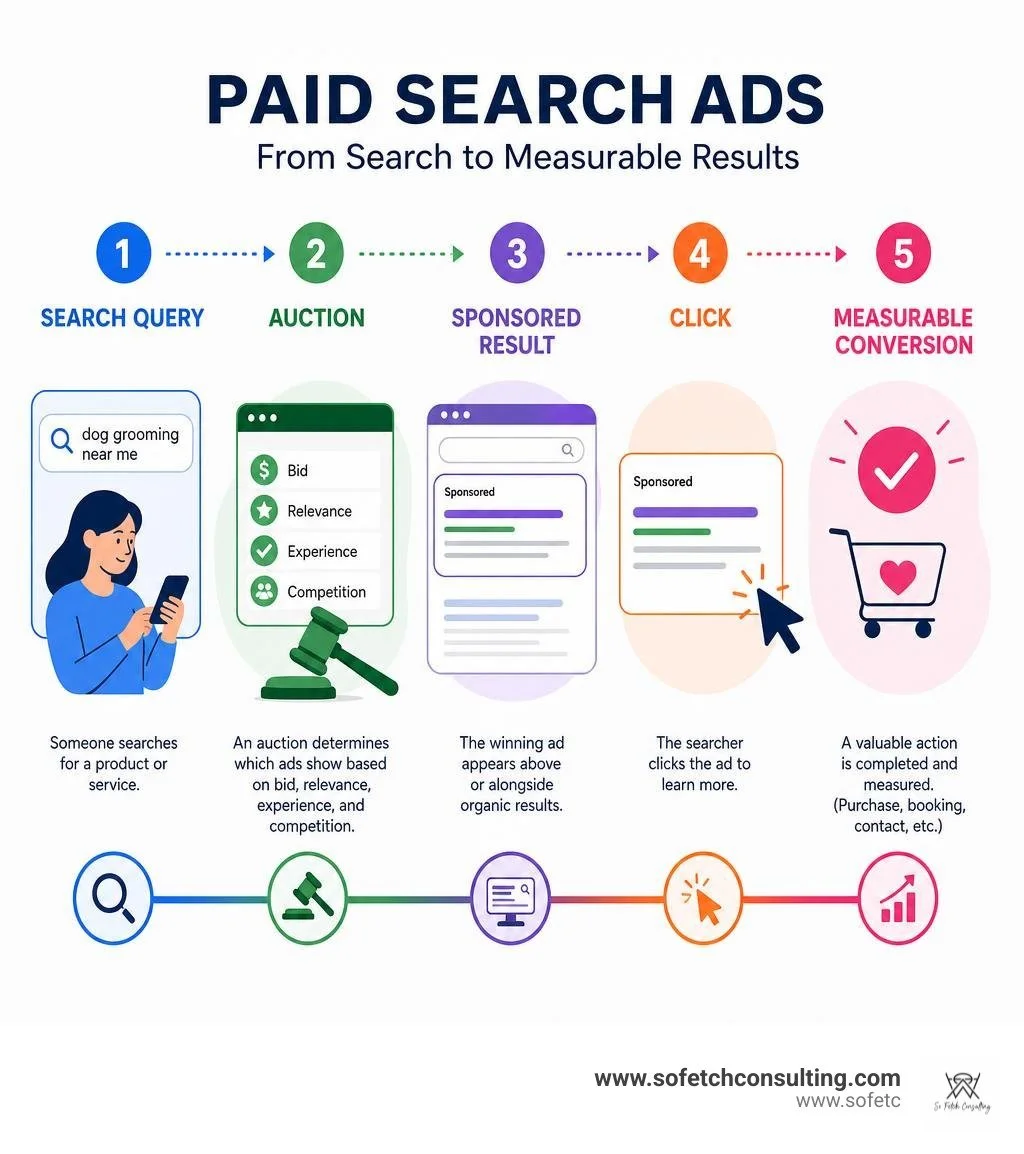
Paid search ads are sponsored listings that appear on a search results page when someone searches for relevant words or products. In most cases, businesses use a pay-per-click (PPC) model, which means they pay when someone clicks the ad, not simply because it appears.
For example, a dog groomer might pay to show an ad for "dog grooming near me." That ad can appear above or alongside unpaid, organic results, helping the business reach people who are actively looking for a service.
Paid search is not a shortcut to guaranteed sales. It is a fast, measurable way to earn visibility while you build longer-term organic rankings through SEO. Your placement and cost depend on an auction that weighs your bid, ad relevance, expected click-through rate, landing page experience, and the competition for that search.
I am Karin Wright, founder of So Fetch Consulting and a Google-certified Search Ads and Analytics strategist who has built and marketed real businesses, including in the pet industry. This guide breaks down the paid search ads definition in plain English, then shows you how to use search ads without wasting your budget.
The Official Paid Search Ads Definition and Core Fundamentals
When we look at online advertising, search marketing stands out because it catches people at the exact moment they want an answer, a service, or a product. Around 53% of all website traffic comes from search engines, and Google alone processes over 3.5 billion searches every single day. That is an enormous amount of daily curiosity and commercial intent.
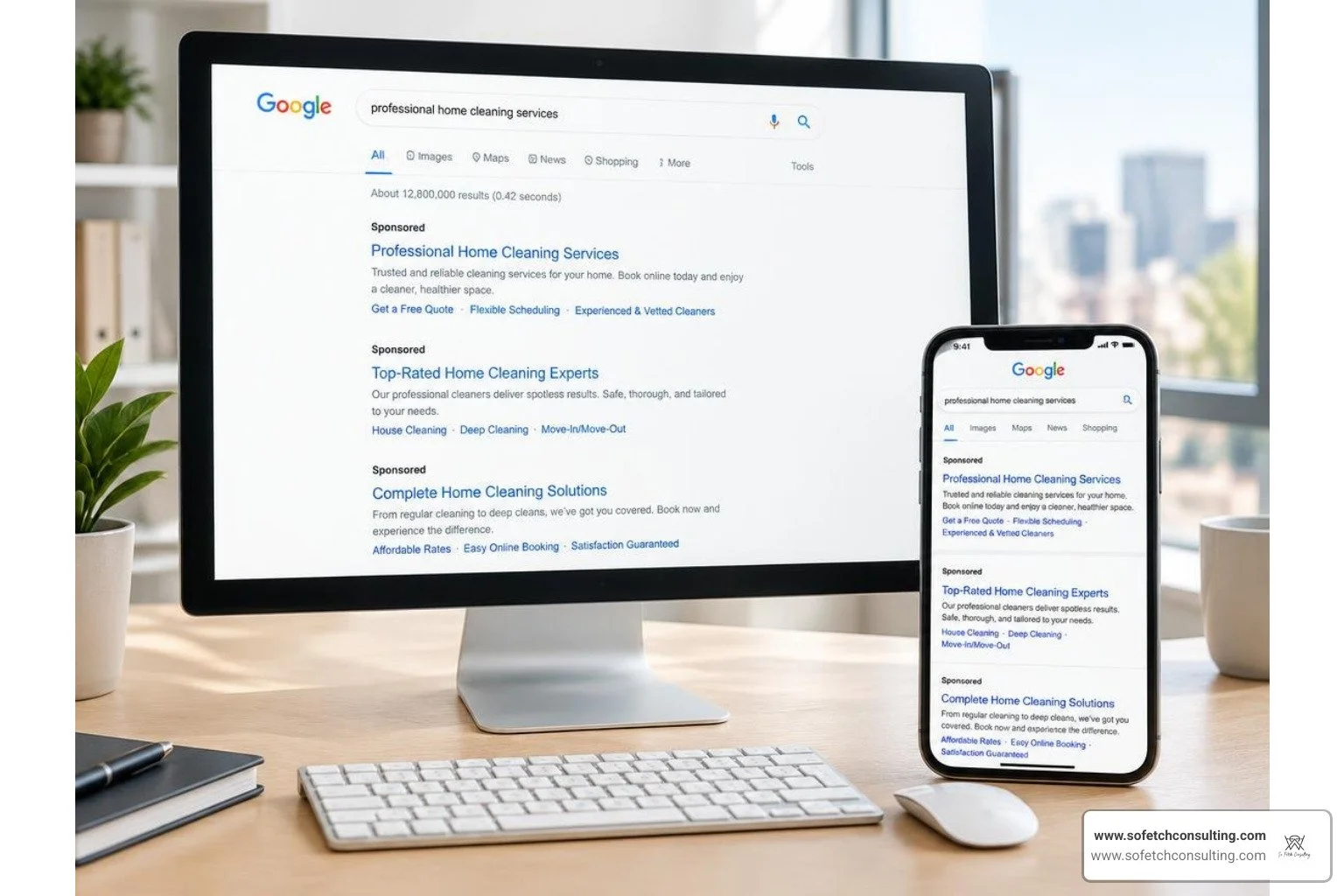
To understand the What is PPC: How Does Paid Search Work - Google Ads relationship, we have to look at the financial model. Paid search advertising is a digital marketing channel where advertisers bid on specific keywords to show sponsored listings on search engine results pages (SERPs). Instead of paying an upfront flat fee just to display an ad, you usually operate under a pay-per-click model. You only pay when an interested user takes action and clicks through to your website.
This structure puts small businesses, nonprofits, and local service providers on equal footing with massive brands. If your targeting is razor-sharp and your ad delivers what the searcher wants, you can win prime visibility right when purchase intent peaks.
Breaking Down the Paid Search Ads Definition for Beginners
Let us strip away the confusing jargon. When you enter a query into a search engine, the system scans its index to deliver two types of results: organic listings and sponsored ad listings.
According to A Guide to Paid Search Ads: Definition + How to Set up Campaigns, search engines evaluate active bids in real time whenever a user hits enter. If you manage a dog daycare or a local tutoring center, you pick the exact keywords you want to target, like "dog boarding near me" or "after school math tutor."
The beauty of paid search lies in its speed. Building organic authority takes consistent effort over several months. Paid search gives you instant visibility at the top of the SERP within minutes of launching your campaign. You set your budget limits, write your messaging, and decide where searchers land.
Paid Search Ads Definition vs Organic Search (PPC vs SEO)
People often ask us whether they should invest in paid search (PPC) or search engine optimization (SEO). The truth is, they work best as partners rather than rivals.
Organic search rankings are earned through valuable content, technical optimization, and website authority over time. You do not pay the search engine when someone clicks an organic link. Paid search guarantees placement right away based on bids and quality scores.
Feature Paid Search (PPC) Organic Search (SEO) Placement Speed Immediate visibility upon campaign launch Takes months of consistent optimization Cost Model Pay-per-click (CPC) or impression-based fees No direct click fees; costs involve creation and maintenance SERP Position Premium spots at the very top and bottom of results Middle section of the results page below top ads Traffic Longevity Stops the moment your daily budget ends Continues to generate traffic long after publication Intent Capture High commercial and transactional intent Broad intent across informational, navigational, and commercial
Running ads above your top organic listings creates what marketers call a 1+1=3 effect. Occupying both the sponsored top spot and an organic position gives your brand commanding screen real estate. The top three search results capture 54% of all traffic, and 65% of high-intent searches result in an ad click. When users see your business in both places, trust goes up, and your overall click-through rate climbs.
How Paid Search Auctions and SERP Placement Work
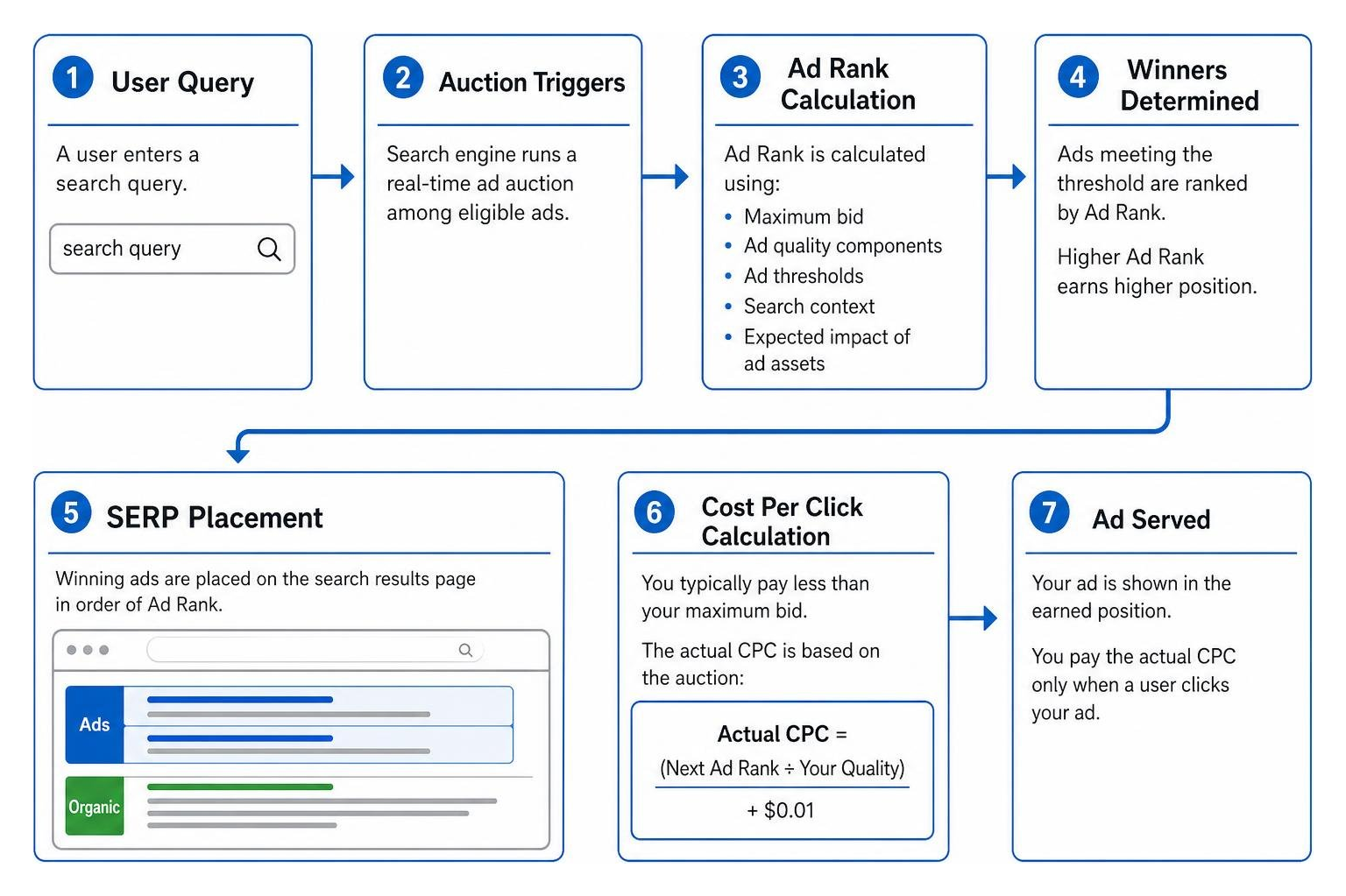
Every time someone types a search query, search engines run an automated, lightning-fast auction behind the scenes. This auction decides which ads earn a spot, what order they appear in, and how much each advertiser pays per click.
As explained in What is paid search (PPC) and why do you need it?, winning the auction does not simply go to the deepest pockets. Search engines care deeply about user experience. If users click bad ads that lead to spammy websites, they stop trusting the platform. Because of that, the auction balances your financial bid with the quality and relevance of your ad.
Ad Rank, Maximum Bids, and Cost Per Click Calculation
Search engines determine your ad position using a metric known as Ad Rank. Ad Rank is calculated at the moment of the search using your maximum bid, your ad quality components, ad thresholds, search context, and the expected impact of your ad assets.
Your maximum cost-per-click (Max CPC) is the highest dollar amount you are willing to spend for a single click. You rarely pay your full maximum bid because of the standard auction pricing model.
In a standard second-price auction system, your actual CPC is calculated as:
Actual CPC = (Ad Rank of the Competitor Below You / Your Quality Score) + $0.01
For example, if you set a maximum bid of $5.00, but your high Quality Score lets you outrank a competitor with a lower score, you might only pay $3.01 for that click. This system rewards advertisers who build relevant, helpful campaigns.
Understanding Quality Score and Ad Relevance Factors

Quality Score is a diagnostic metric graded on a scale from 1 to 10 that search engines assign to your keywords. It directly impacts your ad rank and determines how much of a discount you get on your clicks. A score of 7 or higher tells the platform that your campaign is healthy and relevant.
Quality Score is driven by three core pillars:
Expected Click-Through Rate (eCTR): The likelihood that searchers will click your ad when it appears, based on historical performance data.
Ad Relevance: How closely your ad copy matches the search intent behind the keywords you bid on.
Landing Page Experience: How helpful, transparent, fast, and easy to navigate your landing page is once the user clicks through.
Improving your Quality Score drops your cost per click while moving your ad higher on the page. If your landing page delivers exactly what your headline promises, everyone wins: your visitor finds their answer, the search engine delivers great results, and your marketing budget stretches further.
Primary Formats and Leading Paid Search Platforms
Search advertising has evolved beyond basic blue links. Today, search engines offer flexible ad formats designed to match distinct user goals, whether someone wants to buy a product, book a service, or call a local shop right away.
Ad Formats: Text Ads, Shopping Campaigns, and Local Service Ads
Choosing the right ad format depends on your business goals and how your customers prefer to interact with you:
Responsive Search Ads (RSAs): The workhorse of text advertising. You provide multiple headlines and descriptions, and the platform mixes and matches them using machine learning to deliver the best-performing combination for each search query.
Shopping Campaigns (Product Listing Ads): Essential for e-commerce stores. These ads feature product photos, titles, prices, and store names right at the top of the SERP, letting shoppers compare items before they even visit a website.
Local Services Ads (LSAs): Ideal for local service businesses like pet groomers, plumbers, and private schools. These ads highlight your business name, reviews, operating hours, and a direct phone call button.
Ad Assets (Formerly Extensions): Extra pieces of business information you can add to text ads at no additional cost. Sitelink assets send users to specific pages, call assets display phone numbers, and location assets highlight your physical address.
Comparing Google Ads, Microsoft Advertising, and Amazon Ads
While Google Ads holds the largest search volume globally, diversifying across platforms can open up new, cost-effective customer pools.
Google Ads: Google remains the dominant giant. It handles the highest search volume, offers sophisticated automated bidding, and supports extensive ad formats. Brands see an average return of $8 for every dollar spent on Google Ads.
Microsoft Advertising (Bing Ads): The Microsoft Advertising network reaches millions of unique monthly searchers across Bing, Yahoo, and MSN. The audience often skews slightly older with higher disposable income. Because competition is lower on Microsoft Advertising, businesses often enjoy lower average CPCs and strong click-through rates.
Amazon Ads: Amazon is the ultimate high-intent product search engine. When users search on Amazon, they are rarely looking for casual information; they are ready to buy. Running Sponsored Products and Sponsored Brands puts your products right in front of active shoppers.
Step-by-Step Campaign Setup, Optimization, and Key Metrics
Launching a successful campaign requires thoughtful planning and structured account organization. Let us walk through how to build a paid search campaign from the ground up.
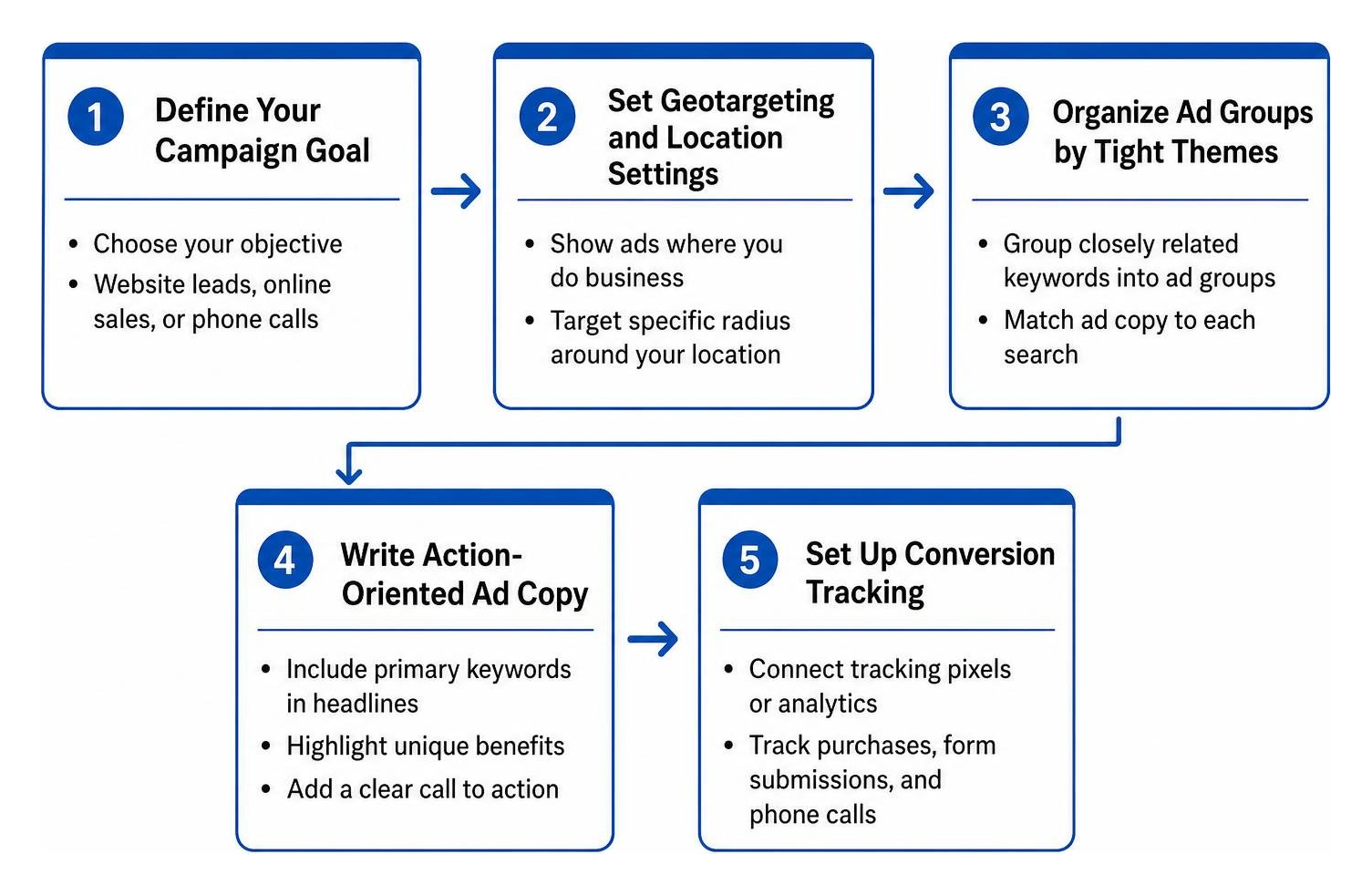
Define Your Campaign Goal: Start inside your ad platform by picking your objective, whether you need website leads, direct online sales, or phone calls.
Set Geotargeting and Location Settings: Only show ads where you actually do business. If you run a local dog training facility, target a specific radius around your facility rather than an entire state.
Organize Ad Groups by Tight Themes: Group closely related keywords into dedicated ad groups. For example, keep "puppy obedience classes" in one ad group and "behavioral aggression training" in another so your ad copy matches each search perfectly.
Write Action-Oriented Ad Copy: Include your primary keywords in your headlines, highlight your unique benefits, and add a clear call to action like "Book Your Free Consultation Today."
Set Up Conversion Tracking: Never spend a dollar on ads without conversion tracking active. Connect your tracking pixels or web analytics to record purchases, form submissions, and phone calls.
Keyword Research, Match Types, and Negative Keywords
Keyword match types control how closely a search query must match your chosen keyword before your ad enters the auction. Using match types wisely protects your budget from irrelevant clicks.
Exact Match [keyword]: Your ad only shows for searches that share the exact meaning or intent of your keyword. This gives you maximum control and high conversion rates with lower search volume.
Phrase Match "keyword": Your ad shows for searches that include the meaning of your keyword, even if other words are added before or after. It offers a balanced mix of volume and relevance.
Broad Match keyword: Your ad can appear on searches related to your keyword, including synonyms and related topics. While it discovers new traffic trends, it can waste budget quickly if left unmonitored.
Negative Keywords: Negative keywords are words or search phrases you explicitly exclude. If you offer premium dog boarding, adding "-cheap" and "-free" prevents your ads from showing when bargain hunters search for services you do not provide.
Essential Tracking Metrics: CTR, CPC, CPA, and ROAS
Managing your campaigns means keeping an eye on the numbers that reflect business health rather than vanity metrics:
Click-Through Rate (CTR): The percentage of people who see your ad and click it. A healthy CTR shows your ad copy resonates with searchers.
Cost Per Click (CPC): The actual amount you pay for each click. Lowering CPC through higher Quality Scores lets you buy more traffic with the same budget.
Conversion Rate (CVR): The percentage of visitors who complete a desired action (like booking a service or purchasing a product) after clicking your ad.
Cost Per Acquisition (CPA): The total ad spend required to generate a single paying customer or lead.
Return on Ad Spend (ROAS): The total revenue generated for every dollar spent on ads. If you spend $100 and generate $500 in revenue, your ROAS is 5x (or 500%).
Frequently Asked Questions About Paid Search Ads
How long does it take to see results from paid search ads?
Paid search ads begin entering auctions and driving traffic immediately after your campaign passes review, which usually takes just a few hours. Gathering enough conversion data for automated bidding algorithms to optimize performance typically takes two to four weeks of consistent traffic.
What makes a good Quality Score in paid search campaigns?
On the standard 1 to 10 scale, a Quality Score of 7 or higher is considered good. Achieving an 8, 9, or 10 means your keywords, ad copy, and landing pages are tightly aligned, which earns you discounted click prices and higher ad placement.
Are paid search ads worth the investment for small businesses?
Yes. Paid search ads give small businesses complete control over daily budgets, location targeting, and keyword selections. Because you can focus spending on high-intent, local searches while excluding irrelevant traffic with negative keywords, even modest budgets can deliver profitable, measurable returns.
Mastering Your Search Marketing Strategy for Scalable Growth
Paid search advertising remains one of the most reliable ways to capture high-intent demand and generate qualified leads for your business. When you understand the underlying mechanics of ad auctions, Quality Score, and intentional keyword grouping, search ads transform from an intimidating expense into a predictable growth engine.
Building high-converting search campaigns takes continuous testing, landing page refinement, and data analysis. If you want expert support crafting a custom digital marketing and search advertising strategy tailored to your business, we are here to help you turn search queries into loyal, happy clients.
